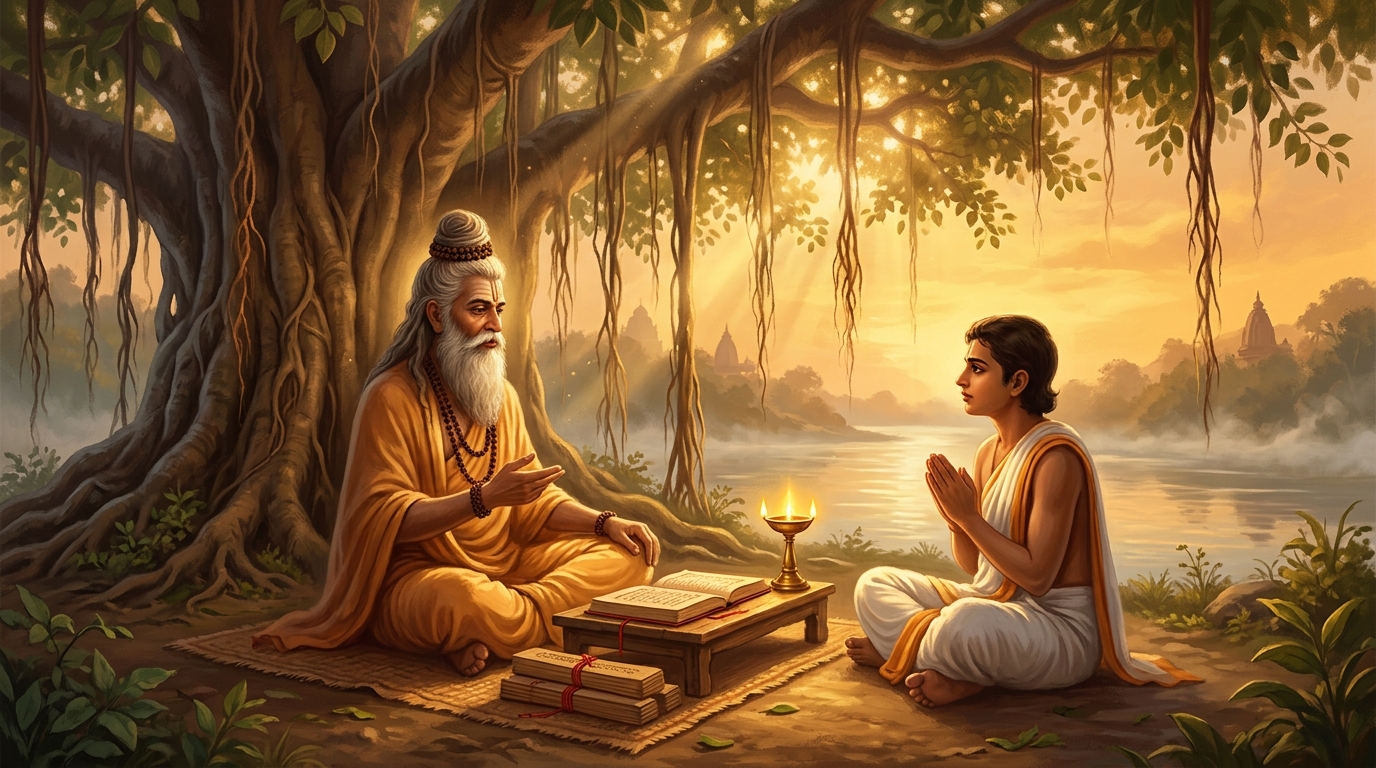

Welcome to Vibes of Divinity. Home to India’s national motto Satyameva Jayate (‘Truth Alone Triumphs’) and the poetic Two Birds on One Tree, the Mundaka Upanishad opens with householder Shaunaka asking Sage Angiras: ‘Sir, what is that one thing by knowing which everything else becomes known?’
- Upanishad: मुण्डकोपनिषद् (Mundaka Upanishad — Atharvaveda)
- Collection: Vedas & Upanishads Library | Divine Wisdom Hub
Philosophical Essence & Teachings
Angiras answers by distinguishing two streams of learning: Apara Vidya (lower/worldly sciences, grammar, arts, and even ritual memorization) and Para Vidya (direct spiritual realization of the Imperishable Reality). Just as sparks fly from a single blazing fire, countless galaxies and beings emerge from and return into Brahman.
Using an unforgettable archery metaphor (2.2.4), Angiras compares the Upanishad to a mighty bow, the focused mind to a sharpened arrow, and Om to the silent release hitting the target of Truth—urging seekers to replace arrogance with truthfulness, compassion, and steady focus.
Key Sanskrit Mantras, Mahavakyas & Meanings
Mundaka Upanishad 2.2.4 — The Bow of Om & Arrow of Mind
प्रणवो धनुः शरो ह्यात्मा ब्रह्म तल्लक्ष्यमुच्यते । अप्रमत्तेन वेद्धव्यं शरवत्तन्मयो भवेत् ॥
Praṇavo dhanuḥ śaro hy ātmā brahma tal lakṣyam ucyate | Apramattena veddhavyaṁ śaravat tan-mayo bhavet ||
Meaning: Pranava (Om) is the bow, the attentive soul is the arrow, and Brahman is the target. Shoot with undistracted steadiness—and become one with the target like the arrow.
Meditation requires alert focus rather than sleepy daydreaming.
Mundaka Upanishad 3.1.6 — Satyameva Jayate
सत्यमेव जयते नानृतं सत्येन पन्था विततो देवयानः ।
Satyam eva jayate nānṛtaṁ satyena panthā vitato devayānaḥ |
Meaning: Truth alone prevails, never falsehood. By truth is paved the luminous path walked by realized sages.
Even when falsehood appears loud temporarily, truth holds ultimate cosmic victory.
Practical Wisdom for Everyday Life
- Balance Career Skill (Apara) with Inner Wisdom (Para): Technical degrees help you earn; spiritual wisdom teaches you how to live.
- Aim Attention Like an Archer: Scattershot habits waste energy; focused calm hits the mark.
- Trust Truth Long-Term: Integrity never loses in the final count.
Frequently Asked Questions
Where does India’s motto ‘Satyameva Jayate’ come from?
From Verse 3.1.6 of the Mundaka Upanishad.
What is the difference between Para and Apara Vidya?
Apara Vidya covers academic, worldly, and textual study, while Para Vidya is direct spiritual realization of the Eternal Reality.
Continue exploring the Upanishads: read Katha Upanishad (Nachiketa & Yama), Vedic Shanti Mantras, or our Complete Bhagavad Gita Guide.
To explore more Upanishadic wisdom, Vedanta dialogues, and sacred chants and timeless wisdom from Hindu scriptures, visit and subscribe to our official Vibes of Divinity YouTube channel.
Which insight from this Upanishad resonated with you most? Share your reflection in the comments below!