
Namaste and welcome to Vibes of Divinity. What would you ask Death if he offered you three boons—wealth, kingdoms, long life, or the ultimate truth of the soul? From the timeless pages of the Katha Upanishad comes one of the boldest dialogues in world philosophy: the story of young Nachiketa, a fearless boy who stood at the gates of Yama, Lord of Death, and refused to settle for passing illusions.
The Story & Sacred Context
Nachiketa’s father, Sage Vajasravasa, once performed a sacrifice promising to give away all his possessions. Watching his father donate frail, barren cows, honest young Nachiketa asked gently, ‘Father, to whom will you give me?’ Irritated by his persistence, the father snapped, ‘To Death I give you!’
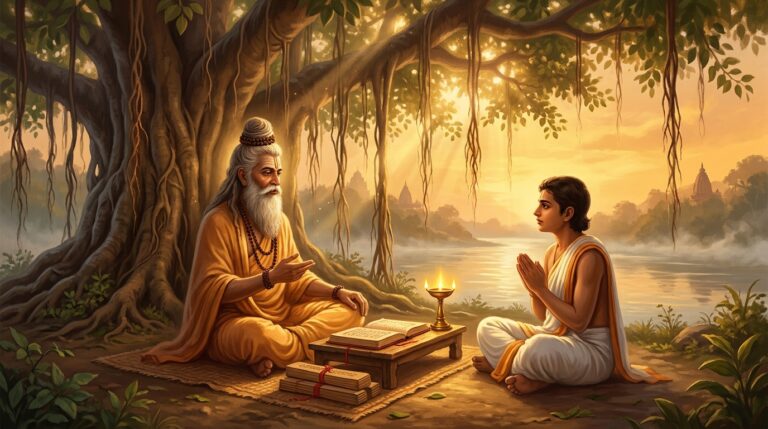
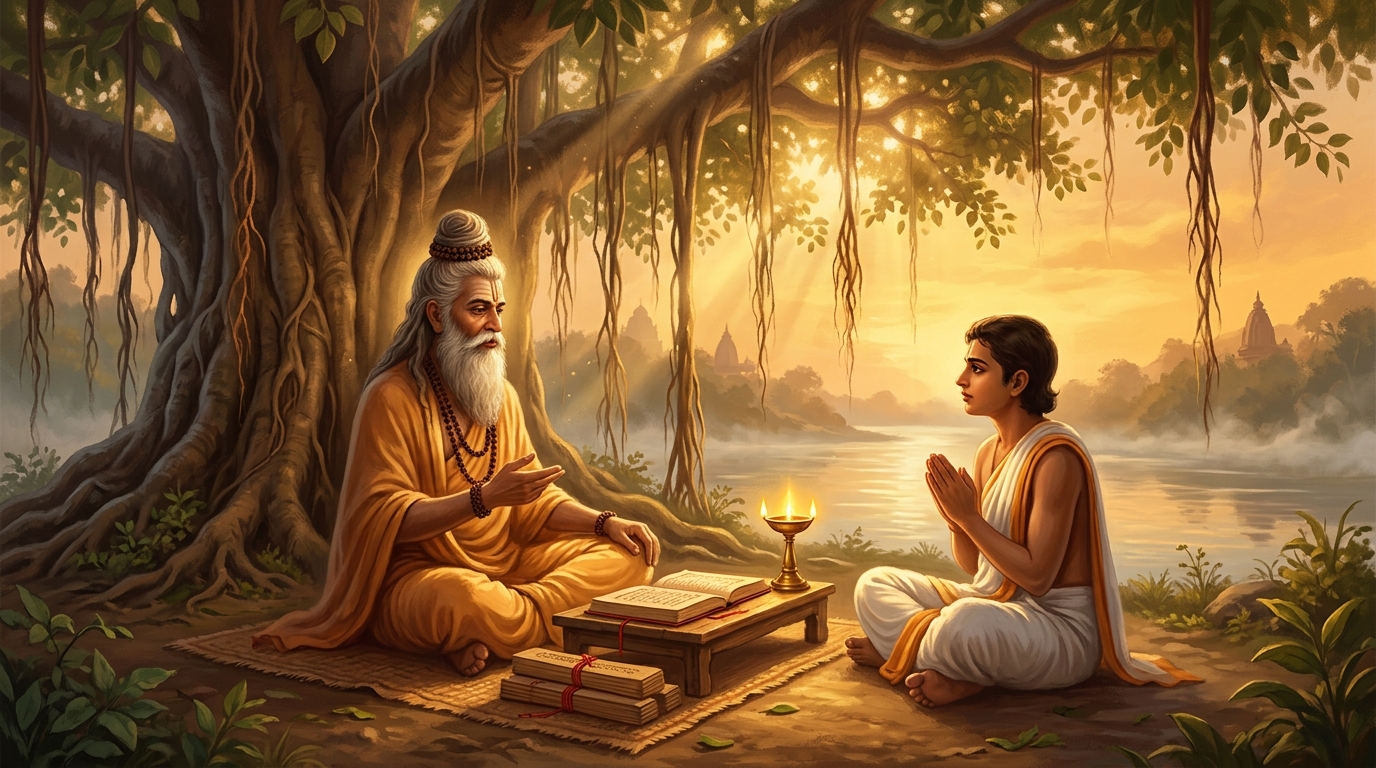
True to his word, Nachiketa journeyed calmly to Yama’s abode, waiting respectfully for three whole days without food or water until Yama returned. Troubled that a young guest had waited unattended, Yama offered Nachiketa three boons. For his first boon, Nachiketa asked for his father’s anger to soften into peace; for his second, he asked to learn the sacred Agni fire-meditation leading to heavenly harmony.
For his third boon, Nachiketa asked the question humanity still wrestles with: ‘When a person dies, some say the soul remains and others say it does not. Teach me the truth.’ Yama tested Nachiketa’s resolve—offering centuries of life, gold, chariots, and celestial pleasures instead. Yet Nachiketa replied: ‘Keep your dances and riches, O Death; all pleasures fade tomorrow. Tell me only what endures forever.’
Moved by Nachiketa’s rare courage, Lord Yama revealed the supreme distinction between Preyas (what merely feels pleasant right now) and Shreyas (what truly elevates the soul), describing the body as a chariot, the senses as wild horses, the mind as the reins, and the intellect as the charioteer guiding the eternal Atman home.
Sacred Sanskrit Verse & Meaning
Katha Upanishad 1.3.14 — Arise, Awake!
उत्तिष्ठत जाग्रत प्राप्य वरान्निबोधत । क्षुरस्य धारा निशिता दुरत्यया दुर्गं पथस्तत्कवयो वदन्ति ॥
Uttiṣṭhata jāgrata prāpya varān nibodhata | Kṣurasya dhārā niśitā duratyayā durgaṁ pathas tat kavayo vadanti ||
Meaning: Arise! Awake! Seek out wise teachers and realize the Truth! The wise declare this spiritual path to be as sharp and demanding as walking a razor’s edge.
Made famous worldwide by Swami Vivekananda, this Katha Upanishad call urges us to wake from spiritual complacency.
Key Spiritual Lessons for Daily Life
- Choose Shreyas Over Preyas: Real freedom comes from choosing long-term growth and integrity over fleeting distractions.
- Never Settle for Cheap Substitutes: Nachiketa turned down worldly gold because his hunger for truth was genuine.
- Hold the Reins Firmly: Guide your senses with steady discernment rather than letting impulses drag the chariot off-road.
Frequently Asked Questions
Where does the story of Nachiketa appear?
It forms the narrative framework of the Katha Upanishad, one of the principal Upanishads of the Krishna Yajurveda.
What do ‘Preyas’ and ‘Shreyas’ mean?
Preyas is the immediately gratifying choice, whereas Shreyas is the truly beneficial, lasting good.
Explore more sacred wisdom across our Bhagavad Gita Guide, Valmiki Ramayana Series, and Mantras & Chants Library.
To explore more spiritual stories, sacred texts, and Vedic wisdom and timeless wisdom from Hindu scriptures, visit and subscribe to our official Vibes of Divinity YouTube channel.
What lesson from this story resonates most with your life today? Share your thoughts in the comments below!