
Welcome to Vibes of Divinity. Whether opening a wedding invitation, stepping into a new home, starting an exam, or launching a creative project, one sacred prayer almost universally comes first: Vakratunda Mahakaya.
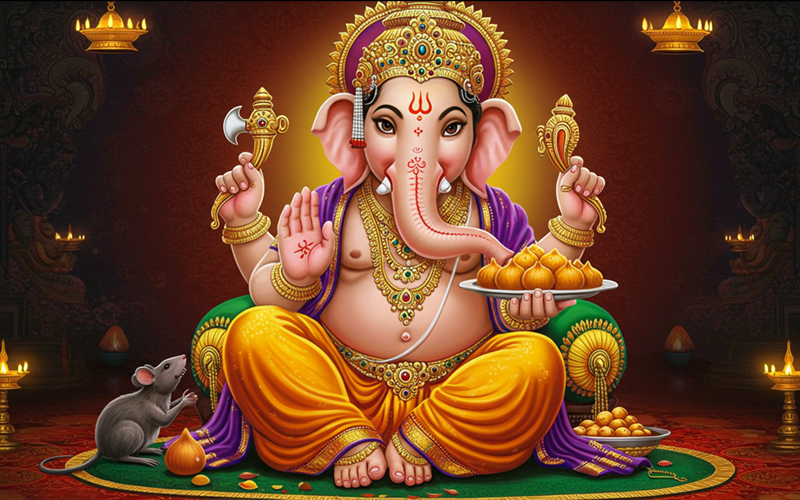
Paired beautifully with the Beej chant Om Gam Ganapataye Namaha, this beloved shloka honors Lord Ganesha (Vighnaharta) as the radiant remover of obstacles.
Sacred Text, Transliteration & Meaning
वक्रतुण्ड महाकाय सूर्यकोटि समप्रभ ।
निर्विघ्नं कुरु मे देव सर्वकार्येषु सर्वदा ॥
Vakratuṇḍa mahā-kāya sūrya-koṭi samaprabha |
Nirvighnaṁ kuru me deva sarva-kāryeṣu sarvadā ||
Meaning: O Lord Ganesha of the curved trunk and immense cosmic form, whose brilliance shines like ten million suns—please bless all my righteous endeavors to remain free of obstacles, always.
Spiritual Significance & Deeper Insights
- Vakratunda (Curved Trunk): Symbolizes adaptability and gentle wisdom—capable of uprooting massive trees of ego yet delicately picking up a single grain.
- Mahakaya (Cosmic Form): Reminds us that the entire universe rests in divine order; small worries shrink when seen in that vast perspective.
- Suryakoti Samaprabha (Ten Million Suns): Invokes bright clarity and unshakable confidence to dispel self-doubt before big undertakings.
How & When to Chant
- Best Times: Every morning before work or study, before journeys or new beginnings, on Wednesdays, Sankashti Chaturthi, and Ganesh Chaturthi.
- Simple Practice: Pause, close your eyes for ten seconds, visualize Lord Ganesha’s calm, smiling presence, and recite the shloka three times clearly.
- Righteous Intent: Notice the prayer asks for smooth progress in worthy actions (sarva-karyeshu)—align your goals with honesty and patience.
Frequently Asked Questions
What is the word-by-word meaning of Vakratunda Mahakaya?
Vakra (curved) + Tunda (trunk); Maha (great) + Kaya (body); Surya-koti (ten million suns) + Samaprabha (equal in radiance); Nirvighnam (obstacle-free) + Kuru me (make for me) + Sarva-karyeshu sarvada (in all endeavors, always).
Why do we pray to Lord Ganesha before other deities or new tasks?
As Prathama Pujya (the first worshipped) and Vighnaharta, Ganesha clears mental friction, aligns intellect (Buddhi), and grounds beginnings in humility.
How many times should Vakratunda Mahakaya be chanted?
Reciting it once, 3 times, or 11 times before beginning any task is traditional and deeply calming.
Explore more sacred hymns in our Mantras & Chants Library or read the Complete Bhagavad Gita Guide.
To explore more sacred mantras, stotras, and Puranic wisdom and timeless wisdom from Hindu scriptures, visit and subscribe to our official Vibes of Divinity YouTube channel.
Have you chanted this sacred prayer in your daily practice? Share your experience in the comments below!