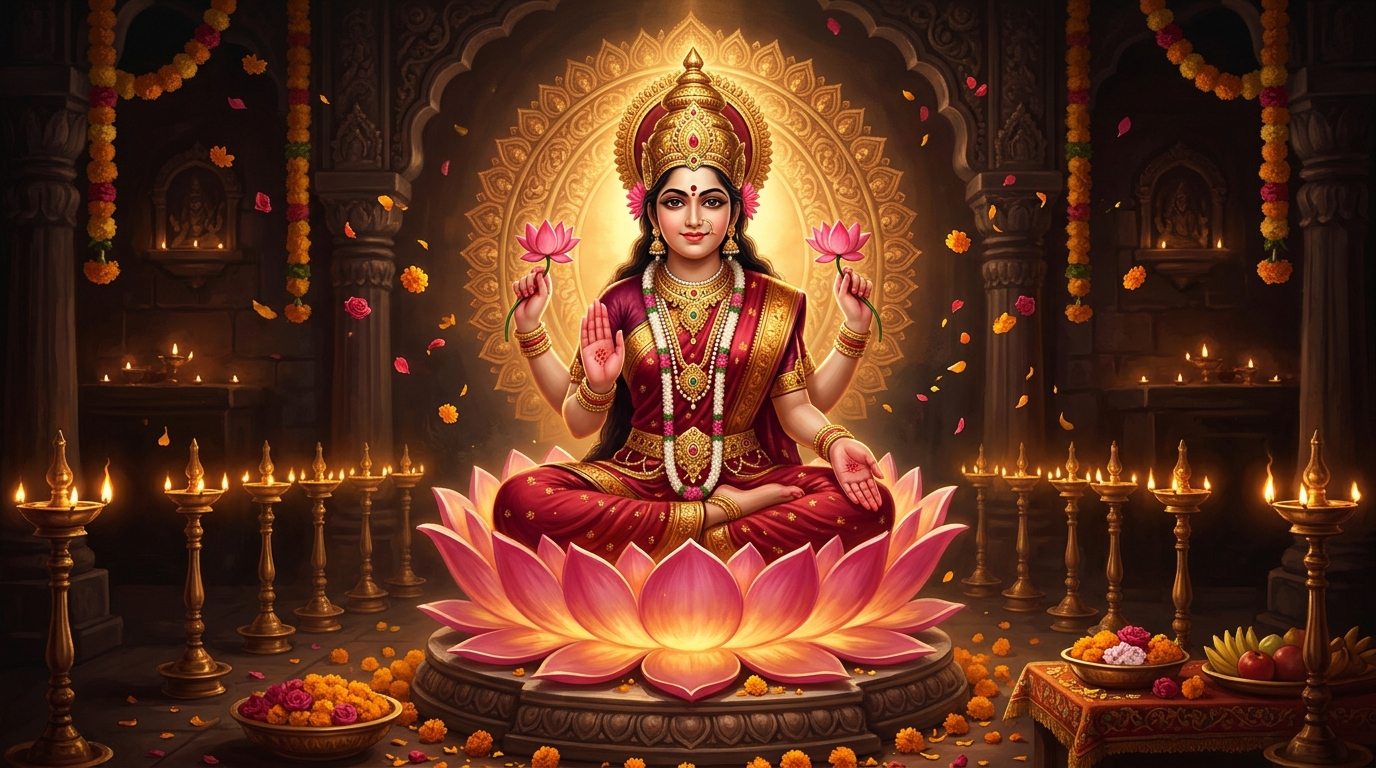

Welcome to Vibes of Divinity. Revered across Shakta and Puranic traditions as one of the most potent invocations of the Divine Mother, the Navarna Mantra (literally, ‘the nine-syllable mantra’) stands at the heart of the sacred Durga Saptashati (Devi Mahatmyam) in the Markandeya Purana.
Compact yet cosmically vast, this mantra unites the three supreme currents of Divine Shakti—Mahasaraswati (wisdom), Mahalakshmi (abundance and harmony), and Mahakali (courage and protection)—guiding the devotee from fear to inner strength.
Sacred Text, Transliteration & Meaning
Verse 1
ॐ ऐं ह्रीं क्लीं चामुण्डायै विच्चे ॥
Oṁ Aiṁ Hrīṁ Klīṁ Cāmuṇḍāyai Vicce ||
Meaning: Salutations to the Supreme Mother who unites the energies of wisdom (Aim), auspiciousness and creative power (Hreem), transformative attraction and grace (Kleem), and fierce protection (Chamundaye), liberating us into higher consciousness (Viche).
Verse 2
या देवी सर्वभूतेषु शक्तिरूपेण संस्थिता ।
नमस्तस्यै नमस्तस्यै नमस्तस्यै नमो नमः ॥
Yā devī sarva-bhūteṣu śakti-rūpeṇa saṁsthitā |
Namastasyai namastasyai namastasyai namo namaḥ ||
Meaning: To that Divine Goddess who abides in all beings in the form of Sacred Strength (Shakti)—salutations to Her, salutations to Her, salutations to Her again and again!
Spiritual Significance & Deeper Insights
- The Three Sacred Seed Syllables: Aim awakens Mahasaraswati’s clarity; Hreem invokes Mahalakshmi’s radiance; Kleem channels Mahakali’s fearless transformative energy.
- Chamundaye Viche: ‘Chamunda’ symbolizes the conqueror of inner ego and negative impulses (Chanda and Munda), while Viche invites divine awakening.
- Fearlessness & Resilience: Regular contemplation of Maa Durga’s mantra builds mental courage during turbulent phases of life.
How & When to Chant
- Best Times: Tuesdays, Fridays, Ashtami/Navami tithis, and especially during Chaitra and Sharad Navratri.
- Gentle Practice: Sit cleanly with steady breath and chant 9, 27, or 108 repetitions mentally or softly with clear pronunciation.
- Ethical Anchor: Pair mantra chanting with kindness, respectful speech, and protecting those in need—the truest worship of Maa Shakti.
Frequently Asked Questions
Why is it called the Navarna Mantra?
Nava means ‘nine’ and Varna means ‘letters/syllables’—referring to the nine core syllables after Om: Aiṁ Hrīṁ Klīṁ Cā-muṇ-ḍā-yai Vic-ce.
Which scripture contains the Navarna Mantra?
It is closely associated with the Devi Mahatmyam (Durga Saptashati) embedded within the Markandeya Purana.
What does ‘Viche’ mean at the end of the mantra?
Traditional commentaries interpret Viche as a call to surrender ego, dissolve darkness, and awaken divine wisdom.
Explore more sacred hymns in our Mantras & Chants Library or read the Complete Bhagavad Gita Guide.
To explore more sacred mantras, stotras, and Puranic wisdom and timeless wisdom from Hindu scriptures, visit and subscribe to our official Vibes of Divinity YouTube channel.
Have you chanted this sacred prayer in your daily practice? Share your experience in the comments below!