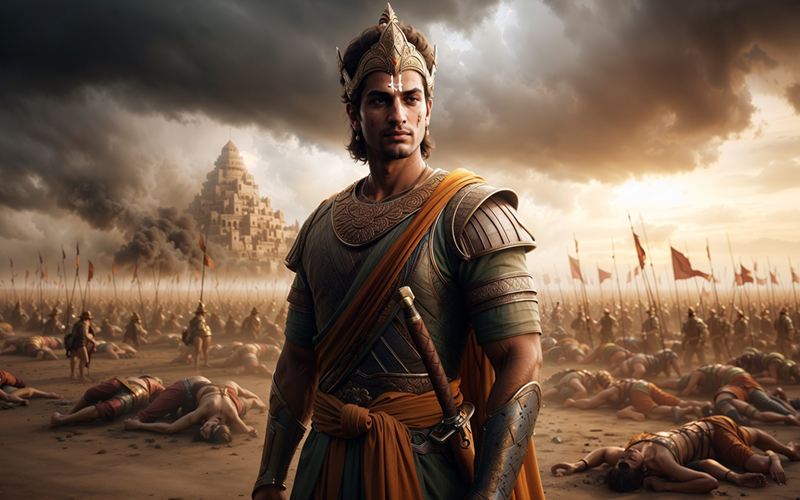

Welcome to Vibes of Divinity. No honest epic glorifies war without counting its tears. In Stri Parva, weapons fall silent and Vyasa leads us onto the blood-soaked plain beside mothers, wives, and daughters—exposing the unbearable human price of pride.
- Parva (Book): स्त्रीपर्व (Stri Parva — The Book of the Women)
- Series Index: Mahabharata Complete 18-Parva Guide
Narrative Summary & Key Events of Parva 11
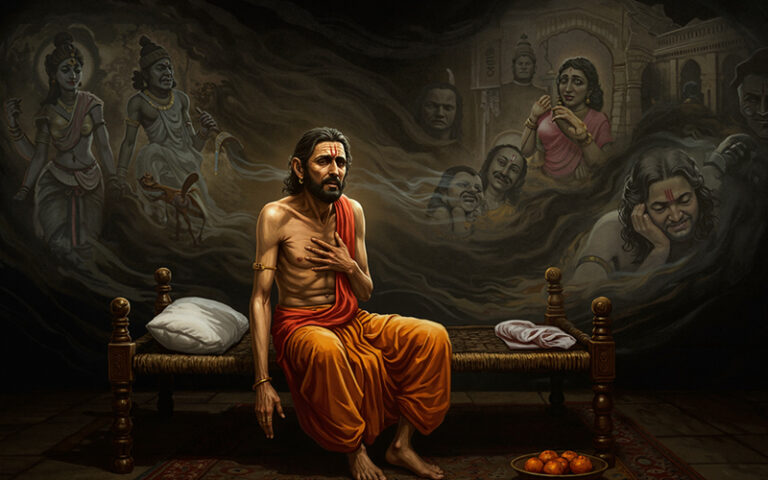
When the Pandavas visit grieving Dhritarashtra and Gandhari, Krishna subtly places an iron statue of Bhima before the blind king—which Dhritarashtra crushes to splinters in sudden rage before weeping in remorse. Gandhari’s maternal sorrow melts when Yudhishthira bows humbly admitting his fault.
Granted divine vision by Vyasa, Gandhari surveys Kurukshetra—mourning sons, grandsons, and widows alike. Seeing Karna lying radiant in death, weeping Kunti finally reveals to the horrified Pandavas that Karna was their own eldest brother—prompting Yudhishthira to pronounce a poignant grief upon secrets hidden between kin.
Blaming Krishna for not stopping the slaughter (read Why Krishna Didn’t Stop the War), Gandhari utters the solemn curse that thirty-six years later Krishna’s own Yadava clan will perish in civil strife. Gently smiling, Lord Krishna accepts her curse—knowing cosmic balance had already ordained it.
Key Sanskrit Shlokas & Meanings
Stri Parva — Victory Turns Hollow Through Bereavement
अयं स कुरुराजस्य पुत्रो दुर्मतिरात्मवान् । यो न मे वचनं चक्रे शमकामां हि मे गिरम् ॥
Nāsti yuddhe jayo nāma — śoka eva parāyaṇam |
Meaning: In fratricidal war, even the victor walks away empty-handed—surrounded by silence and grief.
Stri Parva stands as one of history’s greatest anti-war meditations, honoring the grief of every mother on both sides.
Stri Parva — Krishna Accepts Gandhari’s Curse with Grace
त्वया यदुक्ते वचनं देवि तत्सत्यमेव हि ।
Tvayā yad uktaṁ vacanaṁ devi tat satyam eva hi |
Meaning: ‘O noble Queen, what you have spoken shall indeed come to pass’—Krishna bows calmly to a grieving mother’s sorrow without defending Himself angrily.
True greatness absorbs even undeserved blame with compassion when someone’s heart is broken.
Timeless Lessons for Modern Life
- Peace Is Priceless: Stri Parva reminds every generation that winning an ego battle often loses what matters most.
- Honesty Prevents Lifelong Regret: Hiding painful truths (like Karna’s birth) multiplies sorrow decades later.
- Meet Grief with Quiet Empathy: Krishna comforted Gandhari gently rather than arguing.
Frequently Asked Questions
Why did Dhritarashtra crush Bhima’s iron statue?
Overcome by grief and rage over Duryodhana’s death, blind Dhritarashtra tried to crush Bhima in an embrace—saved by Krishna’s foresight.
What curse did Gandhari give Lord Krishna in Stri Parva?
She foretold/cursed that after 36 years, Krishna’s own Yadava dynasty would destroy itself just as the Kurus had.
Continue Your Mahabharata Journey
← Previous: Parva 10 | All 18 Mahabharata Parvas | Next: Parva 12 →
To explore more Mahabharata untold stories, Bhishma’s wisdom, and Gita teachings and timeless wisdom from Hindu scriptures, visit and subscribe to our official Vibes of Divinity YouTube channel.
Which moment from this Parva speaks to you most? Share your reflection in the comments below!