
Welcome to Vibes of Divinity. Why do our moods, energy levels, and desires shift from peaceful clarity one day to restless ambition or sluggish confusion the next? In Bhagavad Gita Chapter 14 (Gunatraya Vibhaga Yoga), Lord Krishna reveals the psychological operating system of nature: the three Gunas—Sattva, Rajas, and Tamas.
- Chapter Name: गुणत्रयविभागयोग (Gunatraya Vibhaga Yoga)
- Section: Section 3: Deepening Wisdom & Final Liberation (Chapters 13–18)
- Complete Text Included: All 27 Sanskrit shlokas with IAST transliteration & English translation
- Series Index: Bhagavad Gita Complete Guide (All 18 Chapters & 701 Shlokas)
Chapter 14 Summary & Context on Kurukshetra
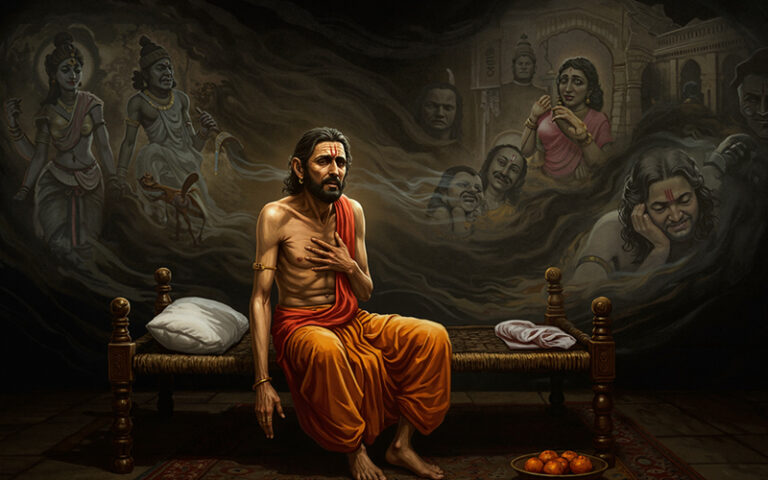
Krishna explains that material nature binds the embodied soul through three subtle strands (gunas): Sattva (luminosity, harmony, clarity, and happiness), Rajas (passion, restless ambition, craving, and constant drive), and Tamas (inertia, darkness, procrastination, and delusion).
Each guna competes for dominance inside us—producing wisdom in Sattva, greed and feverish activity in Rajas, and negligence or lethargy in Tamas.
When Arjuna asks what marks a person who has transcended all three gunas (Gunatita), Krishna explains that such a sage remains steady like an impartial observer as moods rise and pass, treating gold and stone alike, and anchors themselves in unwavering Bhakti Yoga.
Highlighted Shlokas & Spiritual Reflections (Chapter 14)
Shloka 14.5 — How the Three Gunas Bind the Soul
सत्त्वं रजस्तम इति गुणाः प्रकृतिसम्भवाः । निबध्नन्ति महाबाहो देहे देहिनमव्ययम् ॥
Sattvaṁ rajas tama iti guṇāḥ prakṛti-sambhavāḥ | Nibadhnanti mahā-bāho dehe dehinam avyayam ||
Meaning: Sattva (harmony), Rajas (passion), and Tamas (inertia)—these three qualities born of nature bind the imperishable soul within the body, O mighty Arjuna.
Understanding these three forces lets us stop blaming ourselves blindly and instead work skillfully with our mental states.
Shloka 14.17 — The Fruits of Each Guna
सत्त्वात्सञ्जायते ज्ञानं रजसो लोभ एव च । प्रमादमोहौ तमसो भवतोऽज्ञानमेव च ॥
Sattvāt sañjāyate jñānaṁ rajaso lobha eva ca | Pramāda-mohau tamaso bhavato ’jñānam eva ca ||
Meaning: From Sattva arises wisdom; from Rajas, greed; and from Tamas arise negligence, delusion, and ignorance.
By watching whether clarity, greed, or sluggishness dominates our day, we can immediately tell which guna we are feeding.
Shloka 14.26 — Rising Beyond the Gunas Through Bhakti
मां च योऽव्यभिचारेण भक्तियोगेन सेवते । स गुणान्समतीत्यैतान्ब्रह्मभूयाय कल्पते ॥
Māṁ ca yo ’vyabhicāreṇa bhakti-yogena sevate | Sa guṇān samatītyaitān brahma-bhūyāya kalpate ||
Meaning: Whoever serves Me with unswerving Bhakti Yoga completely transcends these three gunas and becomes fit for realization of Brahman.
Even more powerful than fighting moods by sheer force is offering your heart in steady devotion.
Complete Verse-by-Verse Bhagavad Gita Chapter 14 (All 27 Shlokas)
Read all 27 original Sanskrit verses of Chapter 14 below with Roman IAST transliteration and clear English meaning:
Verse 14.1
श्रीभगवानुवाच |
परं भूयः प्रवक्ष्यामि ज्ञानानां ज्ञानमुत्तमम् |
यज्ज्ञात्वा मुनयः सर्वे परां सिद्धिमितो गताः ||१४-१||
śrībhagavānuvāca .
paraṃ bhūyaḥ pravakṣyāmi jñānānāṃ jñānamuttamam .
yajjñātvā munayaḥ sarve parāṃ siddhimito gatāḥ ||14-1||
Meaning: Lord Shri Krishna continued: Now I will reveal unto the Wisdom which is beyond knowledge, by attaining which the sages have reached Perfection.
Verse 14.2
इदं ज्ञानमुपाश्रित्य मम साधर्म्यमागताः |
सर्गेऽपि नोपजायन्ते प्रलये न व्यथन्ति च ||१४-२||
idaṃ jñānamupāśritya mama sādharmyamāgatāḥ .
sarge.api nopajāyante pralaye na vyathanti ca ||14-2||
Meaning: Dwelling in Wisdom and realising My Divinity, they are not born again when the universe is re-created at the beginning of every cycle, nor are they affected when it is dissolved.
Verse 14.3
मम योनिर्महद् ब्रह्म तस्मिन्गर्भं दधाम्यहम् |
सम्भवः सर्वभूतानां ततो भवति भारत ||१४-३||
mama yonirmahad brahma tasmingarbhaṃ dadhāmyaham .
sambhavaḥ sarvabhūtānāṃ tato bhavati bhārata ||14-3||
Meaning: The eternal Cosmos is My womb, in which I plant the seed, from which all beings are born, O Prince!
Verse 14.4
सर्वयोनिषु कौन्तेय मूर्तयः सम्भवन्ति याः |
तासां ब्रह्म महद्योनिरहं बीजप्रदः पिता ||१४-४||
sarvayoniṣu kaunteya mūrtayaḥ sambhavanti yāḥ .
tāsāṃ brahma mahadyonirahaṃ bījapradaḥ pitā ||14-4||
Meaning: O illustrious son of Kunti! Through whatever wombs men are born, it is the Spirit Itself that conceives, and I am their Father.
Verse 14.5
सत्त्वं रजस्तम इति गुणाः प्रकृतिसम्भवाः |
निबध्नन्ति महाबाहो देहे देहिनमव्ययम् ||१४-५||
sattvaṃ rajastama iti guṇāḥ prakṛtisambhavāḥ .
nibadhnanti mahābāho dehe dehinamavyayam ||14-5||
Meaning: Purity, Passion and Ignorance are the Qualities which the Law of nature bringeth forth. They fetter the free Spirit in all beings.
Verse 14.6
तत्र सत्त्वं निर्मलत्वात्प्रकाशकमनामयम् |
सुखसङ्गेन बध्नाति ज्ञानसङ्गेन चानघ ||१४-६||
tatra sattvaṃ nirmalatvātprakāśakamanāmayam .
sukhasaṅgena badhnāti jñānasaṅgena cānagha ||14-6||
Meaning: O Sinless One! Of these, Purity, being luminous, strong and invulnerable, binds one by its yearning for happiness and illumination.
Verse 14.7
रजो रागात्मकं विद्धि तृष्णासङ्गसमुद्भवम् |
तन्निबध्नाति कौन्तेय कर्मसङ्गेन देहिनम् ||१४-७||
rajo rāgātmakaṃ viddhi tṛṣṇāsaṅgasamudbhavam .
tannibadhnāti kaunteya karmasaṅgena dehinam ||14-7||
Meaning: Passion, engendered by thirst for pleasure and attachment, binds the soul through its fondness for activity.
Verse 14.8
तमस्त्वज्ञानजं विद्धि मोहनं सर्वदेहिनाम् |
प्रमादालस्यनिद्राभिस्तन्निबध्नाति भारत ||१४-८||
tamastvajñānajaṃ viddhi mohanaṃ sarvadehinām .
pramādālasyanidrābhistannibadhnāti bhārata ||14-8||
Meaning: But Ignorance, the product of darkness, stupefies the senses in all embodied beings, binding them by chains of folly, indolence and lethargy.
Verse 14.9
सत्त्वं सुखे सञ्जयति रजः कर्मणि भारत |
ज्ञानमावृत्य तु तमः प्रमादे सञ्जयत्युत ||१४-९||
sattvaṃ sukhe sañjayati rajaḥ karmaṇi bhārata .
jñānamāvṛtya tu tamaḥ pramāde sañjayatyuta ||14-9||
Meaning: Purity brings happiness, Passion commotion, and Ignorance, which obscures wisdom, leads to a life of failure.
Verse 14.10
रजस्तमश्चाभिभूय सत्त्वं भवति भारत |
रजः सत्त्वं तमश्चैव तमः सत्त्वं रजस्तथा ||१४-१०||
rajastamaścābhibhūya sattvaṃ bhavati bhārata .
rajaḥ sattvaṃ tamaścaiva tamaḥ sattvaṃ rajastathā ||14-10||
Meaning: O Prince! Purity prevails when Passion and Ignorance are overcome; Passion, when Purity and Ignorance are overcome; and Ignorance when it overcomes Purity and Passion.
Verse 14.11
सर्वद्वारेषु देहेऽस्मिन्प्रकाश उपजायते |
ज्ञानं यदा तदा विद्याद्विवृद्धं सत्त्वमित्युत ||१४-११||
sarvadvāreṣu dehe.asminprakāśa upajāyate .
jñānaṃ yadā tadā vidyādvivṛddhaṃ sattvamityuta ||14-11||
Meaning: When the light of knowledge gleams forth from all the gates of the body, then be sure that Purity prevails.
Verse 14.12
लोभः प्रवृत्तिरारम्भः कर्मणामशमः स्पृहा |
रजस्येतानि जायन्ते विवृद्धे भरतर्षभ ||१४-१२||
lobhaḥ pravṛttirārambhaḥ karmaṇāmaśamaḥ spṛhā .
rajasyetāni jāyante vivṛddhe bharatarṣabha ||14-12||
Meaning: O best of Indians! Avarice, the impulse to act and the beginning of action itself are all due to the dominance of Passion.
Verse 14.13
अप्रकाशोऽप्रवृत्तिश्च प्रमादो मोह एव च |
तमस्येतानि जायन्ते विवृद्धे कुरुनन्दन ||१४-१३||
aprakāśo.apravṛttiśca pramādo moha eva ca .
tamasyetāni jāyante vivṛddhe kurunandana ||14-13||
Meaning: Darkness, stagnation, folly and infatuation are the result of the dominance of Ignorance, O joy of the Kuru-clan!
Verse 14.14
यदा सत्त्वे प्रवृद्धे तु प्रलयं याति देहभृत् |
तदोत्तमविदां लोकानमलान्प्रतिपद्यते ||१४-१४||
yadā sattve pravṛddhe tu pralayaṃ yāti dehabhṛt .
tadottamavidāṃ lokānamalānpratipadyate ||14-14||
Meaning: When Purity prevails, the soul on quitting the body passes on to the pure regions where live those who know the Highest.
Verse 14.15
रजसि प्रलयं गत्वा कर्मसङ्गिषु जायते |
तथा प्रलीनस्तमसि मूढयोनिषु जायते ||१४-१५||
rajasi pralayaṃ gatvā karmasaṅgiṣu jāyate .
tathā pralīnastamasi mūḍhayoniṣu jāyate ||14-15||
Meaning: When Passion prevails, the soul is reborn among those who love activity; when Ignorance rules, it enters the wombs of the ignorant.
Verse 14.16
कर्मणः सुकृतस्याहुः सात्त्विकं निर्मलं फलम् |
रजसस्तु फलं दुःखमज्ञानं तमसः फलम् ||१४-१६||
karmaṇaḥ sukṛtasyāhuḥ sāttvikaṃ nirmalaṃ phalam .
rajasastu phalaṃ duḥkhamajñānaṃ tamasaḥ phalam ||14-16||
Meaning: They say the fruit of a meritorious action is spotless and full of purity; the outcome of Passion is misery, and of Ignorance darkness.
Verse 14.17
सत्त्वात्सञ्जायते ज्ञानं रजसो लोभ एव च |
प्रमादमोहौ तमसो भवतोऽज्ञानमेव च ||१४-१७||
sattvātsañjāyate jñānaṃ rajaso lobha eva ca .
pramādamohau tamaso bhavato.ajñānameva ca ||14-17||
Meaning: Purity engenders Wisdom, Passion avarice, and Ignorance folly, infatuation and darkness.
Verse 14.18
ऊर्ध्वं गच्छन्ति सत्त्वस्था मध्ये तिष्ठन्ति राजसाः |
जघन्यगुणवृत्तिस्था अधो गच्छन्ति तामसाः ||१४-१८||
ūrdhvaṃ gacchanti sattvasthā madhye tiṣṭhanti rājasāḥ .
jaghanyaguṇavṛttisthā adho gacchanti tāmasāḥ ||14-18||
Meaning: When Purity is in the ascendant, the man evolves; when Passion, he neither evolves nor degenerates; when Ignorance, he is lost.
Verse 14.19
नान्यं गुणेभ्यः कर्तारं यदा द्रष्टानुपश्यति |
गुणेभ्यश्च परं वेत्ति मद्भावं सोऽधिगच्छति ||१४-१९||
nānyaṃ guṇebhyaḥ kartāraṃ yadā draṣṭānupaśyati .
guṇebhyaśca paraṃ vetti madbhāvaṃ so.adhigacchati ||14-19||
Meaning: As soon as man understands that it is only the Qualities which act and nothing else, and perceives That which is beyond, he attains My divine nature.
Verse 14.20
गुणानेतानतीत्य त्रीन्देही देहसमुद्भवान् |
जन्ममृत्युजरादुःखैर्विमुक्तोऽमृतमश्नुते ||१४-२०||
guṇānetānatītya trīndehī dehasamudbhavān .
janmamṛtyujarāduḥkhairvimukto.amṛtamaśnute ||14-20||
Meaning: When the soul transcends the Qualities, which are the real cause of physical existence, then, freed from birth and death, from old age and misery, he quaffs the nectar of immortality.
Verse 14.21
अर्जुन उवाच |
कैर्लिङ्गैस्त्रीन्गुणानेतानतीतो भवति प्रभो |
किमाचारः कथं चैतांस्त्रीन्गुणानतिवर्तते ||१४-२१||
arjuna uvāca .
kairliṅgaistrīnguṇānetānatīto bhavati prabho .
kimācāraḥ kathaṃ caitāṃstrīnguṇānativartate ||14-21||
Meaning: Arjuna asked: My Lord! By what signs can he who has transcended the Qualities be recognized? How does he act? How does he live beyond them?
Verse 14.22
श्रीभगवानुवाच |
प्रकाशं च प्रवृत्तिं च मोहमेव च पाण्डव |
न द्वेष्टि सम्प्रवृत्तानि न निवृत्तानि काङ्क्षति ||१४-२२||
śrībhagavānuvāca .
prakāśaṃ ca pravṛttiṃ ca mohameva ca pāṇḍava .
na dveṣṭi sampravṛttāni na nivṛttāni kāṅkṣati ||14-22||
Meaning: Lord Shri Krishna replied: O Prince! He who shuns not the Quality which is present, and longs not for that which is absent;
Verse 14.23
उदासीनवदासीनो गुणैर्यो न विचाल्यते |
गुणा वर्तन्त इत्येवं योऽवतिष्ठति नेङ्गते ||१४-२३||
udāsīnavadāsīno guṇairyo na vicālyate .
guṇā vartanta ityevaṃ yo.avatiṣṭhati neṅgate ||14-23||
Meaning: He who maintains an attitude of indifference, who is not disturbed by the Qualities, who realises that it is only they who act, and remains calm;
Verse 14.24
समदुःखसुखः स्वस्थः समलोष्टाश्मकाञ्चनः |
तुल्यप्रियाप्रियो धीरस्तुल्यनिन्दात्मसंस्तुतिः ||१४-२४||
samaduḥkhasukhaḥ svasthaḥ samaloṣṭāśmakāñcanaḥ .
tulyapriyāpriyo dhīrastulyanindātmasaṃstutiḥ ||14-24||
Meaning: Who accepts pain and pleasure as it comes, is centred in his Self, to whom a piece of clay or stone or gold are the same, who neither likes nor dislikes, who is steadfast, indifferent alike to praise or censure;
Verse 14.25
मानापमानयोस्तुल्यस्तुल्यो मित्रारिपक्षयोः |
सर्वारम्भपरित्यागी गुणातीतः स उच्यते ||१४-२५||
mānāpamānayostulyastulyo mitrāripakṣayoḥ .
sarvārambhaparityāgī guṇātītaḥ sa ucyate ||14-25||
Meaning: Who looks equally upon honour and dishonour, loves friends and foes alike, abandons all initiative, such is he who transcends the Qualities.
Verse 14.26
मां च योऽव्यभिचारेण भक्तियोगेन सेवते |
स गुणान्समतीत्यैतान्ब्रह्मभूयाय कल्पते ||१४-२६||
māṃ ca yo.avyabhicāreṇa bhaktiyogena sevate .
sa guṇānsamatītyaitānbrahmabhūyāya kalpate ||14-26||
Meaning: And he who serves Me and only Me, with unfaltering devotion, shall overcome the Qualities, and become One with the Eternal.
Verse 14.27
ब्रह्मणो हि प्रतिष्ठाहममृतस्याव्ययस्य च |
शाश्वतस्य च धर्मस्य सुखस्यैकान्तिकस्य च ||१४-२७||
brahmaṇo hi pratiṣṭhāhamamṛtasyāvyayasya ca .
śāśvatasya ca dharmasya sukhasyaikāntikasya ca ||14-27||
Meaning: For I am the Home of the Spirit, the continual Source of immortality, of eternal Righteousness and of infinite Joy.
Timeless Life Lessons for Modern Seekers
- Shift Upward from Tamas → Rajas → Sattva: When feeling sluggish (Tamas), take clean action; when overly restless (Rajas), slow down into mindful reflection (Sattva).
- Audit Your Inputs: News, company, speech, and sleep either nourish Sattva or stir Rajas and Tamas.
- Do Not Identify with Passing Moods: Observe shifts in energy calmly rather than mistaking them for your permanent self.
- Use Devotion to Transcend: Steady love for the Divine lifts you cleanly above inner turbulence.
Frequently Asked Questions — Bhagavad Gita Chapter 14
What are the three Gunas in Bhagavad Gita Chapter 14?
They are Sattva (goodness, clarity, peace), Rajas (passion, activity, desire), and Tamas (inertia, darkness, delusion).
Is Sattva completely free of bondage?
Even Sattva gently binds through attachment to happiness and intellectual pride—though it is vastly superior to Rajas and Tamas and serves as the launching pad to transcend all three.
How many verses are in Gita Chapter 14?
Bhagavad Gita Chapter 14 has 27 verses.
Continue Your Bhagavad Gita Journey
← Previous: Chapter 13 | All 18 Gita Chapters | Next: Chapter 15 →
To explore more Bhagavad Gita teachings, Puranic stories, and sacred chants and timeless wisdom from Hindu scriptures, visit and subscribe to our official Vibes of Divinity YouTube channel.
Which shloka from this chapter touches your heart most today? Share your reflection in the comments below.