
Welcome to Vibes of Divinity. Warm, joyful, and astonishingly practical, the Taittiriya Upanishad holds both the oldest graduation address in human history (Shikshavalli) and the timeless psychology of the Five Sheaths (Pancha Kosha).
- Upanishad: तैत्तिरीयोपनिषद् (Taittiriya Upanishad — Krishna Yajurveda)
- Collection: Vedas & Upanishads Library | Divine Wisdom Hub
Philosophical Essence & Teachings
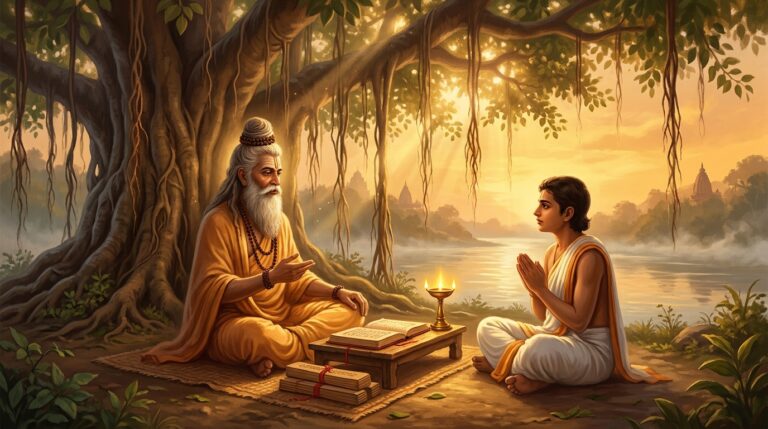
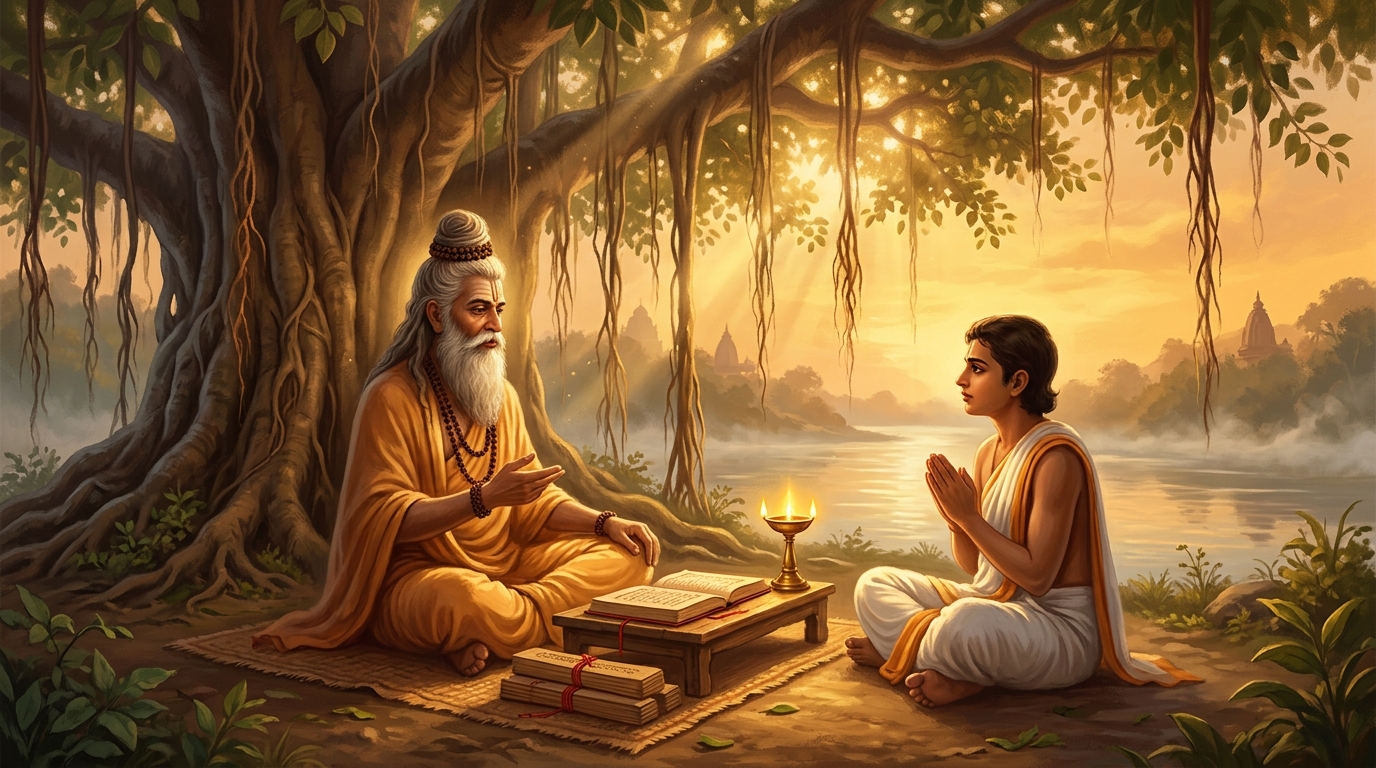
In Shikshavalli, as students graduate from the guru’s ashram into adult life, the teacher delivers unforgettable parting counsel: Speak the truth (Satyam Vada), walk in righteousness (Dharmam Chara), never neglect study or health, honor your mother, father, teacher, and guest as expressions of the Divine (Matri Devo Bhava, Pitri Devo Bhava, Acharya Devo Bhava, Atithi Devo Bhava), and give with humility and joy.
In Brahmanandavalli and Bhriguvalli, young Bhrigu discovers five progressively subtler layers of human existence: physical food-body (Annamaya), vital breath (Pranamaya), emotional mind (Manomaya), discerning intellect (Vijnanamaya), and serene inner bliss (Anandamaya)—concluding that joy (Ananda) sustains all creation.
Key Sanskrit Mantras, Mahavakyas & Meanings
Taittiriya Upanishad 1.11 — Convocation Ethics
सत्यं वद । धर्मं चर । स्वाध्यायान्मा प्रमदः । मातृदेवो भव । पितृदेवो भव । आचार्यदेवो भव । अतिथिदेवो भव ॥
Satyam vada | Dharmam cara | Svādhyāyān mā pramadaḥ | Mātṛ-devo bhava | Pitṛ-devo bhava | Ācārya-devo bhava | Atithi-devo bhava ||
Meaning: Speak the truth. Practice righteousness. Never neglect daily learning. Revere your mother as divine, your father as divine, your teacher as divine, and your guest as divine.
Timeless family and civic values spoken thousands of years ago remain crystal clear today.
Taittiriya Upanishad 2.7 — The Infinite Is Pure Joy
रसो वै सः । रसं ह्येवायं लब्ध्वाऽऽनन्दी भवति ।
Raso vai saḥ | Rasaṁ hy evāyaṁ labdhvā ’’nandī bhavati |
Meaning: Verily, the Supreme Reality is Pure Joy (Rasa); attaining that inner nectar alone makes any soul deeply blissful.
Spirituality isn’t grim—it awakens quiet, unshakable joy.
Practical Wisdom for Everyday Life
- Practice Gratitude at Home First: Honoring parents, mentors, and guests is daily spiritual worship.
- Nurture All Five Koshas: Wholesome food, deep breathing, calm thoughts, wise choices, and joyful gratitude work together.
- Give Generously with Cheer (Shraddhaya Deyam): Help others respectfully without arrogance.
Frequently Asked Questions
Where do ‘Satyam Vada Dharmam Chara’ and ‘Atithi Devo Bhava’ come from?
From Section 1.11 (Shikshavalli) of the Taittiriya Upanishad.
What are the Five Koshas (Pancha Kosha)?
Annamaya (physical), Pranamaya (vital breath), Manomaya (mind), Vijnanamaya (intellect/wisdom), and Anandamaya (bliss) sheaths.
Continue exploring the Upanishads: read Katha Upanishad (Nachiketa & Yama), Vedic Shanti Mantras, or our Complete Bhagavad Gita Guide.
To explore more Upanishadic wisdom, Vedanta dialogues, and sacred chants and timeless wisdom from Hindu scriptures, visit and subscribe to our official Vibes of Divinity YouTube channel.
Which insight from this Upanishad resonated with you most? Share your reflection in the comments below!