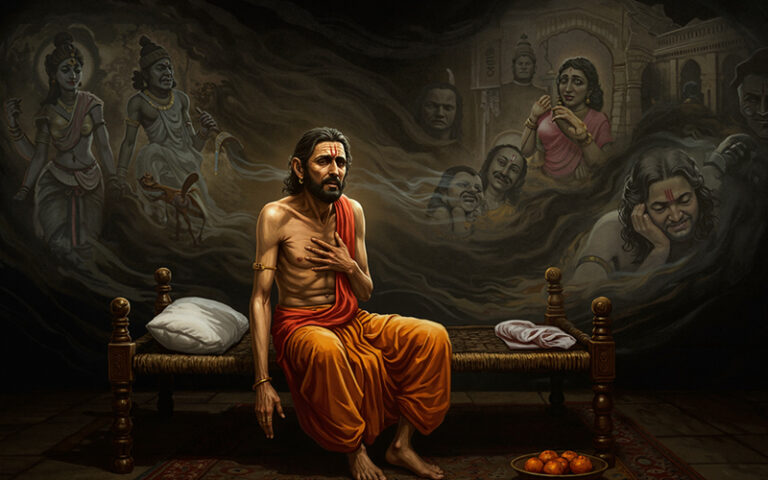

Welcome to Vibes of Divinity. Haunted by guilt over Kurukshetra’s bloodshed, King Yudhishthira begs to abandon the throne for the forest. In Shanti Parva—the longest and deepest philosophical book of the Mahabharata—Lord Krishna leads him back to Kurukshetra where dying Grandfather Bhishma delivers an extraordinary encyclopedia of dharma, governance, and inner liberation.
- Parva (Book): शान्तिपर्व (Shanti Parva — The Book of Peace & Wisdom)
- Series Index: Mahabharata Complete 18-Parva Guide
Narrative Summary & Key Events of Parva 12
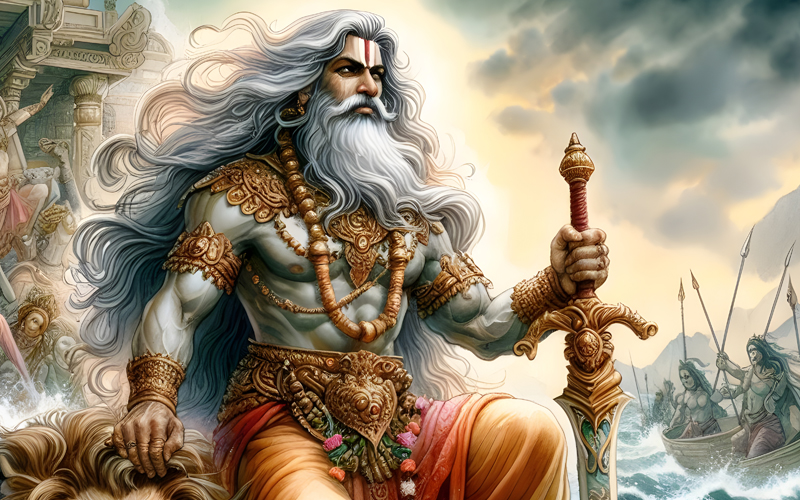
Lying serenely upon his bed of arrows, Bhishma restores Yudhishthira’s spirit across three monumental discourses: Rajadharma (how an ethical ruler serves citizens like a mother protects her child), Apaddharma (how moral judgment adapts responsibly during crises), and Mokshadharma (how the soul transcends fear, greed, and rebirth).
Bhishma weaves unforgettable parables—including the loyal pigeon who gave his own life for a hungry hunter, the dialogue of sage Shuka seeking liberation, and how truthfulness, non-violence, and self-restraint form the bedrock of civilization (explore Bhishma’s Teachings).
Healed in conscience, Yudhishthira accepts the crown not for luxury, but as selfless service to rebuild a wounded society.
Key Sanskrit Shlokas & Meanings
Shanti Parva — Ahimsa & Truthfulness as Supreme Dharma
अहिंसा सत्यवचनं सर्वभूतेषु चार्जवम् । क्षमा चैवाप्रमादश्च यस्यैते स सुखी भवेत् ॥
Ahiṁsā satya-vacanaṁ sarva-bhūteṣu cārjavam | Kṣamā caivāpramādaś ca yasyaite sa sukhī bhavet ||
Meaning: Harmlessness toward all creatures, truthful speech, sincerity toward everyone, forgiveness, and mindful alertness—whoever cultivates these lives in lasting peace.
Bhishma distills complex statecraft and philosophy into everyday kindness and honesty.
Shanti Parva — Self-Mastery Outshines Worldly Conquest
सन्तोषः परमो लाभः सत्सङ्गः परमा गतिः ।
Santoṣaḥ paramo lābhaḥ sat-saṅgaḥ paramā gatiḥ |
Meaning: Contentment is the highest wealth, and wise company (Satsang) is the surest path upward.
Even a king owning the world stays poor without contentment.
Timeless Lessons for Modern Life
- Leadership Means Public Service: Authority exists to protect the weak, never to indulge royal vanity.
- Guilt Should Lead to Responsibility, Not Escapism: Yudhishthira healed his sorrow by serving citizens justly.
- Seek Wisdom Across Perspectives: Shanti Parva unites practical economics, psychology, and spiritual freedom.
Frequently Asked Questions
What are the three main sections of Shanti Parva?
Rajadharma (duties of leadership), Apaddharma (conduct in crisis), and Mokshadharma (the path to spiritual liberation).
Who taught Yudhishthira throughout Shanti Parva?
Grandfather Bhishma, encouraged and blessed by Lord Krishna while resting on his bed of arrows.
Continue Your Mahabharata Journey
← Previous: Parva 11 | All 18 Mahabharata Parvas | Next: Parva 13 →
To explore more Mahabharata untold stories, Bhishma’s wisdom, and Gita teachings and timeless wisdom from Hindu scriptures, visit and subscribe to our official Vibes of Divinity YouTube channel.
Which moment from this Parva speaks to you most? Share your reflection in the comments below!