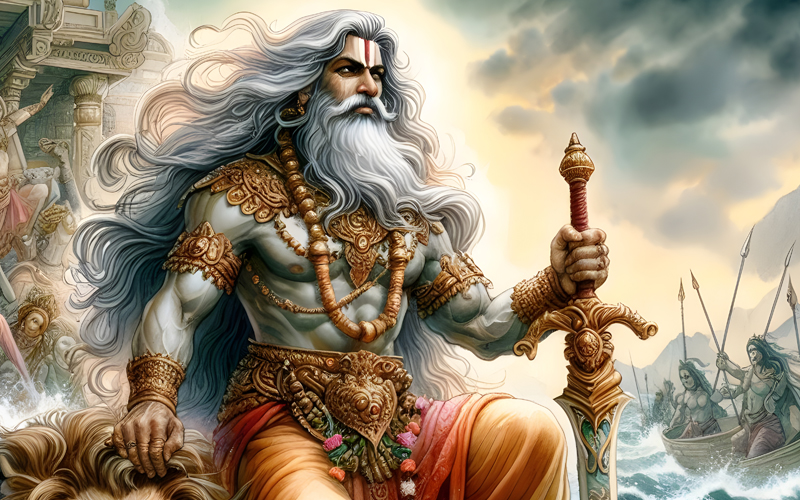

Welcome to Vibes of Divinity. Continuing Bhishma’s final days beside the Pandavas and Lord Krishna, Anushasana Parva (‘The Book of Precepts’) preserves two of Hinduism’s greatest devotional treasures—the Vishnu Sahasranama and Bhishma Stuti—closing with Grandfather Bhishma’s peaceful, radiant departure.
- Parva (Book): अनुशासनपर्व (Anushasana Parva — Book of Final Precepts)
- Series Index: Mahabharata Complete 18-Parva Guide
Narrative Summary & Key Events of Parva 13
Yudhishthira asks Bhishma: ‘Who is the one Supreme Lord worthy of refuge? Whom should humanity praise to overcome all sorrow?’ Pointing lovingly toward Lord Krishna standing right before them, Bhishma recites the thousand sacred names of Lord Vishnu—the immortal Vishnu Sahasranama chanted in millions of homes to this day.
Bhishma also shares heartfelt instructions on generosity (Dana), gratitude, honoring elders and guests, and non-cruelty toward animals—reminding everyone that kindness given freely returns manifold.
At last, as the Sun turns northward into auspicious Uttarayana (Bhishma Ekadashi / Magha Shukla Ashtami), Bhishma bids farewell to his family, focuses his breath and eyes wholly upon Lord Krishna, and merges peacefully into the Supreme Spirit.
Key Sanskrit Shlokas & Meanings
Anushasana Parva — Beginning of Vishnu Sahasranama
विश्वं विष्णुर्वषट्कारो भूतभव्यभवत्प्रभुः । भूतकृद्भूतभृद्भावो भूतात्मा भूतभावनः ॥
Viśvaṁ viṣṇur vaṣaṭkāro bhūta-bhavya-bhavat-prabhuḥ | Bhūta-kṛd bhūta-bhṛd bhāvo bhūtātmā bhūta-bhāvanaḥ ||
Meaning: He who is the Universe itself, All-Pervading Vishnu, the Lord of past, present, and future, Creator, Sustainer, and Indwelling Soul of all beings.
Bhishma’s dying gift to the world wasn’t military tactics—it was a sacred garland of divine names for everyday peace.
Anushasana Parva — Ahimsa Paramo Dharmah
अहिंसा परमो धर्मस्तथाहिंसा परं तपः । अहिंसा परमं सत्यं यतो धर्मः प्रवर्तते ॥
Ahiṁsā paramo dharmas tathāhiṁsā paraṁ tapaḥ | Ahiṁsā paramaṁ satyaṁ yato dharmaḥ pravartate ||
Meaning: Non-violence (compassion) is the highest Dharma; non-violence is the supreme austerity; non-violence is the highest truth from which all righteousness flows.
Chanted by Bhishma right in Anushasana Parva—defining the gentle ethical soul of Sanatana Dharma.
Timeless Lessons for Modern Life
- Leave a Legacy of Love & Wisdom: Bhishma’s greatest gift in his final days was the Vishnu Sahasranama.
- Practice Compassion (Ahimsa) Daily: Gentle speech and harmlessness elevate every ritual.
- Remember the Divine at Life’s End: Bhishma waited patiently for Uttarayana with eyes fixed on Krishna.
Frequently Asked Questions
Where does the Vishnu Sahasranama originate?
It is recited by Grandfather Bhishma to Yudhishthira in Chapter 149 (135 in critical edition) of Anushasana Parva.
What does ‘Uttarayana’ mean for Bhishma’s passing?
Uttarayana marks the Sun’s northward journey after winter solstice—traditionally considered deeply auspicious for conscious departure.
Continue Your Mahabharata Journey
← Previous: Parva 12 | All 18 Mahabharata Parvas | Next: Parva 14 →
To explore more Mahabharata untold stories, Bhishma’s wisdom, and Gita teachings and timeless wisdom from Hindu scriptures, visit and subscribe to our official Vibes of Divinity YouTube channel.
Which moment from this Parva speaks to you most? Share your reflection in the comments below!