Physical Address
Empirical System, 105 First Floor Pitru Krupa, Opp. R.K. Desai College, Koparli Road, Vapi (Gujarat) 396 191
Physical Address
Empirical System, 105 First Floor Pitru Krupa, Opp. R.K. Desai College, Koparli Road, Vapi (Gujarat) 396 191

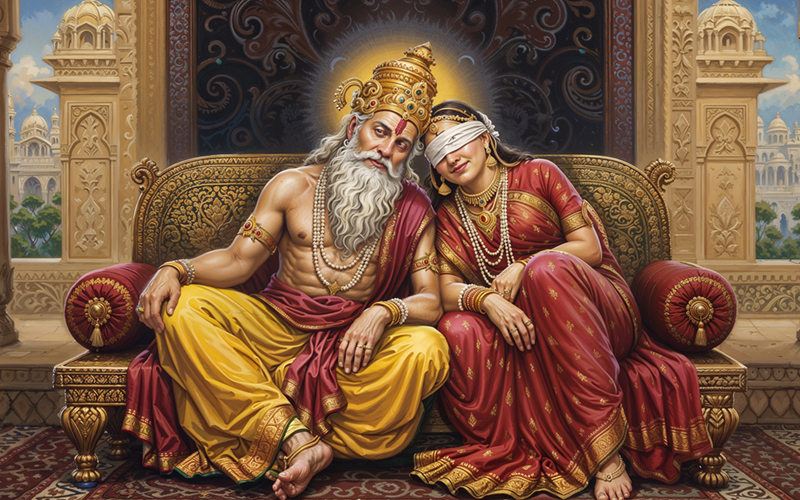
The great war of Kurukshetra was over. The dust had settled on the battlefield, but the scars of loss ran deep in the hearts of the victors and the vanquished alike. In the grand palace of Hastinapura, a new era began under the righteous rule of the Pandavas. But what became of the blind old king, Dhritarashtra, the man whose paternal love had inadvertently fueled the flames of war?
This is the profound and poignant story from the Ashramavasika Parva of the Mahabharata—a tale of grief, forgiveness, and a king’s final journey toward renunciation.
For fifteen years after the war, the Pandavas ruled with Dhritarashtra as the revered head of the royal household. Yudhishthira, the embodiment of Dharma, ensured that his uncle and aunt, Gandhari, were treated with the utmost respect and surrounded by every comfort. He sought their counsel, honored their wishes, and commanded his brothers to ensure they never felt the sting of further grief.
Kunti, Draupadi, and all the Pandava women served the elderly couple with selfless devotion. The sage Vyasa often visited, narrating tales of ancient wisdom to soothe their sorrowful hearts. Dhritarashtra, in turn, performed rituals and made generous donations, with Yudhishthir’s full support, to honor the souls of his fallen sons.
The Pandavas’ humility and unwavering dedication slowly began to heal the old king’s heart. He came to love them as his own. However, one wound refused to heal—the simmering resentment of Bhima.
While Bhima outwardly obeyed his elder brother’s command, his heart could not forget the humiliation of the dice game or the suffering of Draupadi. One day, within earshot of Dhritarashtra and Gandhari, he declared loudly:
“These mighty arms of mine—strong as iron maces—sent all the sons of the blind king to Yamaloka! These are the same arms that vanquished Duryodhana and his kin!”
His words were like arrows, piercing the fragile peace that had been so carefully built. While the wise Gandhari understood the nature of loss, Dhritarashtra was devastated, his grief renewed and his spirit crushed.
Unable to bear his sorrow any longer, Dhritarashtra finally confessed the true depth of his suffering. He admitted that his blind love for Duryodhana had led the entire Kuru dynasty to ruin. He lamented ignoring the warnings of Vidura, Bhishma, Drona, and even Lord Krishna himself.
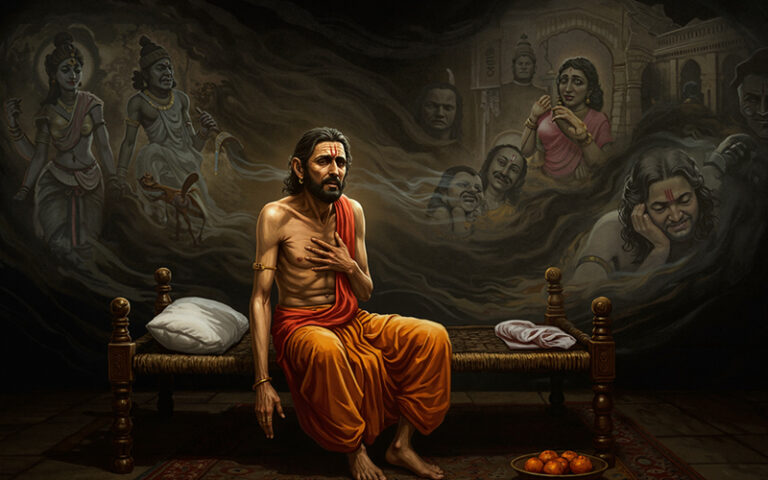
But his most heartbreaking revelation was a secret he had kept for fifteen years. While he appeared to live in royal comfort, he had been secretly practicing severe austerities. Clad in deerskin and sleeping on a bed of kusa grass, he survived on a mere morsel of food, his life a silent penance for his past failures. Only Gandhari knew his secret.
He revealed this to Yudhishthira, expressing his wish to now renounce the world entirely and retire to the forest as a hermit (vanaprastha).
The emotional turmoil of Dhritarashtra, Bhima’s unresolved anger, and Yudhishthira’s unwavering Dharma create a powerful human drama. To truly experience the depth of these final years, we have brought this moving story to life on our YouTube channel, Vibes of Divinity.
Witness the clash of grief and forgiveness in this untold chapter of the Mahabharata.
[Click here to watch: What Happened to Dhritarashtra After the Mahabharat War?]
Don’t forget to like, subscribe, and hit the notification bell to continue your journey into the heart of divine stories with us!
Yudhishthira was shattered by this revelation. Overcome with guilt, he offered to give up the kingdom and follow his uncle into the forest. But Dhritarashtra, guided by the wisdom of Sage Vyasa, remained firm. It was his time to walk the path of renunciation.
Before leaving, the old king offered Yudhishthira profound counsel on the art of kingship—on justice, espionage, treasury management, and the welfare of his subjects. He spoke of the importance of surrounding oneself with wise ministers, protecting the kingdom’s secrets, and ruling with a balance of strength and compassion.
His final words were not of a bitter, defeated man, but of a wise elder passing on the torch of Dharma.
As a final act before his departure, Dhritarashtra wished to perform a grand Shraddha (ritual for the departed) for all the fallen warriors. Bhima, still resentful, objected to using the royal treasury for this purpose. But Arjuna and Yudhishthira overruled him, reminding him that true nobility lies in rising above past grievances.
A magnificent ten-day ceremony was held. Dhritarashtra, with the full backing of the Pandavas, gave away immense wealth in charity—gold, gems, land, cattle, and more. He freed himself from the debt of his departed kin and prepared for his final journey.
On the auspicious day of Kartik Purnima, Dhritarashtra and Gandhari, clad in bark and deerskin, bid a tearful farewell to their family and their people. They walked out of the palace gates, leaving behind a world of power and pain, to seek peace in the solitude of the forest. Their journey was a powerful reminder that even for kings, the ultimate path is one of detachment and spiritual liberation.
This story is a profound exploration of human emotions and spiritual duty. It teaches us:
This tale reminds us that true strength lies not in wealth or power, but in the capacity to forgive, serve selflessly, and embrace the path of Dharma with a compassionate heart.
What does this story teach you about forgiveness and the difficulty of letting go of past hurts? Share your thoughts in the comments below!