
Welcome to Vibes of Divinity. Sabha Parva captures the dazzling height of Pandava prosperity—followed swiftly by one of the darkest moral betrayals in ancient literature: the rigged game of dice in Hastinapura’s royal court.
- Parva (Book): सभापर्व (Sabha Parva — The Book of the Assembly Hall)
- Series Index: Mahabharata Complete 18-Parva Guide
Narrative Summary & Key Events of Parva 2
After Krishna and Bhima defeat tyrannical King Jarasandha (read the full story), Yudhishthira performs the grand Rajasuya Yajna inside the Maya-built Assembly Hall of Indraprastha. Humiliated when he mistakes crystal floors for water—and consumed by envy of Pandava splendor—Duryodhana plots with his uncle Shakuni.
Bound by rigid royal etiquette, Yudhishthira accepts Shakuni’s rigged dice invitation, losing kingdom, wealth, brothers, himself, and finally staking Queen Draupadi. Dragged violently into the assembly hall, Draupadi poses a piercing ethical question to silent elders: how can a king who already lost himself gamble away his wife? (Read Draupadi’s Anguish.)
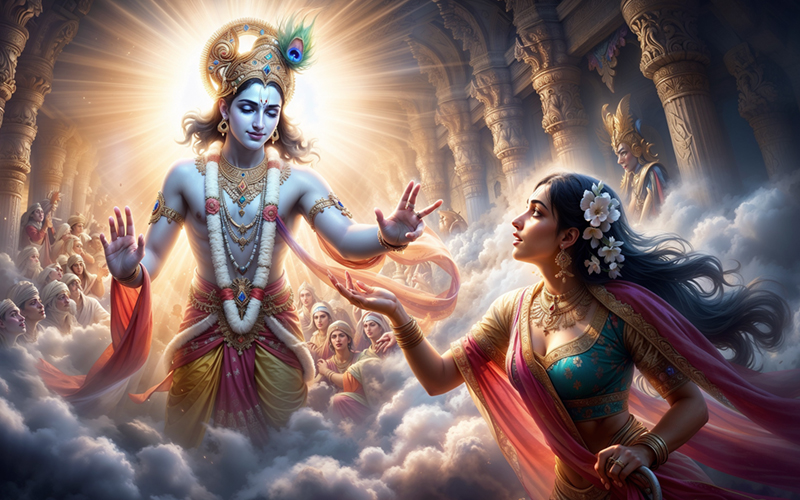
When Dushasana tries to disrobe her while elders hang their heads, Draupadi lets go of relying on mortal kings and lifts both hands in surrender to Lord Krishna—who miraculously supplies endless yards of sacred cloth. A second rigged match sends the Pandavas into twelve years of forest exile plus one year incognito.
Key Sanskrit Shlokas & Meanings
Sabha Parva — Dhritarashtra’s Elders Warn Against Pride
यदा यदा हि मन्युः स्यात्तदा तदा शमं भजेत् ।
Dharmo rakṣati rakṣitaḥ — satyaṁ na hīyate kvacit |
Meaning: Dharma protects those who uphold Dharma; silence before injustice wounds every witness in the hall.
Sabha Parva exposes the tragedy of good people staying silent when power bullies the vulnerable.
Sabha Parva — Draupadi’s Cry of Pure Surrender
गोविन्द द्वारकावासिन् कृष्ण गोपीजनप्रिय । कौरवैः परिभूतां मां किं न जानासि केशव ॥
Govinda dvārakā-vāsin kṛṣṇa gopījana-priya | Kauravaiḥ paribhūtāṁ māṁ kiṁ na jānāsi keśava ||
Meaning: O Govinda, dweller of Dwarka, Krishna, beloved of the devotees—do You not see me humiliated here by the Kauravas, O Keshava?
The instant Draupadi stopped clutching her garment by her own fragile strength and surrendered wholly to Krishna, grace intervened.
Timeless Lessons for Modern Life
- Never Gamble with Integrity or Loved Ones: Addiction, false pride, and peer pressure trap even noble minds.
- Silence Enables Cruelty: Bhishma and Drona’s hesitation in the Sabha taught posterity why speaking up early matters.
- Surrender Unlocks Grace: Draupadi’s prayer in helplessness remains a timeless symbol of divine protection.
Frequently Asked Questions
Why did Yudhishthira accept the dice game in Sabha Parva?
Out of misplaced Kshatriya custom that a king should not refuse a formal challenge—combined with Shakuni’s deceit.
What punishment followed the second dice game?
Twelve years of forest exile (Vanavas) followed by one year living completely undetected (Agyatavas).
Continue Your Mahabharata Journey
← Previous: Parva 1 | All 18 Mahabharata Parvas | Next: Parva 3 →
To explore more Mahabharata untold stories, Bhishma’s wisdom, and Gita teachings and timeless wisdom from Hindu scriptures, visit and subscribe to our official Vibes of Divinity YouTube channel.
Which moment from this Parva speaks to you most? Share your reflection in the comments below!