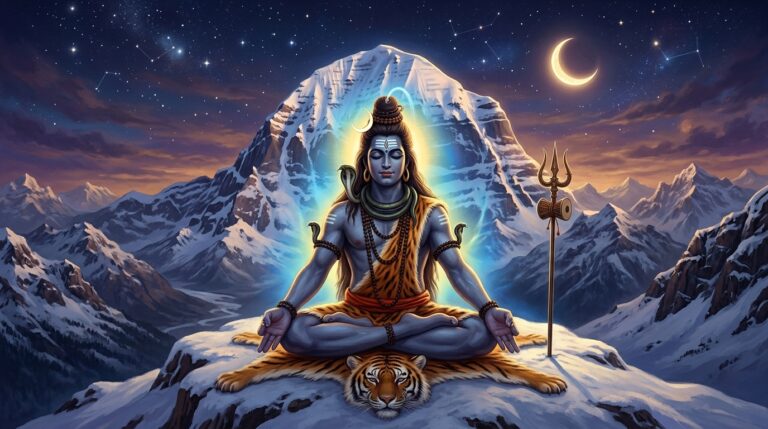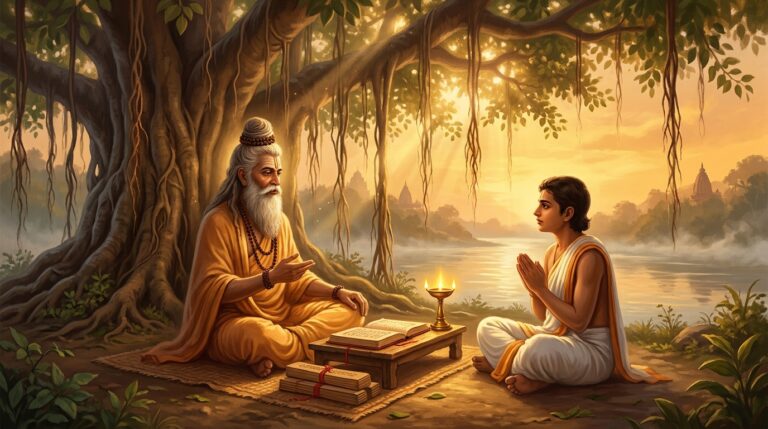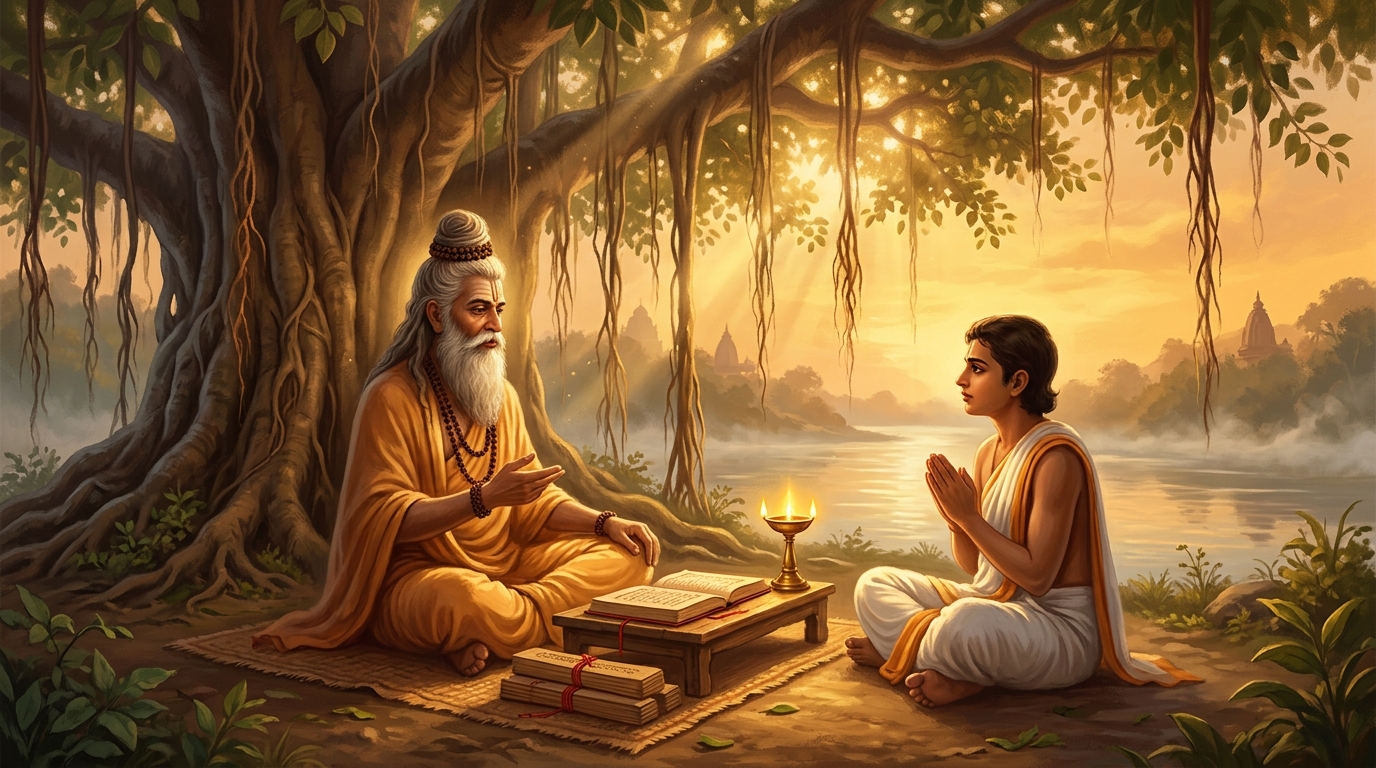

Welcome to Vibes of Divinity. Below is the complete text of the Kena Upanishad across all four Khandas from the Samaveda—featuring every verse in clean Devanagari Sanskrit, Roman IAST transliteration, and clear English translation, including the famous dialogue of Agni, Vayu, Indra, and Goddess Uma Haimavati.
- Total Mantras Included: All 24 original Sanskrit mantras complete with IAST transliteration & English translation
- Series Index: All 12 Principal Upanishads (Divine Wisdom Hub)
Opening Shanti Mantra (Peace Invocation)
ॐ आप्यायन्तु ममाङ्गानि वाक्प्राणश्चक्षुः श्रोत्रमथो बलमिन्द्रियाणि च सर्वाणि । सर्वं ब्रह्मोपनिषदं माहं ब्रह्म निराकुर्यां मा मा ब्रह्म निराकरोत् ॥ ॐ शान्तिः शान्तिः शान्तिः ॥
Oṁ āpyāyantu mamāṅgāni vāk prāṇaś cakṣuḥ śrotram atho balam indriyāṇi ca sarvāṇi | Sarvaṁ brahmopaniṣadaṁ māhaṁ brahma nirākuryāṁ mā mā brahma nirākarot || Oṁ Śāntiḥ Śāntiḥ Śāntiḥ ||
Meaning: May my limbs, speech, breath, sight, hearing, strength, and all senses grow luminous and strong. All is Brahman taught in the Upanishads; may I never deny Truth, nor Truth forsake me. Om Peace, Peace, Peace.
Complete Verse-by-Verse Text (24 Mantras)
Khanda 1.1
ॐ केनेषितं पतति प्रेषितं मनः केन प्राणः प्रथमः प्रैति युक्तः । केनेषितां वाचमिमां वदन्ति चक्षुः श्रोत्रं क उ देवो युनक्ति ॥
Oṁ keneṣitaṁ patati preṣitaṁ manaḥ kena prāṇaḥ prathamaḥ praiti yuktaḥ | Keneṣitāṁ vācam imāṁ vadanti cakṣuḥ śrotraṁ ka u devo yunakti ||
Meaning: By whom impelled does the mind fly toward its objects? Directed by whom does the first vital breath move? By whom is this speech spoken, and what luminous power directs the eye and the ear?
Khanda 1.2
श्रोत्रस्य श्रोत्रं मनसो मनो यद्वाचो ह वाचं स उ प्राणस्य प्राणः । चक्षुषश्चक्षुरतिमुच्य धीराः प्रेत्यास्माल्लोकादमृता भवन्ति ॥
Śrotrasya śrotraṁ manaso mano yad vāco ha vācaṁ sa u prāṇasya prāṇaḥ | Cakṣuṣaś cakṣur atimucya dhīrāḥ pretyāsmāl lokād amṛtā bhavanti ||
Meaning: It is the Ear of the ear, the Mind of the mind, the Speech of speech, the Life-breath of breath, and the Eye of the eye. Realizing this and releasing selfish identification, the wise transcend limitation and attain immortality.
Khanda 1.3
न तत्र चक्षुर्गच्छति न वाग्गच्छति नो मनो न विद्मो न विजानीमो यथैतदनुशिष्यात् ॥
Na tatra cakṣur gacchati na vāg gacchati no mano na vidmo na vijānīmo yathaitad anuśiṣyāt ||
Meaning: There the physical eye cannot reach, nor speech, nor ordinary thought. We cannot objectify It or teach It like an external object.
Khanda 1.4
अन्यदेव तद्विदितादथो अविदितादधि । इति शुश्रुम पूर्वेषां ये नस्तद्व्याचचक्षिरे ॥
Anyad eva tad viditād atho aviditād adhi | Iti śuśruma pūrveṣāṁ ye nas tad vyācacakṣire ||
Meaning: It is distinct from all known objects, and yet beyond the unknown too—so we have heard from the ancient sages who instructed us.
Khanda 1.5
यद्वाचाऽनभ्युदितं येन वागभ्युद्यते । तदेव ब्रह्म त्वं विद्धि नेदं यदिदमुपासते ॥
Yad vācā ’nabhyuditaṁ yena vāg abhyudyate | Tad eva brahma tvaṁ viddhi nedaṁ yad idam upāsate ||
Meaning: That which cannot be spoken by speech, yet by which speech itself is uttered—know That alone to be Brahman, not the limited external objects people idolize.
Khanda 1.6
यन्मनसा न मनुते येनाहुर्मनो मतम् । तदेव ब्रह्म त्वं विद्धि नेदं यदिदमुपासते ॥
Yan manasā na manute yenāhur mano matam | Tad eva brahma tvaṁ viddhi nedaṁ yad idam upāsate ||
Meaning: That which cannot be grasped as an object by the mind, yet by which the mind itself thinks—know That alone to be Brahman, not limited external projections.
Khanda 1.7
यच्चक्षुषा न पश्यति येन चक्षूंषि पश्यति । तदेव ब्रह्म त्वं विद्धि नेदं यदिदमुपासते ॥
Yac cakṣuṣā na paśyati yena cakṣūṁṣi paśyati | Tad eva brahma tvaṁ viddhi nedaṁ yad idam upāsate ||
Meaning: That which cannot be seen by the eye, yet by which the eyes themselves see—know That alone to be Brahman.
Khanda 1.8
यच्छ्रोत्रेण न शृणोति येन श्रोत्रमिदं श्रुतम् । तदेव ब्रह्म त्वं विद्धि नेदं यदिदमुपासते ॥
Yac chrotreṇa na śṛṇoti yena śrotram idaṁ śrutam | Tad eva brahma tvaṁ viddhi nedaṁ yad idam upāsate ||
Meaning: That which cannot be heard by the ear, yet by which hearing itself occurs—know That alone to be Brahman.
Khanda 1.9
यत्प्राणेन न प्राणिति येन प्राणः प्रणीयते । तदेव ब्रह्म त्वं विद्धि नेदं यदिदमुपासते ॥
Yat prāṇena na prāṇiti yena prāṇaḥ praṇīyate | Tad eva brahma tvaṁ viddhi nedaṁ yad idam upāsate ||
Meaning: That which is not driven by breath, yet by which vital breath itself is sustained—know That alone to be Brahman.
Khanda 2.1
यदि मन्यसे सुवेदेति दहरमेवापि नूनं त्वं वेत्थ ब्रह्मणो रूपम् । यदस्य त्वं यदस्य देवेष्वथ नु मीमांस्यमेव ते मन्ये विदितम् ॥
Yadi manyase suvedeti daharam evāpi nūnaṁ tvaṁ vettha brahmaṇo rūpam | Yad asya tvaṁ yad asya deveṣv atha nu mīmāṁsyam eva te manye viditam ||
Meaning: Teacher: If you imagine ‘I know Brahman well,’ you know only a tiny fragment. Reflect still more deeply on how It shines in you and in cosmic powers.
Khanda 2.2
नाहं मन्ये सुवेदेति नो न वेदेति वेद च । यो नस्तद्वेद तद्वेद नो न वेदेति वेद च ॥
Nāhaṁ manye suvedeti no na vedeti veda ca | Yo nas tad veda tad veda no na vedeti veda ca ||
Meaning: Disciple: I do not claim ‘I know It completely,’ yet neither do I say ‘I know It not’—whoever among us grasps ‘I neither fully objectify It nor am ignorant of It’ truly understands.
Khanda 2.3
यस्यामतं तस्य मतं मतं यस्य न वेद सः । अविज्ञातं विजानतां विज्ञातमविजानताम् ॥
Yasyāmataṁ tasya mataṁ mataṁ yasya na veda saḥ | Avijñātaṁ vijānatāṁ vijñātam avijānatām ||
Meaning: To whom Brahman is not an object of prideful thought, to them It is truly known; whoever boasts ‘I have captured It in thought’ knows It not. Unknown to the proud intellect, It shines clearly to the humble.
Khanda 2.4
प्रतिबोधविदितं मतममृतत्वं हि विन्दते । आत्मना विन्दते वीर्यं विद्यया विन्दतेऽमृतम् ॥
Pratibodha-viditaṁ matam amṛtatvaṁ hi vindate | Ātmanā vindate vīryaṁ vidyayā vindate ’mṛtam ||
Meaning: Known as the silent witness shining through every single perception (Pratibodha), It bestows immortality. Through one’s own Self one finds strength; through spiritual wisdom one attains immortality.
Khanda 2.5
इह चेदवेदीदथ सत्यमस्ति न चेदिहावेदीन्महती विनष्टिः । भूतेषु भूतेषु विचित्य धीराः प्रेत्यास्माल्लोकादमृता भवन्ति ॥
Iha ced avedīd atha satyam asti na ced ihāvedīn mahatī vinaṣṭiḥ | Bhūteṣu bhūteṣu vicitya dhīrāḥ pretyāsmāl lokād amṛtā bhavanti ||
Meaning: If one realizes Truth here in this life, fulfillment is won; if not, great is the loss. Discerning that same Presence in every being, the wise attain immortality.
Khanda 3.1
ब्रह्म ह देवेभ्यो विजिग्ये तस्य ह ब्रह्मणो विजये देवा अमहीयन्त । त ऐक्षन्तास्माकमेवायं विजयोऽस्माकमेवायं महिमेति ॥
Brahma ha devebhyo vijigye tasya ha brahmaṇo vijaye devā amahīyanta | Ta aikṣantāsmākam evāyaṁ vijayo ’smākam evāyaṁ mahimeti ||
Meaning: Once Brahman won a great victory for the gods; yet in that victory, the gods boasted: ‘This victory is ours alone, this glory is ours!’
Khanda 3.2
तद्धैषां विजज्ञौ तेभ्यो ह प्रादुर्बभूव तन्न व्यजानत किमिदं यक्षमिति ॥
Tad dhaiṣāṁ vijajñau tebhyo ha prādur babhūva tan na vyajānata kim idaṁ yakṣam iti ||
Meaning: Seeing their vanity, Brahman appeared before them as a wondrous, radiant Spirit (Yaksha); baffled, they knew not what luminous Being stood before them.
Khanda 3.3–3.6 — Agni Tested
तेऽग्निमब्रुवन् जातवेद एतद्विजानीहि किमेतद्यक्षमिति तथेति । … तस्मै तृणं निदधावेतद्दहेति तदुपप्रेयाय सर्वजवेन तन्न शशाक दग्धुम् ॥
Te ’gnim abruvan jātaveda etad vijānīhi kim etad yakṣam iti tatheti | … Tasmai tṛṇaṁ nidadhāv etad daheti tad upapreyāya sarva-javena tan na śaśāka dagdhum ||
Meaning: The gods sent Agni (Fire) to investigate. Asked who he was, Agni boasted, ‘I can burn everything on earth!’ The Spirit placed a single dry blade of grass before him: ‘Burn this.’ Agni rushed with all his fury—yet could not burn it, and returned humbled.
Khanda 3.7–3.10 — Vayu Tested
अथ वायुमब्रुवन् वायवेतद्विजानीहि … तस्मै तृणं निदधावेतदादत्स्वेति तदुपप्रेयाय सर्वजवेन तन्न शशाकादातुम् ॥
Atha vāyum abruvan vāyav etad vijānīhi … Tasmai tṛṇaṁ nidadhāv etad ādatsveti tad upapreyāya sarva-javena tan na śaśākādātum ||
Meaning: Next they sent Vayu (Wind), who boasted, ‘I can blow away anything on earth!’ The Spirit placed the same blade of grass before him; Vayu charged with hurricane force—yet could not budge it a hair’s breadth, and returned humbled.
Khanda 3.11–3.12 — Indra Meets Goddess Uma
अथेन्द्रमब्रुवन् मघवन्नेतद्विजानीहि … स तस्मिन्नेवाकाशे स्त्रियमाजगाम बहुशोभमानामुमां हैमवतीं तां होवाच किमेतद्यक्षमिति ॥
Athendram abruvan maghavann etad vijānīhi … Sa tasminn evākāśe striyam ājagāma bahu-śobhamānām umāṁ haimavatīṁ tāṁ hovāca kim etad yakṣam iti ||
Meaning: Then Indra approached respectfully; the Yaksha vanished, and in that very sky appeared radiant Goddess Uma Haimavati (Parvati). Indra asked humbly, ‘Who was that wondrous Spirit?’
Khanda 4.1
सा ब्रह्मेति होवाच ब्रह्मणो वा एतद्विजये महीयध्वमिति ततो हैव विदाञ्चकार ब्रह्मेति ॥
Sā brahmeti hovāca brahmaṇo vā etad vijaye mahīyadhvam iti tato haiva vidāñ cakāra brahmeti ||
Meaning: She replied: ‘It was Brahman! Through Brahman’s victory alone did you attain glory.’ From Uma’s words, Indra realized the Supreme Truth.
Khanda 4.2–4.3
तस्माद्वा एते देवा अतिरामिवान्यान्देवान् यदग्निर्वायुरिन्द्रस्ते ह्येनन्नेदिष्ठं पस्पृशुस्ते ह्येनत्प्रथमो विदाञ्चकार ब्रह्मेति ॥
Tasmād vā ete devā atirām ivānyān devān yad agnir vāyur indras te hy enan nediṣṭhaṁ paspṛśus te hy enat prathamo vidāñ cakāra brahmeti ||
Meaning: Therefore Agni, Vayu, and Indra stand foremost among the gods—for they came closest to Brahman, and Indra first learned the truth from Uma.
Khanda 4.4–4.5
तस्यैष आदेशो यदेतद्विद्युतो व्यद्युतदा ३ इतीन् व्यमीमिषदा ३ इत्यधिदैवतम् । अथाध्यात्मं यदेतद्गच्छतीव च मनोऽनेन चैतदुपस्मरत्यभीक्ष्णं सङ्कल्पः ॥
Tasyaiṣa ādeśo yad etad vidyuto vyadyutad ā itīn nyamīmiṣad ā ity adhidaivatam | Athādhyātmaṁ yad etad gacchatīva ca mano ’nena caitad upasmaraty abhīkṣṇaṁ saṅkalpaḥ ||
Meaning: In nature, Brahman flashes like a sudden bolt of lightning or the blink of an eye; within the heart, It is the swift spark of awareness by which mind remembers and wills.
Khanda 4.6–4.7
तद्ध तद्वनं नाम तद्वनमित्युपासितव्यं स य एतदेवं वेद अभि हैनं सर्वाणि भूतानि संवाञ्छन्ति । उपनिषदं भो ब्रूहीत्युक्ता त उपनिषद् ब्राह्मीं वाव त उपनिषदमब्रूमेति ॥
Tad dha tadvanaṁ nāma tadvanam ity upāsitavyaṁ sa ya etad evaṁ veda abhi hainaṁ sarvāṇi bhūtāni saṁvāñchanti | Upaniṣadaṁ bho brūhīty uktā ta upaniṣad brāhmīṁ vāva ta upaniṣadam abrūmeti ||
Meaning: That Reality is called Tadvana (‘Adorable Goal of all beings’); meditate upon It as Tadvana, and all beings cherish you with goodwill. ‘Master, teach me the Upanishad!’ ‘We have just imparted to you the sacred wisdom of Brahman.’
Khanda 4.8–4.9
तस्यै तपो दमः कर्मेति प्रतिष्ठा वेदाः सर्वाङ्गानि सत्यमायतनम् । यो वा एतामेवं वेदापहत्य पाप्मानमनन्ते स्वर्गे लोके ज्येये प्रतितिष्ठति प्रतितिष्ठति ॥
Tasyai tapo damaḥ karmeti pratiṣṭhā vedāḥ sarvāṅgāni satyam āyatanam | Yo vā etām evaṁ vedāpahatya pāpmānam anante svarge loke jyeye pratitiṣṭhati pratitiṣṭhati ||
Meaning: Its firm foundation is self-discipline (Tapas), sense-restraint (Dama), and selfless action (Karma); the Vedas are its limbs, and Truth (Satya) is its dwelling place. Whoever realizes this shakes off impurity and stands established in boundless, supreme peace.
Key Life Lessons from This Upanishad
- Seek the Witness Behind Thought (Khanda 1): Consciousness isn’t a physical object—it is the quiet light enabling every perception.
- Drop Ego & Vanity (Khandas 2–3): Even Agni and Vayu couldn’t move a blade of grass without Divine power.
- Build Character as Foundation (Khanda 4.8): Discipline, self-restraint, selfless action, and truthfulness anchor spiritual realization.
Explore more complete scriptures: Bhagavad Gita Guide | All 12 Principal Upanishads.
To explore more Upanishadic wisdom, complete Sanskrit chants, and spiritual storytelling and timeless wisdom from Hindu scriptures, visit and subscribe to our official Vibes of Divinity YouTube channel.