
Welcome to Vibes of Divinity. Known as the King of Knowledge and the King of Secrets, Bhagavad Gita Chapter 9 (Raja Vidya Raja Guhya Yoga) reveals one of the most tender truths in spiritual literature: the Supreme Lord is equally present in all beings, yet responds with extraordinary intimacy to pure, unpretentious love.
- Chapter Name: राजविद्याराजगुह्ययोग (Raja Vidya Raja Guhya Yoga)
- Section: Section 2: Divine Knowledge & Devotion (Chapters 7–12)
- Complete Text Included: All 34 Sanskrit shlokas with IAST transliteration & English translation
- Series Index: Bhagavad Gita Complete Guide (All 18 Chapters & 701 Shlokas)
Chapter 9 Summary & Context on Kurukshetra
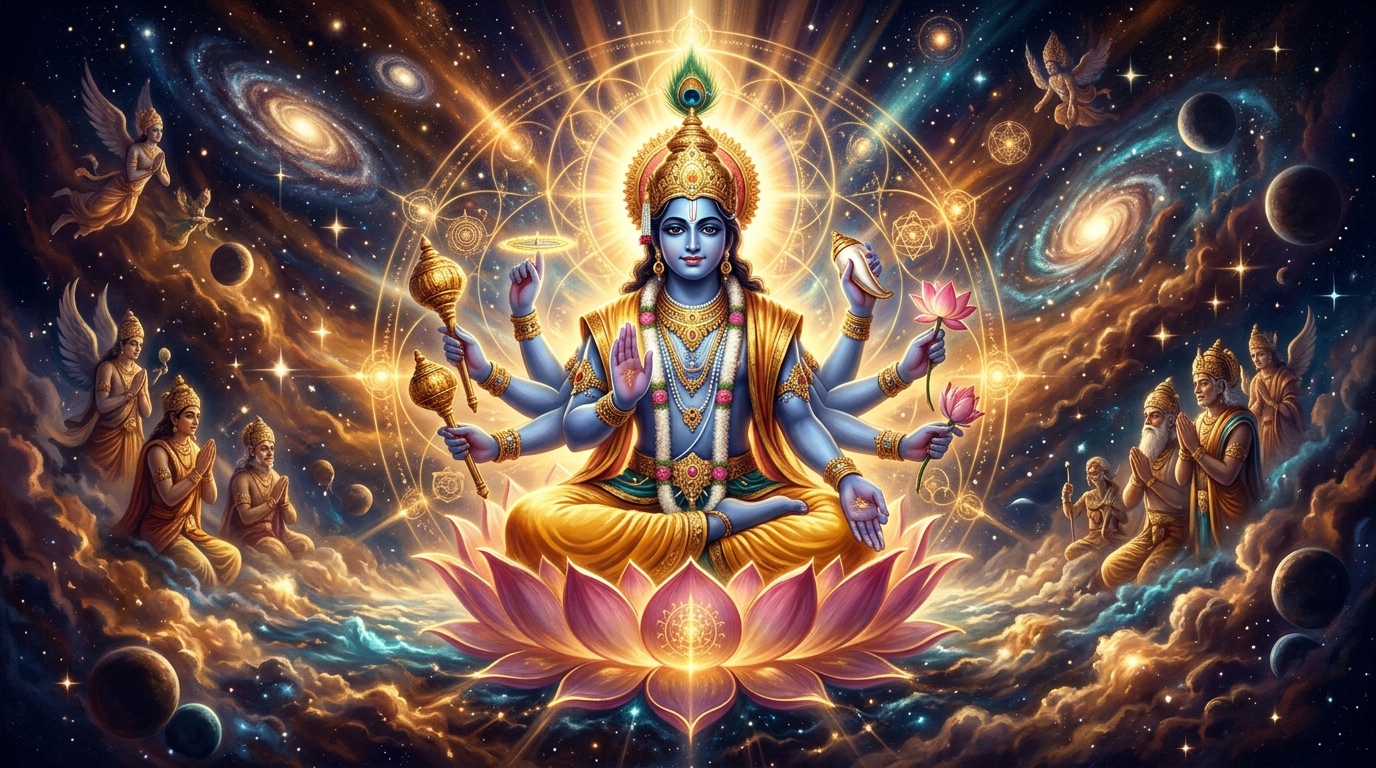
Krishna explains how He pervades the entire cosmos in unmanifest form—all beings rest in Him, yet He remains untouched and independent, like wind moving freely within vast space.
He then delivers two of the most beloved promises of devotion. First, in 9.22, Krishna vows to personally carry what His steady devotees lack and preserve what they already possess (Yoga-Kshema). Second, in 9.26, He declares that God does not require wealth or grand rituals—even a humble leaf, a flower, a fruit, or water offered with pure devotion is lovingly accepted.
Regardless of past mistakes or background, anyone who turns wholeheartedly toward truth and dharma is swiftly transformed and carried to lasting peace.
Highlighted Shlokas & Spiritual Reflections (Chapter 9)
Shloka 9.22 — The Promise of Divine Care (Yoga-Kshema)
अनन्याश्चिन्तयन्तो मां ये जनाः पर्युपासते । तेषां नित्याभियुक्तानां योगक्षेमं वहाम्यहम् ॥
Ananyāś cintayanto māṁ ye janāḥ paryupāsate | Teṣāṁ nityābhiyuktānāṁ yoga-kṣemaṁ vahāmy aham ||
Meaning: To those who worship Me exclusively with steady, single-minded devotion, I personally provide what they lack and preserve what they have.
When we place sincere faith in the Divine, unnecessary fear about survival and security gives way to quiet trust.
Shloka 9.26 — Simple Offerings of Pure Love
पत्रं पुष्पं फलं तोयं यो मे भक्त्या प्रयच्छति । तदहं भक्त्युपहृतमश्नामि प्रयतात्मनः ॥
Patraṁ puṣpaṁ phalaṁ toyaṁ yo me bhaktyā prayacchati | Tad ahaṁ bhakty-upahṛtam aśnāmi prayatātmanaḥ ||
Meaning: Whoever offers Me with devotion a leaf, a flower, a fruit, or water—that offering of love from a pure heart I gladly accept.
Sincerity matters far more than extravagance. A quiet prayer from a humble heart outweighs expensive displays.
Shloka 9.27 — Making Everything an Offering
यत्करोषि यदश्नासि यज्जुहोषि ददासि यत् । यत्तपस्यसि कौन्तेय तत्कुरुष्व मदर्पणम् ॥
Yat karoṣi yad aśnāsi yaj juhoṣi dadāsi yat | Yat tapasyasi kaunteya tat kuruṣva mad-arpaṇam ||
Meaning: Whatever you do, whatever you eat, whatever you offer or give away, and whatever austerity you perform, O Arjuna, do that as an offering unto Me.
Turn daily meals, kindness, and honest labor into sacred worship through conscious gratitude.
Complete Verse-by-Verse Bhagavad Gita Chapter 9 (All 34 Shlokas)
Read all 34 original Sanskrit verses of Chapter 9 below with Roman IAST transliteration and clear English meaning:
Verse 9.1
श्रीभगवानुवाच |
इदं तु ते गुह्यतमं प्रवक्ष्याम्यनसूयवे |
ज्ञानं विज्ञानसहितं यज्ज्ञात्वा मोक्ष्यसेऽशुभात् ||९-१||
śrībhagavānuvāca .
idaṃ tu te guhyatamaṃ pravakṣyāmyanasūyave .
jñānaṃ vijñānasahitaṃ yajjñātvā mokṣyase.aśubhāt ||9-1||
Meaning: Lord Shri Krishna said: I will now reveal to thee, since thou doubtest not, that profound mysticism, which when followed by experience, shall liberate thee from sin.
Verse 9.2
राजविद्या राजगुह्यं पवित्रमिदमुत्तमम् |
प्रत्यक्षावगमं धर्म्यं सुसुखं कर्तुमव्ययम् ||९-२||
rājavidyā rājaguhyaṃ pavitramidamuttamam .
pratyakṣāvagamaṃ dharmyaṃ susukhaṃ kartumavyayam ||9-2||
Meaning: This is the Premier Science, the Sovereign Secret, the Purest and Best; intuitional, righteous; and to him who practiseth it pleasant beyond measure.
Verse 9.3
अश्रद्दधानाः पुरुषा धर्मस्यास्य परन्तप |
अप्राप्य मां निवर्तन्ते मृत्युसंसारवर्त्मनि ||९-३||
aśraddadhānāḥ puruṣā dharmasyāsya parantapa .
aprāpya māṃ nivartante mṛtyusaṃsāravartmani ||9-3||
Meaning: They who have no faith in this teaching cannot find Me, but remain lost in the purlieus of this perishable world.
Verse 9.4
मया ततमिदं सर्वं जगदव्यक्तमूर्तिना |
मत्स्थानि सर्वभूतानि न चाहं तेष्ववस्थितः ||९-४||
mayā tatamidaṃ sarvaṃ jagadavyaktamūrtinā .
matsthāni sarvabhūtāni na cāhaṃ teṣvavasthitaḥ ||9-4||
Meaning: The whole world is pervaded by Me, yet My form is not seen. All living things have their being in Me, yet I am not limited by them.
Verse 9.5
न च मत्स्थानि भूतानि पश्य मे योगमैश्वरम् |
भूतभृन्न च भूतस्थो ममात्मा भूतभावनः ||९-५||
na ca matsthāni bhūtāni paśya me yogamaiśvaram .
bhūtabhṛnna ca bhūtastho mamātmā bhūtabhāvanaḥ ||9-5||
Meaning: Nevertheless, they do not consciously abide in Me. Such is My Divine Sovereignty that though I, the Supreme Self, am the cause and upholder of all, yet I remain outside.
Verse 9.6
यथाकाशस्थितो नित्यं वायुः सर्वत्रगो महान् |
तथा सर्वाणि भूतानि मत्स्थानीत्युपधारय ||९-६||
yathākāśasthito nityaṃ vāyuḥ sarvatrago mahān .
tathā sarvāṇi bhūtāni matsthānītyupadhāraya ||9-6||
Meaning: As the mighty wind, though moving everywhere, has no resting place but space, so have all these beings no home but Me.
Verse 9.7
सर्वभूतानि कौन्तेय प्रकृतिं यान्ति मामिकाम् |
कल्पक्षये पुनस्तानि कल्पादौ विसृजाम्यहम् ||९-७||
sarvabhūtāni kaunteya prakṛtiṃ yānti māmikām .
kalpakṣaye punastāni kalpādau visṛjāmyaham ||9-7||
Meaning: All beings, O Arjuna, return at the close of every cosmic cycle into the realm of Nature, which is a part of Me, and at the beginning of the next I send them forth again.
Verse 9.8
प्रकृतिं स्वामवष्टभ्य विसृजामि पुनः पुनः |
भूतग्राममिमं कृत्स्नमवशं प्रकृतेर्वशात् ||९-८||
prakṛtiṃ svāmavaṣṭabhya visṛjāmi punaḥ punaḥ .
bhūtagrāmamimaṃ kṛtsnamavaśaṃ prakṛtervaśāt ||9-8||
Meaning: With the help of Nature, again and again I pour forth the whole multitude of beings, whether they will or no, for they are ruled by My Will.
Verse 9.9
न च मां तानि कर्माणि निबध्नन्ति धनञ्जय |
उदासीनवदासीनमसक्तं तेषु कर्मसु ||९-९||
na ca māṃ tāni karmāṇi nibadhnanti dhanañjaya .
udāsīnavadāsīnamasaktaṃ teṣu karmasu ||9-9||
Meaning: But these acts of mine do not bind Me. I remain outside and unattached.
Verse 9.10
मयाध्यक्षेण प्रकृतिः सूयते सचराचरम् |
हेतुनानेन कौन्तेय जगद्विपरिवर्तते ||९-१०||
mayādhyakṣeṇa prakṛtiḥ sūyate sacarācaram .
hetunānena kaunteya jagadviparivartate ||9-10||
Meaning: Under my guidance, Nature produces all things movable and immovable. Thus it is, O Arjuna, that this universe revolves.
Verse 9.11
अवजानन्ति मां मूढा मानुषीं तनुमाश्रितम् |
परं भावमजानन्तो मम भूतमहेश्वरम् ||९-११||
avajānanti māṃ mūḍhā mānuṣīṃ tanumāśritam .
paraṃ bhāvamajānanto mama bhūtamaheśvaram ||9-11||
Meaning: Fools disregard Me, seeing Me clad in human form. They know not that in My higher nature I am the Lord-God of all.
Verse 9.12
मोघाशा मोघकर्माणो मोघज्ञाना विचेतसः |
राक्षसीमासुरीं चैव प्रकृतिं मोहिनीं श्रिताः ||९-१२||
moghāśā moghakarmāṇo moghajñānā vicetasaḥ .
rākṣasīmāsurīṃ caiva prakṛtiṃ mohinīṃ śritāḥ ||9-12||
Meaning: Their hopes are vain, their actions worthless, their knowledge futile; they are without sense, deceitful, barbarous and godless.
Verse 9.13
महात्मानस्तु मां पार्थ दैवीं प्रकृतिमाश्रिताः |
भजन्त्यनन्यमनसो ज्ञात्वा भूतादिमव्ययम् ||९-१३||
mahātmānastu māṃ pārtha daivīṃ prakṛtimāśritāḥ .
bhajantyananyamanaso jñātvā bhūtādimavyayam ||9-13||
Meaning: But the Great Souls, O Arjuna! Filled with My Divine Spirit, they worship Me, they fix their minds on Me and on Me alone, for they know that I am the imperishable Source of being.
Verse 9.14
सततं कीर्तयन्तो मां यतन्तश्च दृढव्रताः |
नमस्यन्तश्च मां भक्त्या नित्ययुक्ता उपासते ||९-१४||
satataṃ kīrtayanto māṃ yatantaśca dṛḍhavratāḥ .
namasyantaśca māṃ bhaktyā nityayuktā upāsate ||9-14||
Meaning: Always extolling Me, strenuous, firm in their vows, prostrating themselves before Me, they worship Me continually with concentrated devotion.
Verse 9.15
ज्ञानयज्ञेन चाप्यन्ये यजन्तो मामुपासते |
एकत्वेन पृथक्त्वेन बहुधा विश्वतोमुखम् ||९-१५||
jñānayajñena cāpyanye yajanto māmupāsate .
ekatvena pṛthaktvena bahudhā viśvatomukham ||9-15||
Meaning: Others worship Me with full consciousness as the One, the Manifold, the Omnipresent, the Universal.
Verse 9.16
अहं क्रतुरहं यज्ञः स्वधाहमहमौषधम् |
मन्त्रोऽहमहमेवाज्यमहमग्निरहं हुतम् ||९-१६||
ahaṃ kraturahaṃ yajñaḥ svadhāhamahamauṣadham .
mantro.ahamahamevājyamahamagnirahaṃ hutam ||9-16||
Meaning: I am the Oblation, the Sacrifice and the Worship; I am the Fuel and the Chant, I am the Butter offered to the fire, I am the Fire itself, and I am the Act of offering.
Verse 9.17
पिताहमस्य जगतो माता धाता पितामहः |
वेद्यं पवित्रमोंकार ऋक्साम यजुरेव च ||९-१७||
pitāhamasya jagato mātā dhātā pitāmahaḥ .
vedyaṃ pavitramoṃkāra ṛksāma yajureva ca ||9-17||
Meaning: I am the Father of the universe and its Mother; I am its Nourisher and its Grandfather; I am the Knowable and the Pure; I am Om; and I am the Sacred Scriptures.
Verse 9.18
गतिर्भर्ता प्रभुः साक्षी निवासः शरणं सुहृत् |
प्रभवः प्रलयः स्थानं निधानं बीजमव्ययम् ||९-१८||
gatirbhartā prabhuḥ sākṣī nivāsaḥ śaraṇaṃ suhṛt .
prabhavaḥ pralayaḥ sthānaṃ nidhānaṃ bījamavyayam ||9-18||
Meaning: I am the Goal, the Sustainer, the Lord, the Witness, the Home, the Shelter, the Lover and the Origin; I am Life and Death; I am the Fountain and the Seed Imperishable.
Verse 9.19
तपाम्यहमहं वर्षं निगृह्णाम्युत्सृजामि च |
अमृतं चैव मृत्युश्च सदसच्चाहमर्जुन ||९-१९||
tapāmyahamahaṃ varṣaṃ nigṛhṇāmyutsṛjāmi ca .
amṛtaṃ caiva mṛtyuśca sadasaccāhamarjuna ||9-19||
Meaning: I am the Heat of the Sun, I release and hold back the Rains. I am Death and Immortality; I am Being and Not-Being.
Verse 9.20
त्रैविद्या मां सोमपाः पूतपापा
यज्ञैरिष्ट्वा स्वर्गतिं प्रार्थयन्ते |
ते पुण्यमासाद्य सुरेन्द्रलोक-
मश्नन्ति दिव्यान्दिवि देवभोगान् ||९-२०||
traividyā māṃ somapāḥ pūtapāpā yajñairiṣṭvā svargatiṃ prārthayante .
te puṇyamāsādya surendralokaṃ aśnanti divyāndivi devabhogān ||9-20||
Meaning: Those who are versed in the scriptures, who drink the mystic Soma-juice and are purified from sin, but who while worshipping Me with sacrifices pray that I will lead them to heaven; they reach the holy world where lives the Controller of the Powers of Nature, and they enjoy the feasts of Paradise.
Verse 9.21
ते तं भुक्त्वा स्वर्गलोकं विशालं
क्षीणे पुण्ये मर्त्यलोकं विशन्ति |
एवं त्रयीधर्ममनुप्रपन्ना
गतागतं कामकामा लभन्ते ||९-२१||
te taṃ bhuktvā svargalokaṃ viśālaṃ kṣīṇe puṇye martyalokaṃ viśanti .
evaṃ trayīdharmamanuprapannā gatāgataṃ kāmakāmā labhante ||9-21||
Meaning: Yet although they enjoy the spacious glories of Paradise, nevertheless, when their merit is exhausted, they are born again into this world of mortals. They have followed the letter of the scriptures, yet because they have sought but to fulfill their own desires, they must depart and return again and again.
Verse 9.22
अनन्याश्चिन्तयन्तो मां ये जनाः पर्युपासते |
तेषां नित्याभियुक्तानां योगक्षेमं वहाम्यहम् ||९-२२||
ananyāścintayanto māṃ ye janāḥ paryupāsate .
teṣāṃ nityābhiyuktānāṃ yogakṣemaṃ vahāmyaham ||9-22||
Meaning: But if a man will meditate on Me and Me alone, and will worship Me always and everywhere, I will take upon Myself the fulfillment of his aspiration, and I will safeguard whatsoever he shall attain.
Verse 9.23
येऽप्यन्यदेवता भक्ता यजन्ते श्रद्धयान्विताः |
तेऽपि मामेव कौन्तेय यजन्त्यविधिपूर्वकम् ||९-२३||
ye.apyanyadevatābhaktā yajante śraddhayānvitāḥ .
te.api māmeva kaunteya yajantyavidhipūrvakam ||9-23||
Meaning: Even those who worship the lesser Powers, if they do so with faith, they thereby worship Me, though not in the right way.
Verse 9.24
अहं हि सर्वयज्ञानां भोक्ता च प्रभुरेव च |
न तु मामभिजानन्ति तत्त्वेनातश्च्यवन्ति ते ||९-२४||
ahaṃ hi sarvayajñānāṃ bhoktā ca prabhureva ca .
na tu māmabhijānanti tattvenātaścyavanti te ||9-24||
Meaning: I am the willing recipient of sacrifice, and I am its true Lord. But these do not know me in truth, and so they sink back.
Verse 9.25
यान्ति देवव्रता देवान्पितॄन्यान्ति पितृव्रताः |
भूतानि यान्ति भूतेज्या यान्ति मद्याजिनोऽपि माम् ||९-२५||
yānti devavratā devānpitṝnyānti pitṛvratāḥ .
bhūtāni yānti bhūtejyā yānti madyājino.api mām ||9-25||
Meaning: The votaries of the lesser Powers go to them; the devotees of spirits go to them; they who worship the Powers of Darkness, to such Powers shall they go; and so, too, those who worship Me shall come to Me.
Verse 9.26
पत्रं पुष्पं फलं तोयं यो मे भक्त्या प्रयच्छति |
तदहं भक्त्युपहृतमश्नामि प्रयतात्मनः ||९-२६||
patraṃ puṣpaṃ phalaṃ toyaṃ yo me bhaktyā prayacchati .
tadahaṃ bhaktyupahṛtamaśnāmi prayatātmanaḥ ||9-26||
Meaning: Whatever a man offers to Me, whether it be a leaf, or a flower, or fruit, or water, I accept it, for it is offered with devotion and purity of mind.
Verse 9.27
यत्करोषि यदश्नासि यज्जुहोषि ददासि यत् |
यत्तपस्यसि कौन्तेय तत्कुरुष्व मदर्पणम् ||९-२७||
yatkaroṣi yadaśnāsi yajjuhoṣi dadāsi yat .
yattapasyasi kaunteya tatkuruṣva madarpaṇam ||9-27||
Meaning: Whatever thou doest, whatever thou dost eat, whatever thou dost sacrifice and give, whatever austerities thou practisest, do all as an offering to Me.
Verse 9.28
शुभाशुभफलैरेवं मोक्ष्यसे कर्मबन्धनैः |
संन्यासयोगयुक्तात्मा विमुक्तो मामुपैष्यसि ||९-२८||
śubhāśubhaphalairevaṃ mokṣyase karmabandhanaiḥ .
saṃnyāsayogayuktātmā vimukto māmupaiṣyasi ||9-28||
Meaning: So shall thy action be attended by no result, either good or bad; but through the spirit of renunciation thou shalt come to Me and be free.
Verse 9.29
समोऽहं सर्वभूतेषु न मे द्वेष्योऽस्ति न प्रियः |
ये भजन्ति तु मां भक्त्या मयि ते तेषु चाप्यहम् ||९-२९||
samo.ahaṃ sarvabhūteṣu na me dveṣyo.asti na priyaḥ .
ye bhajanti tu māṃ bhaktyā mayi te teṣu cāpyaham ||9-29||
Meaning: I am the same to all beings. I favour none, and I hate none. But those who worship Me devotedly, they live in Me, and I in them.
Verse 9.30
अपि चेत्सुदुराचारो भजते मामनन्यभाक् |
साधुरेव स मन्तव्यः सम्यग्व्यवसितो हि सः ||९-३०||
api cetsudurācāro bhajate māmananyabhāk .
sādhureva sa mantavyaḥ samyagvyavasito hi saḥ ||9-30||
Meaning: Even the most sinful, if he worship Me with his whole heart, shalt be considered righteous, for he is treading the right path.
Verse 9.31
क्षिप्रं भवति धर्मात्मा शश्वच्छान्तिं निगच्छति |
कौन्तेय प्रतिजानीहि न मे भक्तः प्रणश्यति ||९-३१||
kṣipraṃ bhavati dharmātmā śaśvacchāntiṃ nigacchati .
kaunteya pratijānīhi na me bhaktaḥ praṇaśyati ||9-31||
Meaning: He shall attain spirituality ere long, and Eternal Peace shall be his. O Arjuna! Believe me, My devotee is never lost.
Verse 9.32
मां हि पार्थ व्यपाश्रित्य येऽपि स्युः पापयोनयः |
स्त्रियो वैश्यास्तथा शूद्रास्तेऽपि यान्ति परां गतिम् ||९-३२||
māṃ hi pārtha vyapāśritya ye.api syuḥ pāpayonayaḥ .
striyo vaiśyāstathā śūdrāste.api yānti parāṃ gatim ||9-32||
Meaning: For even the children of sinful parents, and those miscalled the weaker sex, and merchants, and labourers, if only they will make Me their refuge, they shall attain the Highest.
Verse 9.33
किं पुनर्ब्राह्मणाः पुण्या भक्ता राजर्षयस्तथा |
अनित्यमसुखं लोकमिमं प्राप्य भजस्व माम् ||९-३३||
kiṃ punarbrāhmaṇāḥ puṇyā bhaktā rājarṣayastathā .
anityamasukhaṃ lokamimaṃ prāpya bhajasva mām ||9-33||
Meaning: What need then to mention the holy Ministers of God, the devotees and the saintly rulers? Do thou, therefore, born in this changing and miserable world, do thou too worship Me.
Verse 9.34
मन्मना भव मद्भक्तो मद्याजी मां नमस्कुरु |
मामेवैष्यसि युक्त्वैवमात्मानं मत्परायणः ||९-३४||
manmanā bhava madbhakto madyājī māṃ namaskuru .
māmevaiṣyasi yuktvaivamātmānaṃ matparāyaṇaḥ ||9-34||
Meaning: Fix thy mind on Me, devote thyself to Me, sacrifice for Me, surrender to Me, make Me the object of thy aspirations, and thou shalt assuredly become one with Me, Who am thine own Self.
Timeless Life Lessons for Modern Seekers
- Simplicity Wins Over Show: God values genuine love far more than wealth, status, or elaborate rituals.
- Sanctify Everyday Habits: Dedicate ordinary acts—eating, giving, working—as quiet offerings of gratitude.
- No Past Disqualifies Sincere Change: Krishna affirms in 9.30–32 that anyone who turns toward righteousness with a sincere heart is welcomed.
- Trust Divine Provision: Let go of paralyzing worry while doing your honest part.
Frequently Asked Questions — Bhagavad Gita Chapter 9
Why is Chapter 9 called Raja Vidya Raja Guhya Yoga?
Raja Vidya means ‘King of Knowledge’ and Raja Guhya means ‘King of Secrets’—because it reveals the direct, joyous path of pure devotion accessible to everyone.
What does Patram Pushpam Phalam Toyam (9.26) teach?
It teaches that the Divine cares about the love behind an offering, not its material price—a single flower or glass of water offered sincerely is deeply cherished.
How many verses are in Gita Chapter 9?
Bhagavad Gita Chapter 9 contains 34 verses.
Continue Your Bhagavad Gita Journey
← Previous: Chapter 8 | All 18 Gita Chapters | Next: Chapter 10 →
To explore more Bhagavad Gita teachings, Puranic stories, and sacred chants and timeless wisdom from Hindu scriptures, visit and subscribe to our official Vibes of Divinity YouTube channel.
Which shloka from this chapter touches your heart most today? Share your reflection in the comments below.