
Welcome to Vibes of Divinity. After years of sorrow, Ashwamedhika Parva turns toward healing, restoration, and humility—featuring Krishna’s Anugita discourse and one of the Mahabharata’s most unforgettable parables about true charity: the Half-Golden Mongoose.
- Parva (Book): आश्वमेधिकपर्व (Ashwamedhika Parva — The Horse Sacrifice)
- Series Index: Mahabharata Complete 18-Parva Guide
Narrative Summary & Key Events of Parva 14
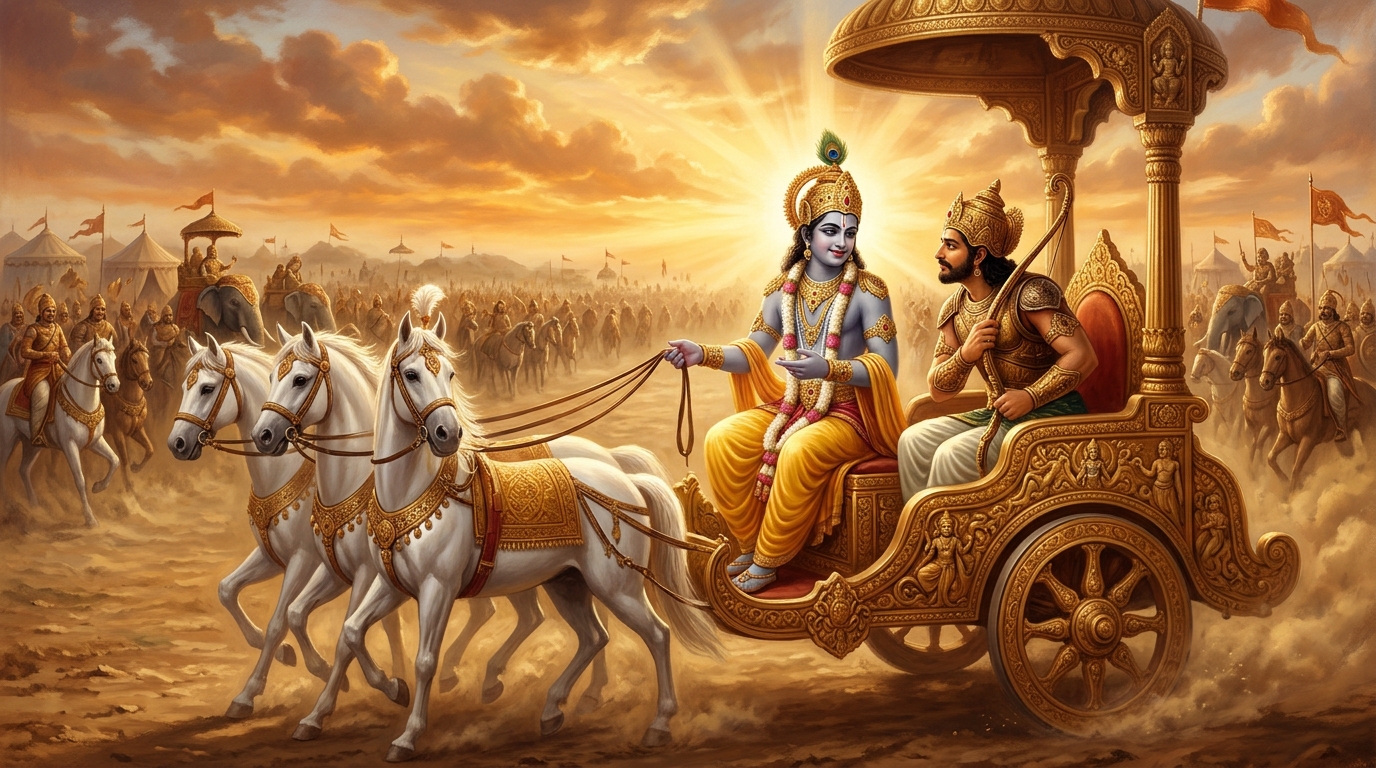
Before returning to Dwarka, Arjuna admits he forgot much of the Bhagavad Gita amid the chaos of war and asks Krishna to teach it again. Gently smiling, Krishna replies he cannot summon that exact cosmic yogic state on demand, yet imparts the illuminating Anugita (‘Follow-up Gita’) on inner mind-mastery and self-knowledge.
With Sage Vyasa’s guidance, Yudhishthira performs a grand Ashwamedha Yajna—preceded by Arjuna’s peaceful reconciliation tour across kingdoms (including his dramatic encounter with his son Babhruvahana in Manipura).
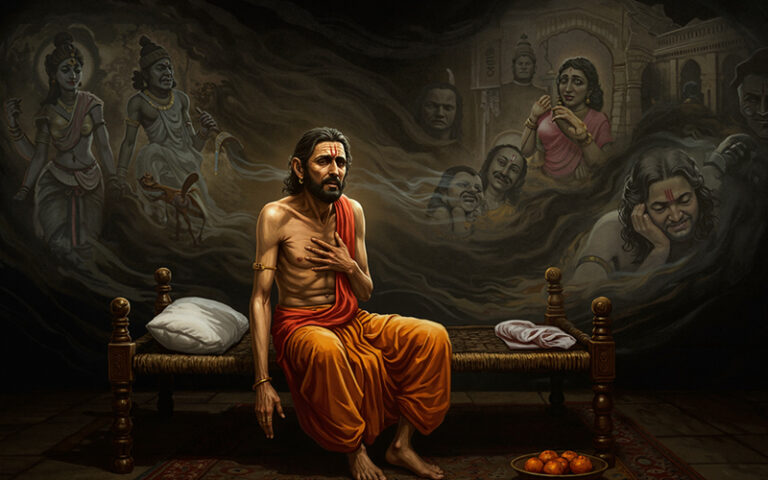
At the sacrifice’s glorious finale, as kings praise Yudhishthira’s lavish charity, a strange mongoose—half its body gleaming pure gold, the other half ordinary brown—rolls across the sacred floor and laughs: ‘This royal sacrifice isn’t worth a single handful of flour!’ He tells of a starving village family who joyfully gave away their last handful of barley flour to a hungry guest, turning half his fur gold—proving humble sacrifice outweighs royal showmanship.
Key Sanskrit Shlokas & Meanings
Ashwamedhika Parva — Humble Giving Outweighs Royal Display
दानं न तुल्यं भूतानां कदाचित्सक्तुमुष्टिना ।
Śraddhā-pūrvaṁ daridrasya dānaṁ śreṣṭhatamaṁ smṛtam |
Meaning: A tiny handful given with total selflessness out of genuine need outweighs mountains of wealth donated from surplus.
The half-golden mongoose humbles pride even inside a sacred Ashwamedha Yajna.
Anugita Echo — Mind Is the True Sanctuary
मन एव मनुष्याणां कारणं बन्धमोक्षयोः ।
Mana eva manuṣyāṇāṁ kāraṇaṁ bandha-mokṣayoḥ |
Meaning: The mind alone is the cause of human bondage or liberation—purified by wisdom, it frees the soul.
Central to Krishna’s Anugita reminder to Arjuna.
Timeless Lessons for Modern Life
- Measure Generosity by Heart, Not Headlines: Giving when it stretches you transforms the soul far more than spare change.
- Keep Reviewing Spiritual Truths: Like Arjuna forgetting parts of the Gita, we all need steady reminders.
- Stay Humble After Success: The mongoose’s visit kept Yudhishthira grounded amid royal applause.
Frequently Asked Questions
What is the Anugita in Ashwamedhika Parva?
The Anugita (Chapters 16–51) is Lord Krishna’s post-war spiritual reminder to Arjuna covering mind control, prana, and knowledge of the Self.
What does the half-golden mongoose story teach?
It teaches that sincere, sacrificial generosity from a poor family far outweighs ostentatious charity from vast royal surplus.
Continue Your Mahabharata Journey
← Previous: Parva 13 | All 18 Mahabharata Parvas | Next: Parva 15 →
To explore more Mahabharata untold stories, Bhishma’s wisdom, and Gita teachings and timeless wisdom from Hindu scriptures, visit and subscribe to our official Vibes of Divinity YouTube channel.
Which moment from this Parva speaks to you most? Share your reflection in the comments below!