
Namaste and welcome to Vibes of Divinity. Every monumental story plants its seeds in the opening chapter. Adi Parva—the first of the eighteen books (Parvas) of Maharishi Vyasa’s Mahabharata—spans generations, unveiling how a single royal oath, fierce pride, and unhealed jealousy set the stage for Kurukshetra.
- Parva (Book): आदिपर्व (Adi Parva — The Book of the Beginning)
- Series Index: Mahabharata Complete 18-Parva Guide
Narrative Summary & Key Events of Parva 1
Recited by Sage Vaishampayana at King Janamejaya’s snake sacrifice (Sarpa Satra), Adi Parva traces the Bharata lineage from King Dushyanta and Shakuntala (read Shakuntala’s story) down to King Shantanu, Goddess Ganga, and Devavrata—whose selfless celibacy vow earned him the immortal name Bhishma.
Through the tragic fates of Pandu and blind Dhritarashtra, the five Pandavas and hundred Kauravas grow up together in Hastinapura under Guru Dronacharya (read Eklavya’s story). Duryodhana’s envy erupts in the assassination plot at the Lakshagriha (House of Lac), forcing the Pandavas into hiding.
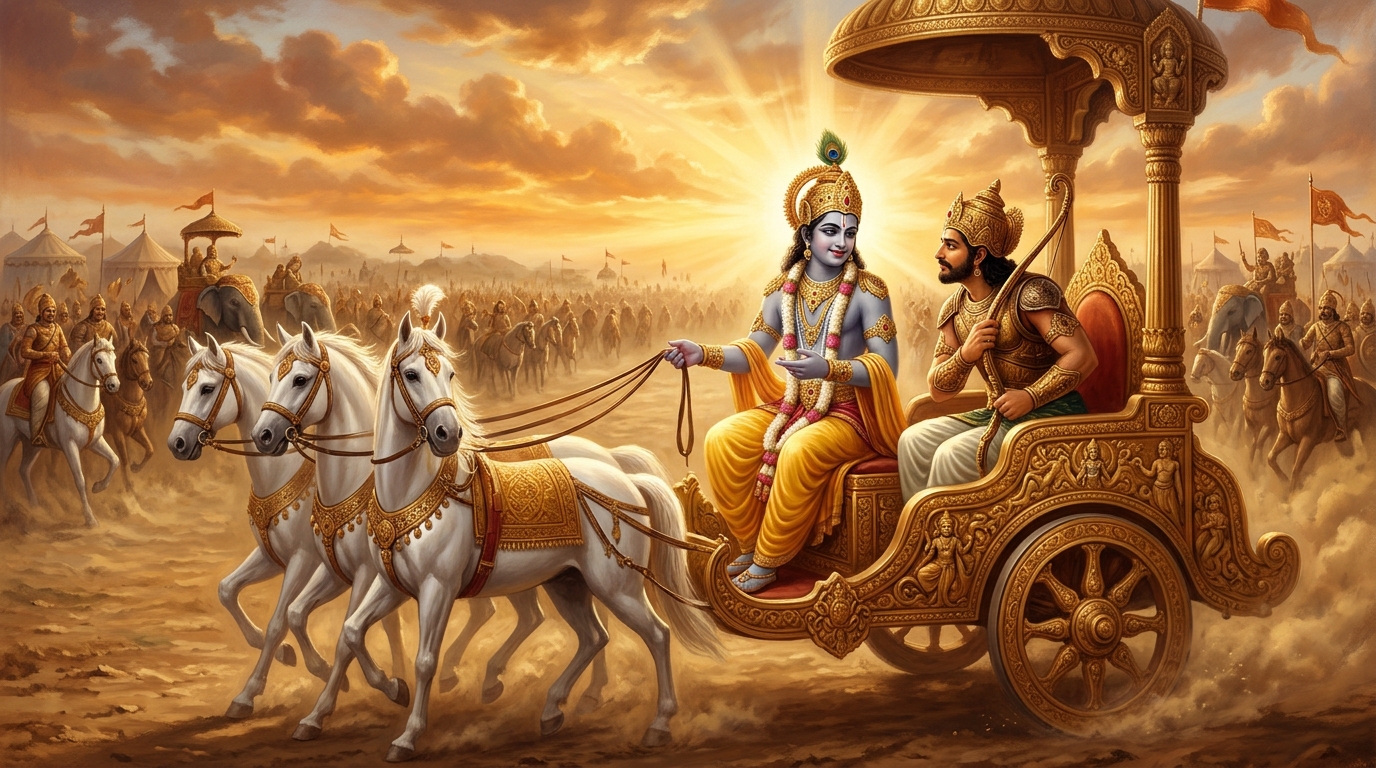
In disguise, Arjuna pierces the spinning fish-eye target to win Princess Draupadi’s hand, forging a powerful alliance with Panchala and Lord Krishna. Dhritarashtra reluctantly divides the kingdom, giving the Pandavas barren Khandavaprastha—which with Krishna’s blessing they transform into radiant Indraprastha.
Key Sanskrit Shlokas & Meanings
Adi Parva — The Unmatched Scope of the Mahabharata
धर्मे चार्थे च कामे च मोक्षे च भरतर्षभ । यदिहास्ति तदन्यत्र यन्नेहास्ति न तत्क्वचित् ॥
Dharme cārthe ca kāme ca mokṣe ca bharatarṣabha | Yad ihāsti tad anyatra yan nehāsti na tat kvacit ||
Meaning: Regarding righteousness (Dharma), prosperity (Artha), noble desire (Kama), and liberation (Moksha)—whatever is found in this Mahabharata exists elsewhere; what is not here is found nowhere else.
Adi Parva boldly declares that human psychology, ethics, and spiritual destiny are all mirrored within Vyasa’s epic.
Adi Parva — Shakuntala’s Teaching on Conscience
एकोऽहमस्मीति मन्यसे त्वं न हृच्छयं वेत्सि मुनिं पुराणम् ।
Eko ’ham asmīti manyase tvaṁ na hṛc-chayaṁ vetsi muniṁ purāṇam |
Meaning: You imagine you act in secret alone, forgetting the eternal Witness seated silently within your own heart.
Spoken by Shakuntala to King Dushyanta—reminding us that integrity holds even when no crowd is watching.
Timeless Lessons for Modern Life
- Unchecked Envy Poisons Generations: Duryodhana’s childhood jealousy grew into a catastrophe engulfing an entire civilization.
- Turn Barren Land into Indraprastha: Given unfair scraps, the Pandavas built greatness through courage and cooperation.
- Keep Integrity When Alone: Remember the inner witness inside every conscience.
Frequently Asked Questions
How many books are in the Mahabharata?
The Mahabharata is divided into 18 major Parvas, beginning with Adi Parva.
What major events happen in Adi Parva?
Ganga and Shantanu, Bhishma’s vow, Shakuntala, the birth of Pandavas and Kauravas, the House of Lac escape, Draupadi’s swayamvara, and the founding of Indraprastha.
Continue Your Mahabharata Journey
All 18 Mahabharata Parvas | Next: Parva 2 →
To explore more Mahabharata untold stories, Bhishma’s wisdom, and Gita teachings and timeless wisdom from Hindu scriptures, visit and subscribe to our official Vibes of Divinity YouTube channel.
Which moment from this Parva speaks to you most? Share your reflection in the comments below!