
Welcome to Vibes of Divinity. Is spiritual worth inherited by birth, or earned through integrity of character? Thousands of years ago, the Chandogya Upanishad answered that question with astonishing clarity through the unforgettable story of Satyakama Jabala.
The Story & Sacred Context
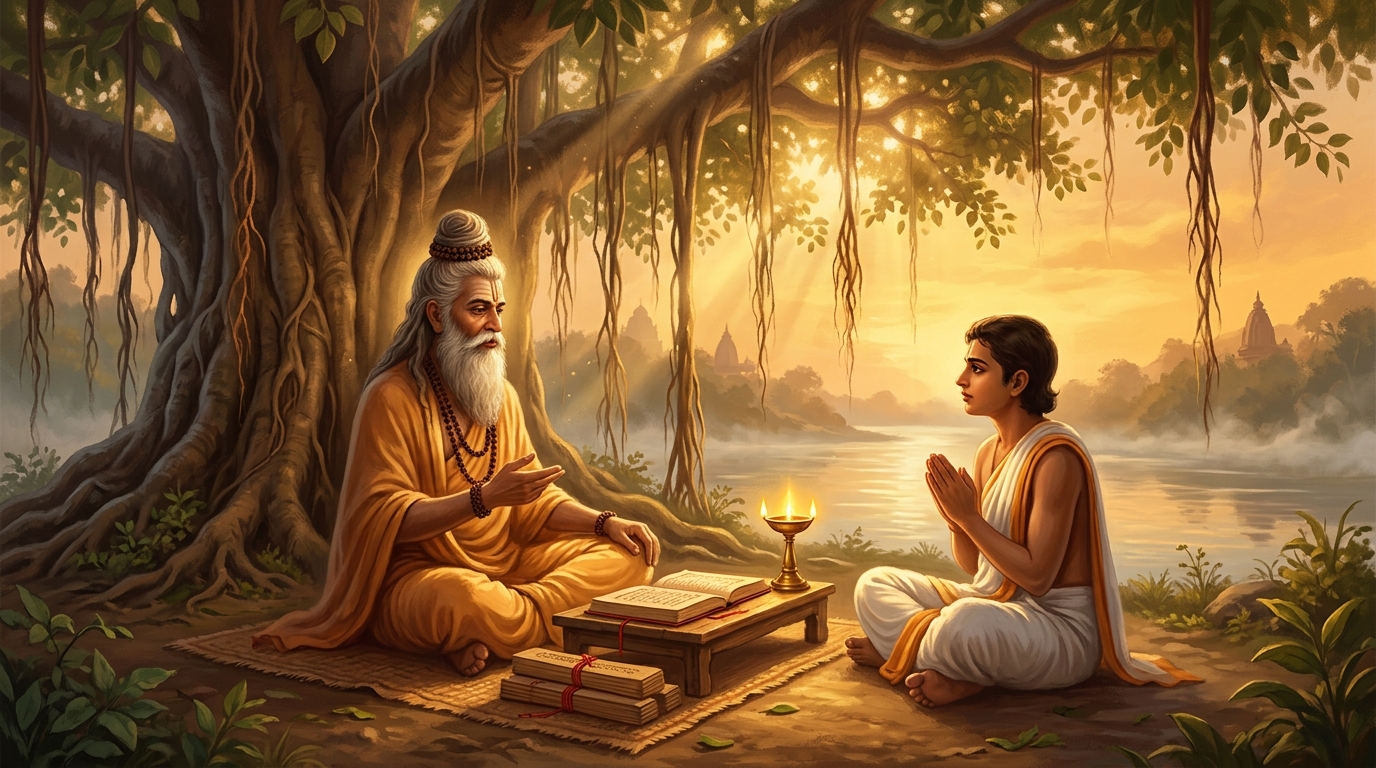
Young Satyakama felt a deep longing to study sacred Vedic wisdom. Before approaching the renowned teacher Sage Haridrumata Gautama, he asked his mother Jabala about his father’s lineage (gotra), knowing teachers routinely asked students for their family background.
With quiet dignity, Jabala told him the unvarnished truth: in her youth, while working tirelessly serving guests in many households, she had given birth to him and never knew his father’s lineage. ‘Tell your teacher simply: I am Satyakama, son of Jabala,’ she advised.
When Satyakama stood before Sage Gautama and was asked his lineage, he repeated his mother’s exact words openly before the assembled scholars without inventing a prestigious name or hiding in shame. Gautama’s eyes shone with admiration. ‘No one lacking true nobility could ever speak truth so fearlessly!’ he declared, accepting Satyakama on the spot as his disciple.
Gautama entrusted Satyakama with four hundred lean cattle to tend in the forest, promising not to return until they multiplied to a thousand. Living silently amidst sky, earth, fire, swans, and nature for years, Satyakama learned directly from the living universe itself—returning radiant with realized wisdom to become one of the greatest teachers of the Upanishads.
Sacred Sanskrit Verse & Meaning
Mundaka Upanishad 3.1.6 — Truth Alone Triumphs
सत्यमेव जयते नानृतं सत्येन पन्था विततो देवयानः ।
Satyam eva jayate nānṛtaṁ satyena panthā vitato devayānaḥ |
Meaning: Truth alone triumphs, never falsehood. By truth is laid out the luminous path leading to the Divine.
Satyakama’s very name—literally ‘Lover of Truth’—embodies India’s timeless national motto.
Key Spiritual Lessons for Daily Life
- Honesty Is the Highest Credential: Character and truthfulness open doors that pretentious ego never can.
- Nature Teaches the Pure Heart: Solitude, responsibility, and patience prepare the mind for deep insight.
- Never Feel Ashamed of Humble Origins: Dignity lies in how honestly you walk forward today.
Frequently Asked Questions
Which Upanishad tells Satyakama Jabala’s story?
His story appears in Chapter 4 (Sections 4–9) of the Chandogya Upanishad.
Why did Sage Gautama accept Satyakama immediately?
Because Satyakama’s fearless honesty proved he already possessed the true inner spirit of a seeker.
Explore more sacred wisdom across our Bhagavad Gita Guide, Valmiki Ramayana Series, and Mantras & Chants Library.
To explore more spiritual stories, sacred texts, and Vedic wisdom and timeless wisdom from Hindu scriptures, visit and subscribe to our official Vibes of Divinity YouTube channel.
What lesson from this story resonates most with your life today? Share your thoughts in the comments below!