
Welcome to Vibes of Divinity. Concluding the epic, Uttara Kanda moves beyond battlefield triumph into the complex weight of governance, personal sacrifice, and the eternal immortality of sacred storytelling through Rama and Sita’s twin sons, Lava and Kusha.
- Kanda (Book): उत्तरकाण्ड (Uttara Kanda — Epilogue & Legacy)
- Series Index: Valmiki Ramayana Complete 7-Kanda Guide
Narrative Summary of Kanda 7
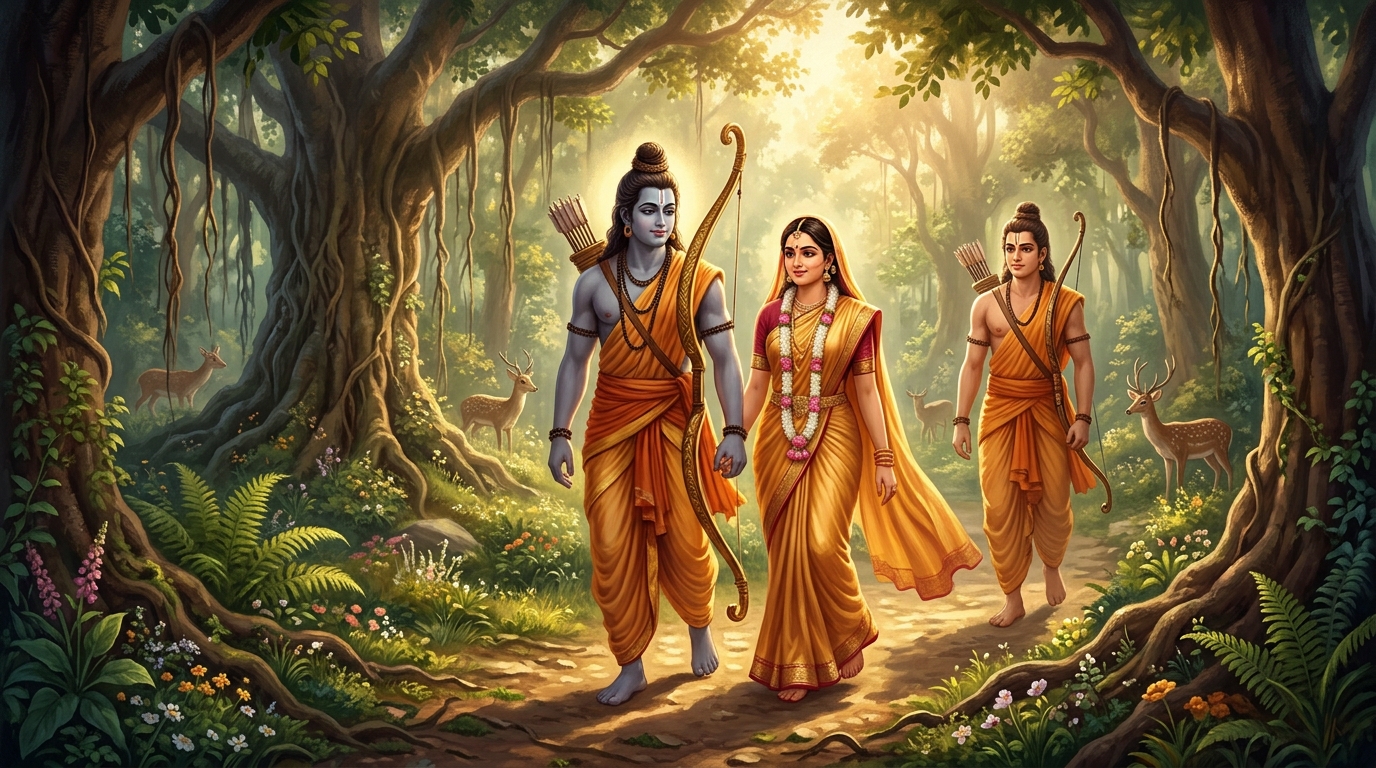
Under Shri Rama’s rule, Ayodhya flourishes into Ram Rajya—an age celebrated for justice, absence of fear, flourishing nature, and rulers who listen humbly to the smallest citizen. Yet public whispers questioning Sita’s captivity test Rama’s heart painfully; placing public duty above private happiness, he sends pregnant Sita to Maharishi Valmiki’s tranquil ashram.
In Valmiki’s hermitage, Sita gives birth to twins Lava and Kusha, whom Valmiki raises and teaches to sing the complete Ramayana. Years later, during Rama’s Ashwamedha Yajna, the two young minstrels sing the epic with astonishing grace before Rama’s court—reuniting the king with the story of his own life.
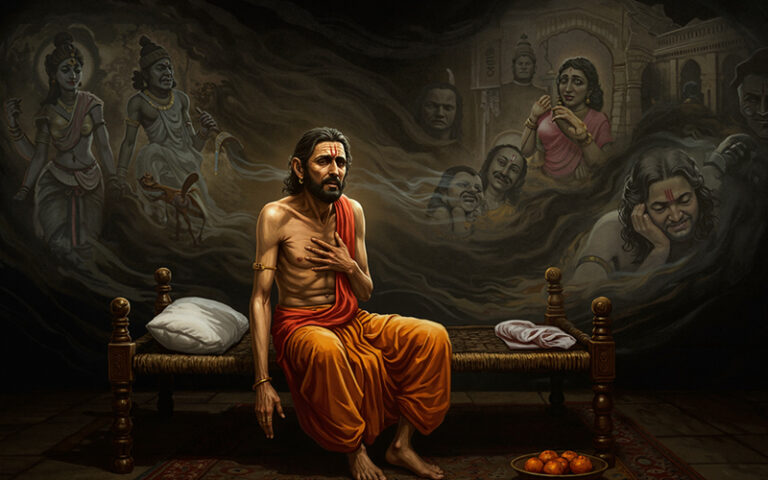
When called to take another public oath, Mata Sita calls upon her Mother Earth (Bhumi Devi) to bear witness to her lifelong purity; the earth opens gracefully and receives her back. Grief-stricken yet steadfast, Rama eventually entrusts the kingdom to his sons and brothers’ lineages and enters the sacred Sarayu river—returning to his eternal form as Lord Vishnu.
Key Sanskrit Shlokas & Meanings
Uttara Kanda — The Ideal of Ram Rajya
रामो रामो राम इति प्रजानामभवन् कथाः । रामभूतं जगदभूद् रामे राज्यं प्रशासति ॥
Rāmo rāmo rāma iti prajānām abhavan kathāḥ | Rāma-bhūtaṁ jagad abhūd rāme rājyaṁ praśāsati ||
Meaning: ‘Rama, Rama, Rama’ was the joyful theme upon every citizen’s lips; indeed, the entire world seemed suffused with righteousness while Rama reigned.
Ram Rajya means leadership so just and compassionate that peace radiates throughout society.
Ramayana Phalashruti — The Timeless Fruit of Reading the Ramayana
यावत्स्थास्यन्ति गिरयः सरितश्च महीतले । तावद्रामायणकथा लोकेषु प्रचरिष्यति ॥
Yāvat sthāsyanti girayaḥ saritaś ca mahī-tale | Tāvad rāmāyaṇa-kathā lokeṣu pracariṣyati ||
Meaning: As long as the mountains stand tall and the rivers flow upon this earth, so long shall the sacred story of the Ramayana endure among humanity.
Spoken by Lord Brahma to Valmiki—affirming why the Ramayana continues guiding hearts thousands of years later.
Timeless Dharmic Lessons
- Dignity & Sacredness of Storytelling: Lava and Kusha singing the Ramayana reminds us that timeless stories pass wisdom from generation to generation.
- The Cost of Leadership: Uttara Kanda portrays the profound personal sacrifices rulers face when balancing public trust and private sorrow.
- Respect Women’s Dignity & Truth: Sita’s quiet strength and return to Mother Earth stand as an enduring testament to inner self-respect.
- All Earthly Roles End Gracefully: Even avatars complete their earthly chapter and return peacefully to the Infinite.
Frequently Asked Questions
Who taught Lava and Kusha to sing the Ramayana?
Maharishi Valmiki raised Lava and Kusha in his forest ashram and taught them to sing the 24,000-verse Ramayana.
What does ‘Ram Rajya’ symbolize in Indian thought?
It symbolizes an ideal society anchored in dharma, fairness, absence of exploitation, ecological harmony, and moral accountability of leaders.
Continue Your Ramayana Journey
← Previous: Kanda 6 | All 7 Ramayana Kandas
To explore more Ramayana stories, Hanuman devotion, and epic insights and timeless wisdom from Hindu scriptures, visit and subscribe to our official Vibes of Divinity YouTube channel.
Which moment from this Kanda inspires you most? Share your reflections in the comments below!