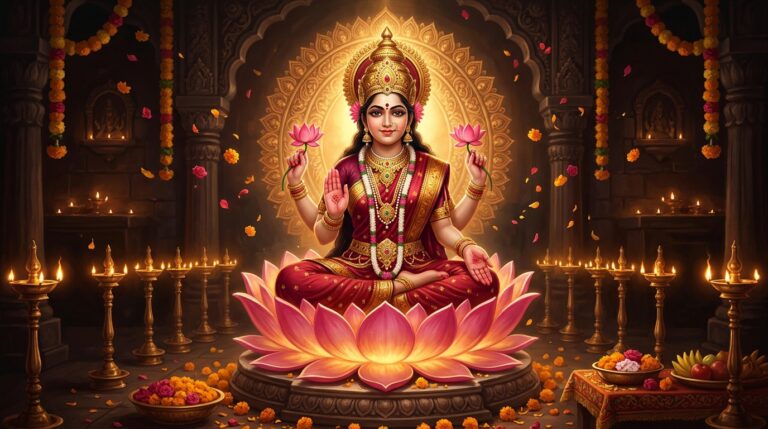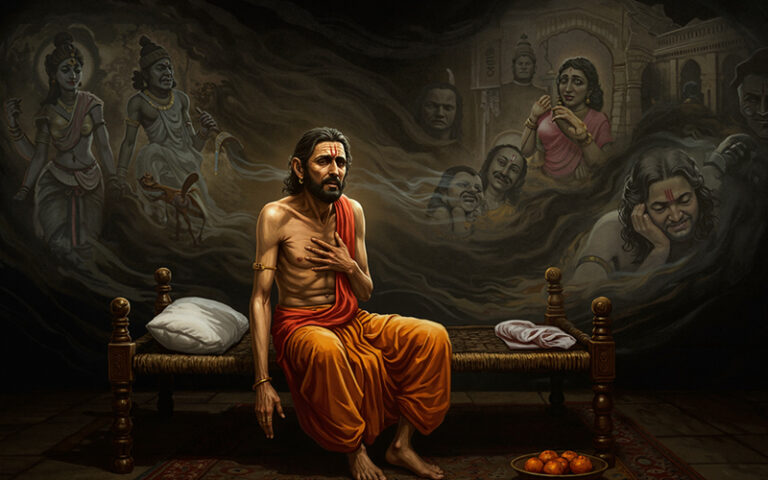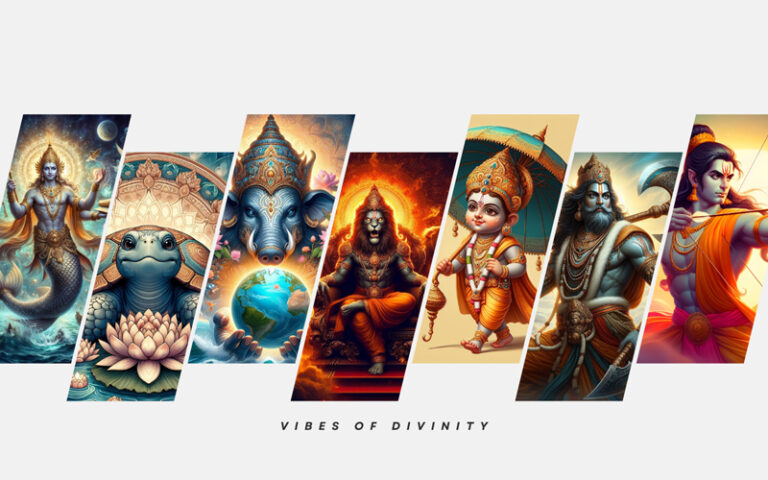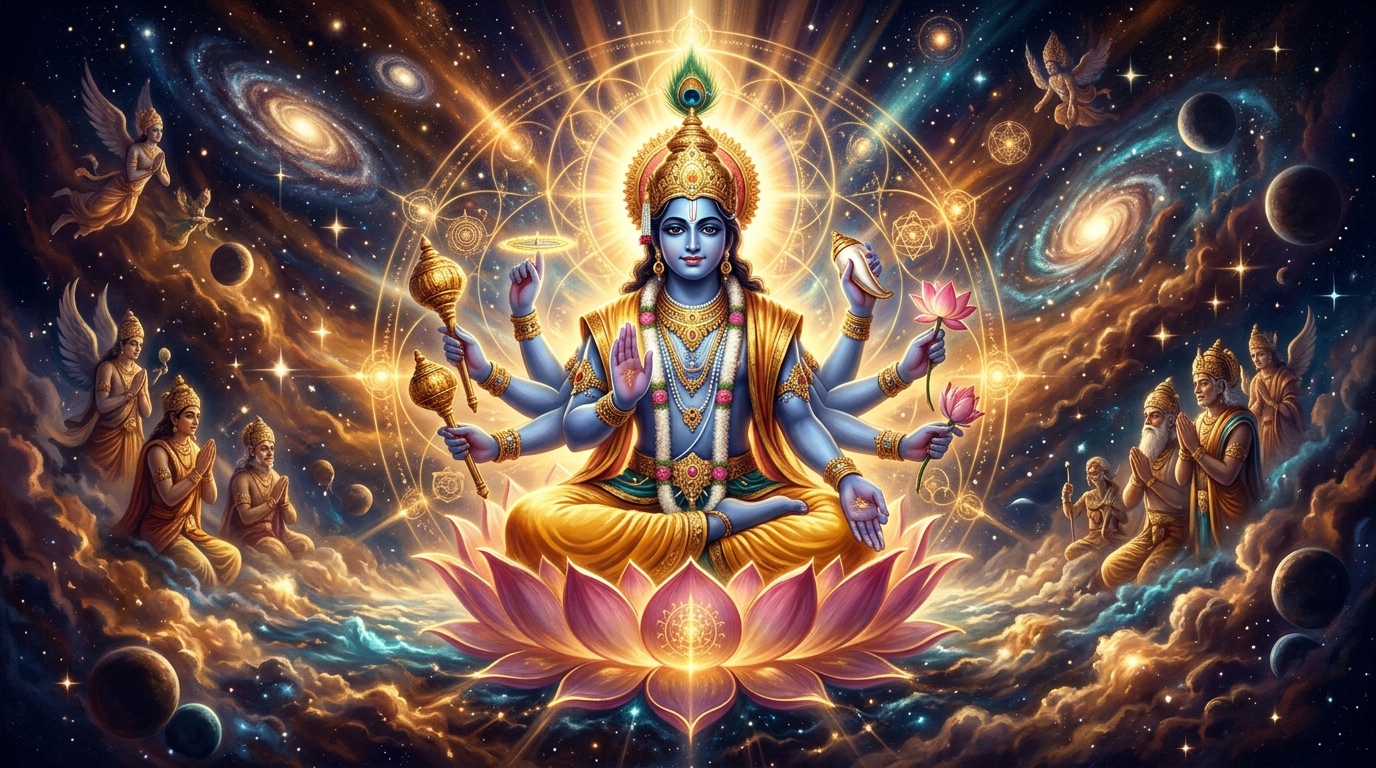

Welcome to Vibes of Divinity. In Bhagavad Gita Chapter 10 (Vibhuti Yoga), Arjuna asks Krishna how a seeker can recognize and remember Him everywhere in creation. Krishna’s answer awakens awe and wonder: wherever you witness extraordinary beauty, courage, wisdom, or grace in the universe, you are glimpsing a tiny spark of Divine splendor.
- Chapter Name: विभूतियोग (Vibhuti Yoga)
- Section: Section 2: Divine Knowledge & Devotion (Chapters 7–12)
- Complete Text Included: All 42 Sanskrit shlokas with IAST transliteration & English translation
- Series Index: Bhagavad Gita Complete Guide (All 18 Chapters & 701 Shlokas)
Chapter 10 Summary & Context on Kurukshetra
Before listing His divine manifestations, Krishna shares four foundational verses (10.8–10.11)—revered as the Chatushloki Gita—explaining that those who know Him as the source of all beings worship Him with love and receive inner spiritual illumination (Buddhi Yoga) directly from Him.
Overwhelmed with joy, Arjuna acknowledges Krishna as Param Brahma and asks to hear His glories. Krishna enumerates famous manifestations across nature, deities, sages, and seasons: among mountains, Meru; among rivers, the Ganga; among luminaries, the radiant Sun; among sages, Narada; among epics, Arjuna himself among the Pandavas.
Krishna concludes with a sweeping truth: His glories have no limit—a single spark of His splendor upholds this entire cosmos.
Highlighted Shlokas & Spiritual Reflections (Chapter 10)
Shloka 10.8 — The Source of All Existence
अहं सर्वस्य प्रभवो मत्तः सर्वं प्रवर्तते । इति मत्वा भजन्ते मां बुधा भावसमन्विताः ॥
Ahaṁ sarvasya prabhavo mattaḥ sarvaṁ pravartate | Iti matvā bhajante māṁ budhā bhāva-samanvitāḥ ||
Meaning: I am the source of all spiritual and material worlds; everything emanates from Me. Knowing this, the wise worship Me with deep, loving devotion.
Recognizing one sacred origin behind all reality replaces envy and anxiety with deep gratitude.
Shloka 10.20 — Seated Within Every Heart
अहमात्मा गुडाकेश सर्वभूताशयस्थितः । अहमादिश्च मध्यं च भूतानामन्त एव च ॥
Aham ātmā guḍākeśa sarva-bhūtāśaya-sthitaḥ | Aham ādiś ca madhyaṁ ca bhūtānām anta eva ca ||
Meaning: I am the Indwelling Self seated in the hearts of all beings, O Arjuna; I am the beginning, the middle, and the very end of all creatures.
Before searching far away in distant skies, remember that the Divine dwells right inside your own heart.
Shloka 10.41 — Every Spark of Excellence Reflects the Divine
यद्यद्विभूतिमत्सत्त्वं श्रीमदूर्जितमेव वा । तत्तदेवावगच्छ त्वं मम तेजोऽंशसम्भवम् ॥
Yad yad vibhūtimat sattvaṁ śrīmad ūrjitam eva vā | Tat tad evāvagaccha tvaṁ mama tejo-’ṁśa-sambhavam ||
Meaning: Whatever being or phenomenon shows extraordinary glory, beauty, or strength, know that it springs from a mere fragment of My splendor.
Whenever art, nature, music, or human kindness moves you deeply, let that wonder remind you of the Creator.
Complete Verse-by-Verse Bhagavad Gita Chapter 10 (All 42 Shlokas)
Read all 42 original Sanskrit verses of Chapter 10 below with Roman IAST transliteration and clear English meaning:
Verse 10.1
श्रीभगवानुवाच |
भूय एव महाबाहो शृणु मे परमं वचः |
यत्तेऽहं प्रीयमाणाय वक्ष्यामि हितकाम्यया ||१०-१||
śrībhagavānuvāca .
bhūya eva mahābāho śṛṇu me paramaṃ vacaḥ .
yatte.ahaṃ prīyamāṇāya vakṣyāmi hitakāmyayā ||10-1||
Meaning: Lord Shri Krishna said: Now, O Prince! Listen to My supreme advice, which I give thee for the sake of thy welfare, for thou art My beloved.
Verse 10.2
न मे विदुः सुरगणाः प्रभवं न महर्षयः |
अहमादिर्हि देवानां महर्षीणां च सर्वशः ||१०-२||
na me viduḥ suragaṇāḥ prabhavaṃ na maharṣayaḥ .
ahamādirhi devānāṃ maharṣīṇāṃ ca sarvaśaḥ ||10-2||
Meaning: Neither the professors of divinity nor the great ascetics know My origin, for I am the source of them all.
Verse 10.3
यो मामजमनादिं च वेत्ति लोकमहेश्वरम् |
असम्मूढः स मर्त्येषु सर्वपापैः प्रमुच्यते ||१०-३||
yo māmajamanādiṃ ca vetti lokamaheśvaram .
asammūḍhaḥ sa martyeṣu sarvapāpaiḥ pramucyate ||10-3||
Meaning: He who knows Me as the unborn, without beginning, the Lord of the universe, he, stripped of his delusion, becomes free from all conceivable sin.
Verse 10.4
बुद्धिर्ज्ञानमसम्मोहः क्षमा सत्यं दमः शमः |
सुखं दुःखं भवोऽभावो भयं चाभयमेव च ||१०-४||
buddhirjñānamasammohaḥ kṣamā satyaṃ damaḥ śamaḥ .
sukhaṃ duḥkhaṃ bhavo.abhāvo bhayaṃ cābhayameva ca ||10-4||
Meaning: Intelligence, wisdom, non-illusion, forgiveness, truth, self-control, calmness, pleasure, pain, birth, death, fear and fearlessness;
Verse 10.5
अहिंसा समता तुष्टिस्तपो दानं यशोऽयशः |
भवन्ति भावा भूतानां मत्त एव पृथग्विधाः ||१०-५||
ahiṃsā samatā tuṣṭistapo dānaṃ yaśo.ayaśaḥ .
bhavanti bhāvā bhūtānāṃ matta eva pṛthagvidhāḥ ||10-5||
Meaning: Harmlessness, equanimity, contentment, austerity, beneficence, fame and failure, all these, the characteristics of beings, spring from Me only.
Verse 10.6
महर्षयः सप्त पूर्वे चत्वारो मनवस्तथा |
मद्भावा मानसा जाता येषां लोक इमाः प्रजाः ||१०-६||
maharṣayaḥ sapta pūrve catvāro manavastathā .
madbhāvā mānasā jātā yeṣāṃ loka imāḥ prajāḥ ||10-6||
Meaning: The seven Great Seers,* the Progenitors of mankind, the Ancient Four,** and the Lawgivers were born of My Will and come forth direct from Me. The race of mankind has sprung from them. [* Mareechi, Atri, Angira, Pulah, Kratu, Pulastya, Vahishta. ** The Masters: Sanak, Sanandan, Sanatan, Sanatkumar.]
Verse 10.7
एतां विभूतिं योगं च मम यो वेत्ति तत्त्वतः |
सोऽविकम्पेन योगेन युज्यते नात्र संशयः ||१०-७||
etāṃ vibhūtiṃ yogaṃ ca mama yo vetti tattvataḥ .
so.avikampena yogena yujyate nātra saṃśayaḥ ||10-7||
Meaning: He who rightly understands My manifested glory and My Creative Power, beyond doubt attains perfect peace.
Verse 10.8
अहं सर्वस्य प्रभवो मत्तः सर्वं प्रवर्तते |
इति मत्वा भजन्ते मां बुधा भावसमन्विताः ||१०-८||
ahaṃ sarvasya prabhavo mattaḥ sarvaṃ pravartate .
iti matvā bhajante māṃ budhā bhāvasamanvitāḥ ||10-8||
Meaning: I am the source of all; from Me everything flows. Therefore the wise worship Me with unchanging devotion.
Verse 10.9
मच्चित्ता मद्गतप्राणा बोधयन्तः परस्परम् |
कथयन्तश्च मां नित्यं तुष्यन्ति च रमन्ति च ||१०-९||
maccittā madgataprāṇā bodhayantaḥ parasparam .
kathayantaśca māṃ nityaṃ tuṣyanti ca ramanti ca ||10-9||
Meaning: With minds concentrated on Me, with lives absorbed in Me, and enlightening each other, they ever feel content and happy.
Verse 10.10
तेषां सततयुक्तानां भजतां प्रीतिपूर्वकम् |
ददामि बुद्धियोगं तं येन मामुपयान्ति ते ||१०-१०||
teṣāṃ satatayuktānāṃ bhajatāṃ prītipūrvakam .
dadāmi buddhiyogaṃ taṃ yena māmupayānti te ||10-10||
Meaning: To those who are always devout and who worship Me with love, I give the power of discrimination, which leads them to Me.
Verse 10.11
तेषामेवानुकम्पार्थमहमज्ञानजं तमः |
नाशयाम्यात्मभावस्थो ज्ञानदीपेन भास्वता ||१०-११||
teṣāmevānukampārthamahamajñānajaṃ tamaḥ .
nāśayāmyātmabhāvastho jñānadīpena bhāsvatā ||10-11||
Meaning: By My grace, I live in their hearts; and I dispel the darkness of ignorance by the shining light of wisdom.
Verse 10.12
अर्जुन उवाच |
परं ब्रह्म परं धाम पवित्रं परमं भवान् |
पुरुषं शाश्वतं दिव्यमादिदेवमजं विभुम् ||१०-१२||
arjuna uvāca .
paraṃ brahma paraṃ dhāma pavitraṃ paramaṃ bhavān .
puruṣaṃ śāśvataṃ divyamādidevamajaṃ vibhum ||10-12||
Meaning: Arjuna asked: Thou art the Supreme Spirit, the Eternal Home, the Holiest of the Holy, the Eternal Divine Self, the Primal God, the Unborn and the Omnipresent.
Verse 10.13
आहुस्त्वामृषयः सर्वे देवर्षिर्नारदस्तथा |
असितो देवलो व्यासः स्वयं चैव ब्रवीषि मे ||१०-१३||
āhustvāmṛṣayaḥ sarve devarṣirnāradastathā .
asito devalo vyāsaḥ svayaṃ caiva bravīṣi me ||10-13||
Meaning: So have said the seers and the divine sage Narada; as well as Asita, Devala and Vyasa; and Thou Thyself also sayest it.
Verse 10.14
सर्वमेतदृतं मन्ये यन्मां वदसि केशव |
न हि ते भगवन्व्यक्तिं विदुर्देवा न दानवाः ||१०-१४||
sarvametadṛtaṃ manye yanmāṃ vadasi keśava .
na hi te bhagavanvyaktiṃ vidurdevā na dānavāḥ ||10-14||
Meaning: I believe in what Thou hast said, my Lord! For neither the godly not the godless comprehend Thy manifestation.
Verse 10.15
स्वयमेवात्मनात्मानं वेत्थ त्वं पुरुषोत्तम |
भूतभावन भूतेश देवदेव जगत्पते ||१०-१५||
svayamevātmanātmānaṃ vettha tvaṃ puruṣottama .
bhūtabhāvana bhūteśa devadeva jagatpate ||10-15||
Meaning: Shri Purohit Swami did not comment on this sloka
Verse 10.16
वक्तुमर्हस्यशेषेण दिव्या ह्यात्मविभूतयः |
याभिर्विभूतिभिर्लोकानिमांस्त्वं व्याप्य तिष्ठसि ||१०-१६||
vaktumarhasyaśeṣeṇa divyā hyātmavibhūtayaḥ .
yābhirvibhūtibhirlokānimāṃstvaṃ vyāpya tiṣṭhasi ||10-16||
Meaning: Please tell me all about Thy glorious manifestations, by means of which Thou pervadest the world.
Verse 10.17
कथं विद्यामहं योगिंस्त्वां सदा परिचिन्तयन् |
केषु केषु च भावेषु चिन्त्योऽसि भगवन्मया ||१०-१७||
kathaṃ vidyāmahaṃ yogiṃstvāṃ sadā paricintayan .
keṣu keṣu ca bhāveṣu cintyo.asi bhagavanmayā ||10-17||
Meaning: O Master! How shall I, by constant meditation, know Thee? My Lord! What are Thy various manifestations through which I am to mediate on Thee?
Verse 10.18
विस्तरेणात्मनो योगं विभूतिं च जनार्दन |
भूयः कथय तृप्तिर्हि शृण्वतो नास्ति मेऽमृतम् ||१०-१८||
vistareṇātmano yogaṃ vibhūtiṃ ca janārdana .
bhūyaḥ kathaya tṛptirhi śṛṇvato nāsti me.amṛtam ||10-18||
Meaning: Tell me again, I pray, about the fullness of Thy power and Thy glory; for I feel that I am never satisfied when I listen to Thy immortal words.
Verse 10.19
श्रीभगवानुवाच |
हन्त ते कथयिष्यामि दिव्या ह्यात्मविभूतयः |
प्राधान्यतः कुरुश्रेष्ठ नास्त्यन्तो विस्तरस्य मे ||१०-१९||
śrībhagavānuvāca .
hanta te kathayiṣyāmi divyā hyātmavibhūtayaḥ .
prādhānyataḥ kuruśreṣṭha nāstyanto vistarasya me ||10-19||
Meaning: Lord Shri Krishna replied: So be it, My beloved fried! I will unfold to thee some of the chief aspects of My glory. Of its full extent there is no end.
Verse 10.20
अहमात्मा गुडाकेश सर्वभूताशयस्थितः |
अहमादिश्च मध्यं च भूतानामन्त एव च ||१०-२०||
ahamātmā guḍākeśa sarvabhūtāśayasthitaḥ .
ahamādiśca madhyaṃ ca bhūtānāmanta eva ca ||10-20||
Meaning: O Arjuna! I am the Self, seated in the hearts of all beings; I am the beginning and the life, and I am the end of them all.
Verse 10.21
आदित्यानामहं विष्णुर्ज्योतिषां रविरंशुमान् |
मरीचिर्मरुतामस्मि नक्षत्राणामहं शशी ||१०-२१||
ādityānāmahaṃ viṣṇurjyotiṣāṃ raviraṃśumān .
marīcirmarutāmasmi nakṣatrāṇāmahaṃ śaśī ||10-21||
Meaning: Of all the creative Powers I am the Creator, of luminaries the Sun; the Whirlwind among the winds, and the Moon among planets.
Verse 10.22
वेदानां सामवेदोऽस्मि देवानामस्मि वासवः |
इन्द्रियाणां मनश्चास्मि भूतानामस्मि चेतना ||१०-२२||
vedānāṃ sāmavedo.asmi devānāmasmi vāsavaḥ .
indriyāṇāṃ manaścāsmi bhūtānāmasmi cetanā ||10-22||
Meaning: Of the Vedas I am the Hymns, I am the Electric Force in the Powers of Nature; of the senses I am the Mind; and I am the Intelligence in all that lives.
Verse 10.23
रुद्राणां शङ्करश्चास्मि वित्तेशो यक्षरक्षसाम् |
वसूनां पावकश्चास्मि मेरुः शिखरिणामहम् ||१०-२३||
rudrāṇāṃ śaṅkaraścāsmi vitteśo yakṣarakṣasām .
vasūnāṃ pāvakaścāsmi meruḥ śikhariṇāmaham ||10-23||
Meaning: Among Forces of Vitality I am the life, I am Mammon to the heathen and the godless; I am the Energy in fire, earth, wind, sky, heaven, sun, moon and planets; and among mountains am the Mount Meru.
Verse 10.24
पुरोधसां च मुख्यं मां विद्धि पार्थ बृहस्पतिम् |
सेनानीनामहं स्कन्दः सरसामस्मि सागरः ||१०-२४||
purodhasāṃ ca mukhyaṃ māṃ viddhi pārtha bṛhaspatim .
senānīnāmahaṃ skandaḥ sarasāmasmi sāgaraḥ ||10-24||
Meaning: Among the priests, know, O Arjuna, that I am the Apostle Brihaspati; of generals I am Skanda, the Commander-in-Chief, and of waters I am the Ocean.
Verse 10.25
महर्षीणां भृगुरहं गिरामस्म्येकमक्षरम् |
यज्ञानां जपयज्ञोऽस्मि स्थावराणां हिमालयः ||१०-२५||
maharṣīṇāṃ bhṛgurahaṃ girāmasmyekamakṣaram .
yajñānāṃ japayajño.asmi sthāvarāṇāṃ himālayaḥ ||10-25||
Meaning: Of the great seers I am Bhrigu, of words I am Om, of offerings I am the silent prayer, among things immovable I am the Himalayas.
Verse 10.26
अश्वत्थः सर्ववृक्षाणां देवर्षीणां च नारदः |
गन्धर्वाणां चित्ररथः सिद्धानां कपिलो मुनिः ||१०-२६||
aśvatthaḥ sarvavṛkṣāṇāṃ devarṣīṇāṃ ca nāradaḥ .
gandharvāṇāṃ citrarathaḥ siddhānāṃ kapilo muniḥ ||10-26||
Meaning: Of trees I am the sacred Fig-tree, of the Divine Seers Narada, of the heavenly singers I am Chitraratha, their Leader, and of sages I am Kapila.
Verse 10.27
उच्चैःश्रवसमश्वानां विद्धि माममृतोद्भवम् |
ऐरावतं गजेन्द्राणां नराणां च नराधिपम् ||१०-२७||
uccaiḥśravasamaśvānāṃ viddhi māmamṛtodbhavam .
airāvataṃ gajendrāṇāṃ narāṇāṃ ca narādhipam ||10-27||
Meaning: Know that among horses I am Pegasus, the heaven-born; among the lordly elephants I am the White one, and I am the Ruler among men.
Verse 10.28
आयुधानामहं वज्रं धेनूनामस्मि कामधुक् |
प्रजनश्चास्मि कन्दर्पः सर्पाणामस्मि वासुकिः ||१०-२८||
āyudhānāmahaṃ vajraṃ dhenūnāmasmi kāmadhuk .
prajanaścāsmi kandarpaḥ sarpāṇāmasmi vāsukiḥ ||10-28||
Meaning: I am the Thunderbolt among weapons; of cows I am the Cow of Plenty, I am Passion in those who procreate, and I am the Cobra among serpents.
Verse 10.29
अनन्तश्चास्मि नागानां वरुणो यादसामहम् |
पितॄणामर्यमा चास्मि यमः संयमतामहम् ||१०-२९||
anantaścāsmi nāgānāṃ varuṇo yādasāmaham .
pitṝṇāmaryamā cāsmi yamaḥ saṃyamatāmaham ||10-29||
Meaning: I am the King-python among snakes, I am the Aqueous Principle among those that live in water, I am the Father of fathers, and among rulers I am Death.
Verse 10.30
प्रह्लादश्चास्मि दैत्यानां कालः कलयतामहम् |
मृगाणां च मृगेन्द्रोऽहं वैनतेयश्च पक्षिणाम् ||१०-३०||
prahlādaścāsmi daityānāṃ kālaḥ kalayatāmaham .
mṛgāṇāṃ ca mṛgendro.ahaṃ vainateyaśca pakṣiṇām ||10-30||
Meaning: And I am the devotee Prahlad among the heathen; of Time I am the Eternal Present; I am the Lion among beasts and the Eagle among birds.
Verse 10.31
पवनः पवतामस्मि रामः शस्त्रभृतामहम् |
झषाणां मकरश्चास्मि स्रोतसामस्मि जाह्नवी ||१०-३१||
pavanaḥ pavatāmasmi rāmaḥ śastrabhṛtāmaham .
jhaṣāṇāṃ makaraścāsmi srotasāmasmi jāhnavī ||10-31||
Meaning: I am the Wind among purifiers, the King Rama among warriors; I am the Crocodile among the fishes, and I am the Ganges among rivers.
Verse 10.32
सर्गाणामादिरन्तश्च मध्यं चैवाहमर्जुन |
अध्यात्मविद्या विद्यानां वादः प्रवदतामहम् ||१०-३२||
sargāṇāmādirantaśca madhyaṃ caivāhamarjuna .
adhyātmavidyā vidyānāṃ vādaḥ pravadatāmaham ||10-32||
Meaning: I am the Beginning, the Middle and the End in creation; among sciences, I am the science of Spirituality; I am the Discussion among disputants.
Verse 10.33
अक्षराणामकारोऽस्मि द्वन्द्वः सामासिकस्य च |
अहमेवाक्षयः कालो धाताहं विश्वतोमुखः ||१०-३३||
akṣarāṇāmakāro.asmi dvandvaḥ sāmāsikasya ca .
ahamevākṣayaḥ kālo dhātāhaṃ viśvatomukhaḥ ||10-33||
Meaning: Of letters I am A; I am the copulative in compound words; I am Time inexhaustible; and I am the all-pervading Preserver.
Verse 10.34
मृत्युः सर्वहरश्चाहमुद्भवश्च भविष्यताम् |
कीर्तिः श्रीर्वाक्च नारीणां स्मृतिर्मेधा धृतिः क्षमा ||१०-३४||
mṛtyuḥ sarvaharaścāhamudbhavaśca bhaviṣyatām .
kīrtiḥ śrīrvākca nārīṇāṃ smṛtirmedhā dhṛtiḥ kṣamā ||10-34||
Meaning: I am all-devouring Death; I am the Origin of all that shall happen; I am Fame, Fortune, Speech, Memory, Intellect, Constancy and Forgiveness.
Verse 10.35
बृहत्साम तथा साम्नां गायत्री छन्दसामहम् |
मासानां मार्गशीर्षोऽहमृतूनां कुसुमाकरः ||१०-३५||
bṛhatsāma tathā sāmnāṃ gāyatrī chandasāmaham .
māsānāṃ mārgaśīrṣo.ahamṛtūnāṃ kusumākaraḥ ||10-35||
Meaning: Of hymns I am Brihatsama, of metres I am Garatri, among the months I am Margasheersha (December), and I am the Spring among seasons.
Verse 10.36
द्यूतं छलयतामस्मि तेजस्तेजस्विनामहम् |
जयोऽस्मि व्यवसायोऽस्मि सत्त्वं सत्त्ववतामहम् ||१०-३६||
dyūtaṃ chalayatāmasmi tejastejasvināmaham .
jayo.asmi vyavasāyo.asmi sattvaṃ sattvavatāmaham ||10-36||
Meaning: I am the Gambling of the cheat and the Splendour of the splendid; I am Victory; I am Effort; and I am the Purity of the pure.
Verse 10.37
वृष्णीनां वासुदेवोऽस्मि पाण्डवानां धनञ्जयः |
मुनीनामप्यहं व्यासः कवीनामुशना कविः ||१०-३७||
vṛṣṇīnāṃ vāsudevo.asmi pāṇḍavānāṃ dhanañjayaḥ .
munīnāmapyahaṃ vyāsaḥ kavīnāmuśanā kaviḥ ||10-37||
Meaning: I am Shri Krishna among the Vishnu-clan and Arjuna among the Pandavas; of the saints I am Vyasa, and I am Shukracharya among the sages.
Verse 10.38
दण्डो दमयतामस्मि नीतिरस्मि जिगीषताम् |
मौनं चैवास्मि गुह्यानां ज्ञानं ज्ञानवतामहम् ||१०-३८||
daṇḍo damayatāmasmi nītirasmi jigīṣatām .
maunaṃ caivāsmi guhyānāṃ jñānaṃ jñānavatāmaham ||10-38||
Meaning: I am the Sceptre of rulers, the Strategy of the conquerors, the Silence of mystery, the Wisdom of the wise.
Verse 10.39
यच्चापि सर्वभूतानां बीजं तदहमर्जुन |
न तदस्ति विना यत्स्यान्मया भूतं चराचरम् ||१०-३९||
yaccāpi sarvabhūtānāṃ bījaṃ tadahamarjuna .
na tadasti vinā yatsyānmayā bhūtaṃ carācaram ||10-39||
Meaning: I am the Seed of all being, O Arjuna! No creature moving or unmoving can live without Me.
Verse 10.40
नान्तोऽस्ति मम दिव्यानां विभूतीनां परन्तप |
एष तूद्देशतः प्रोक्तो विभूतेर्विस्तरो मया ||१०-४०||
nānto.asti mama divyānāṃ vibhūtīnāṃ parantapa .
eṣa tūddeśataḥ prokto vibhūtervistaro mayā ||10-40||
Meaning: O Arjuna! The aspects of My divine life are endless. I have mentioned but a few by way of illustration.
Verse 10.41
यद्यद्विभूतिमत्सत्त्वं श्रीमदूर्जितमेव वा |
तत्तदेवावगच्छ त्वं मम तेजोंऽशसम्भवम् ||१०-४१||
yadyadvibhūtimatsattvaṃ śrīmadūrjitameva vā .
tattadevāvagaccha tvaṃ mama tejoṃśasambhavam ||10-41||
Meaning: Whatever is glorious, excellent, beautiful and mighty, be assured that it comes from a fragment of My splendour.
Verse 10.42
अथवा बहुनैतेन किं ज्ञातेन तवार्जुन |
विष्टभ्याहमिदं कृत्स्नमेकांशेन स्थितो जगत् ||१०-४२||
athavā bahunaitena kiṃ jñātena tavārjuna .
viṣṭabhyāhamidaṃ kṛtsnamekāṃśena sthito jagat ||10-42||
Meaning: But what is the use of all these details to thee? O Arjuna! I sustain this universe with only small part of Myself.
Timeless Life Lessons for Modern Seekers
- Practice Spiritual Wonder: Let majestic mountains, rivers, sunrise, and great wisdom remind you of Divine presence.
- Cultivate Gratitude Over Pride: Any talent or strength we possess is a borrowed spark of grace, not a reason for arrogance.
- Seek Inner Illumination: Sincere love and remembrance invite inner clarity (Buddhi Yoga) when outer logic falls short.
- Remember the Indweller: Treating others with respect honors the Divine seated inside every heart.
Frequently Asked Questions — Bhagavad Gita Chapter 10
What is Vibhuti Yoga in Bhagavad Gita Chapter 10?
Vibhuti refers to the splendid manifestations of the Divine throughout nature, humanity, and the cosmos—helping devotees see God everywhere.
What is the Chatushloki Gita?
Verses 10.8 through 10.11 are known as the Chatushloki Gita (four-verse essence) because they summarize the origin of all creation, loving devotion, and divine guidance.
How many verses are in Gita Chapter 10?
Bhagavad Gita Chapter 10 contains 42 verses.
Continue Your Bhagavad Gita Journey
← Previous: Chapter 9 | All 18 Gita Chapters | Next: Chapter 11 →
To explore more Bhagavad Gita teachings, Puranic stories, and sacred chants and timeless wisdom from Hindu scriptures, visit and subscribe to our official Vibes of Divinity YouTube channel.
Which shloka from this chapter touches your heart most today? Share your reflection in the comments below.