
Welcome to Vibes of Divinity. Fifteen peaceful years pass under Yudhishthira’s compassionate rule, during which the Pandavas care tenderly for blind Dhritarashtra and Gandhari. Yet in Ashramavasika Parva, aging elders choose gentle detachment—stepping into the sacred fourth stage of life (Vanaprastha).
- Parva (Book): आश्रमवासिकपर्व (Ashramavasika Parva — Book of the Hermitage)
- Series Index: Mahabharata Complete 18-Parva Guide
Narrative Summary & Key Events of Parva 15
Despite Yudhishthira’s devoted respect—apart from occasional quiet grief from Bhima—Dhritarashtra and Gandhari choose to leave royal comfort for a simple Himalayan hermitage beside the Ganga. Surprisingly, Mother Kunti insists on accompanying her sister-in-law Gandhari rather than remaining in the palace (read Dhritarashtra’s Final Journey).
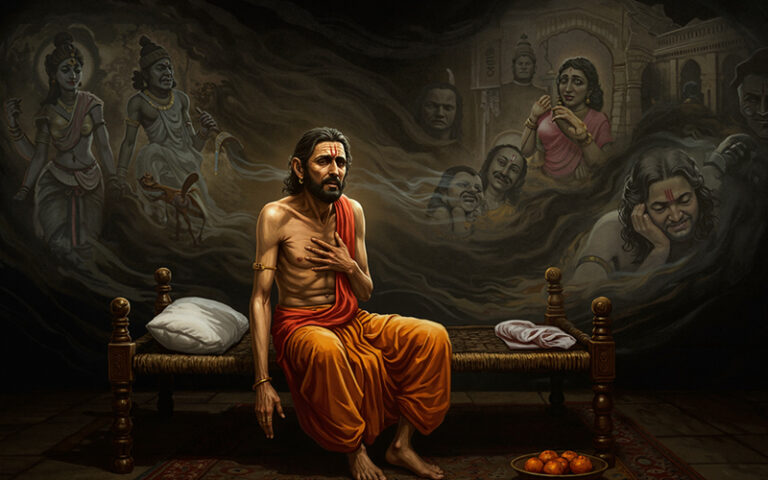
Years later, the Pandavas visit the peaceful hermitage. There, saintly Vidura departs calmly, merging his vital energy directly into Yudhishthira’s heart as a mirror of Dharma. Through Sage Vyasa’s yogic grace, the bereaved families receive one luminous night by the Ganga where fallen warriors of both sides appear peacefully—free from anger, reconciling across death.
Not long after, a sacred forest fire sweeps the hermitage; serene in meditation, Dhritarashtra, Gandhari, and Kunti welcome their final release without fear.
Key Sanskrit Shlokas & Meanings
Ashramavasika Parva — Reconciling Past Pain Before Departing
न वैरमुपजीवन्ति प्रशान्ताः सद्गुणाश्रयाः ।
Kṣamā śāntiḥ praśamaś caiva vānaprastha-vratam mahat |
Meaning: Stepping away from old thrones with forgiveness and inner quietude frees the heart for final peace.
Even Dhritarashtra’s lifetime of regret softens into serenity through repentance and prayer.
Ashramavasika Parva — Letting Go Gracefully (Vanaprastha)
यथा कालेन पक्वानि फलानि निपतन्ति वै ।
Kāle prāpte tyajed gehaṁ vana-vāsāya dhīra-dhīḥ |
Meaning: Just as ripe fruit releases naturally from the branch in due season, the wise release worldly attachments gracefully when autumn arrives.
Sanatana Dharma teaches aging gracefully—gradually shifting from control toward contemplation.
Timeless Lessons for Modern Life
- It Is Never Too Late to Heal & Repent: Dhritarashtra spent his final years in quiet simplicity and peace.
- Practice Graceful Letting Go: Passing responsibility to younger generations frees elders for spiritual joy.
- Release Old Grudges While Alive: Vyasa’s night of reconciliation teaches us not to carry bitterness to the grave.
Frequently Asked Questions
Why did Kunti leave the palace with Dhritarashtra and Gandhari?
Out of deep sisterly compassion and spiritual detachment—saying she had enjoyed royal comfort only when testing her sons’ dharma, and now wished to serve her elders in peace.
How did Dhritarashtra, Gandhari, and Kunti pass away?
They calmly entered meditation when a forest wildfire approached their hermitage in the Himalayas, attaining peaceful liberation.
Continue Your Mahabharata Journey
← Previous: Parva 14 | All 18 Mahabharata Parvas | Next: Parva 16 →
To explore more Mahabharata untold stories, Bhishma’s wisdom, and Gita teachings and timeless wisdom from Hindu scriptures, visit and subscribe to our official Vibes of Divinity YouTube channel.
Which moment from this Parva speaks to you most? Share your reflection in the comments below!