
Welcome to Vibes of Divinity. Bhishma Parva holds the immortal spiritual jewel of Indian civilization: Chapters 25–42 of this very book form the complete Shrimad Bhagavad Gita, spoken just before war erupts under Grandfather Bhishma’s ten-day command.
- Parva (Book): भीष्मपर्व (Bhishma Parva — Book of Bhishma)
- Series Index: Mahabharata Complete 18-Parva Guide
Narrative Summary & Key Events of Parva 6
Sanjaya receives divine sight from Sage Vyasa to narrate the battle live to blind Dhritarashtra. Seeing Arjuna drop his bow in despair, Lord Krishna delivers the eighteen chapters of the Bhagavad Gita—awakening Arjuna to selfless duty, devotion, and courage.
Once conches blow, Bhishma fights with unstoppable brilliance for ten fierce days—prompting Krishna twice to leap down lifting a broken chariot wheel to protect Arjuna and push him out of hesitation (why Krishna broke His vow).
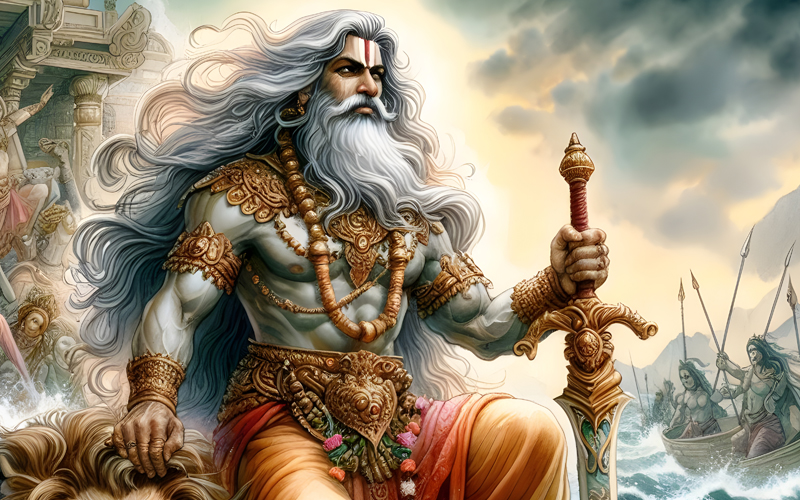
Realizing nobody can defeat Bhishma head-on, the Pandavas respectfully visit Bhishma himself at night! True to his noble heart, Bhishma explains his vow never to raise weapons against Shikhandi (born Amba reborn). On Day 10, shielded by Shikhandi, Arjuna pierces Bhishma with hundreds of arrows—laying the great patriarch upon a majestic bed of arrows (Sharashayya), where Bhishma chooses to await the auspicious northern solar solstice (Uttarayana).
Key Sanskrit Shlokas & Meanings
Bhishma Parva (Bhagavad Gita 2.47) — Duty Without Attachment
कर्मण्येवाधिकारस्ते मा फलेषु कदाचन । मा कर्मफलहेतुर्भूर्मा ते सङ्गोऽस्त्वकर्मणि ॥
Karmaṇy evādhikāras te mā phaleṣu kadācana | Mā karma-phala-hetur bhūr mā te saṅgo ’stv akarmaṇi ||
Meaning: Your right is to perform your duty alone, never to claim anxious ownership over outcomes.
Spoken right inside Bhishma Parva, this verse anchors every warrior’s inner clarity amidst chaos.
Bhishma Parva — Bhishma’s Blessing for Arjuna’s Headrest
तल्पं मे देहि गाङ्गेय वीरशाय्योचितं नृप ।
Talpaṁ me dehi gāṅgeya vīra-śayyocitaṁ nṛpa |
Meaning: Bhishma asks Arjuna—not Duryodhana—for arrows to pillow his head upon the hero’s bed, honoring skill united with Dharma.
Even as Bhishma fell, mutual love and respect between grandfather and grandson shone brighter than war.
Timeless Lessons for Modern Life
- Seek Spiritual Clarity Before Action: The Bhagavad Gita begins right before the hardest battle—wisdom belongs in daily pressure, not just calm retreats.
- Keep Dignity Amid Conflict: Arjuna bowed and wept while fulfilling his painful duty toward Bhishma.
- Honor Sacred Timing & Willpower: Bhishma’s mastery over mind and breath sustained him calmly on the bed of arrows.
Frequently Asked Questions
Where in the Mahabharata does the Bhagavad Gita appear?
The Bhagavad Gita comprises Chapters 25 through 42 of Bhishma Parva (the 6th Parva of the Mahabharata).
How many days did Bhishma command the Kaurava army?
Bhishma served as commander-in-chief for the first 10 days of the 18-day Kurukshetra war.
Continue Your Mahabharata Journey
← Previous: Parva 5 | All 18 Mahabharata Parvas | Next: Parva 7 →
To explore more Mahabharata untold stories, Bhishma’s wisdom, and Gita teachings and timeless wisdom from Hindu scriptures, visit and subscribe to our official Vibes of Divinity YouTube channel.
Which moment from this Parva speaks to you most? Share your reflection in the comments below!