
Welcome to Vibes of Divinity. Look toward the northern night sky and you will see Dhruva Nakshatra—the steadfast Pole Star around which constellations appear to revolve. In the Fourth Canto of the Srimad Bhagavata Mahapurana, that star bears the name of a five-year-old boy whose hurt heart turned into astonishing spiritual resolve.
The Story & Sacred Context
Little Prince Dhruva, son of King Uttanapada and gentle Queen Suniti, once tried to climb onto his father’s lap—only to be harshly pushed down by his stepmother Suruchi. Heartbroken, Dhruva ran weeping to his mother. Instead of teaching him hatred or revenge, wise Suniti told him gently: ‘Do not curse anyone, my child. Seek shelter in the Supreme Lord Narayana, who alone holds the highest seat above all earthly thrones.’
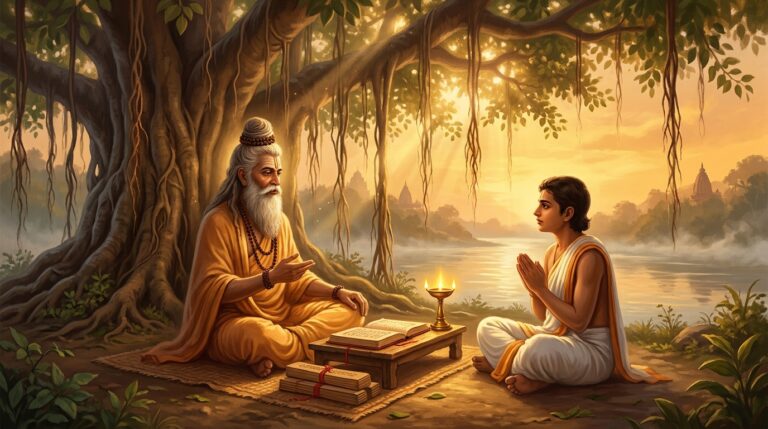
Taking his mother’s words completely to heart, five-year-old Dhruva walked out into the Madhuvana forest. Along the way he met Sage Narada, who tried to test whether the boy was too young—warning of wild beasts and cold nights. Unmoved, Dhruva asked only how to meditate on Lord Vishnu. Touched, Narada initiated him into the twelve-syllable mantra Om Namo Bhagavate Vasudevaya.
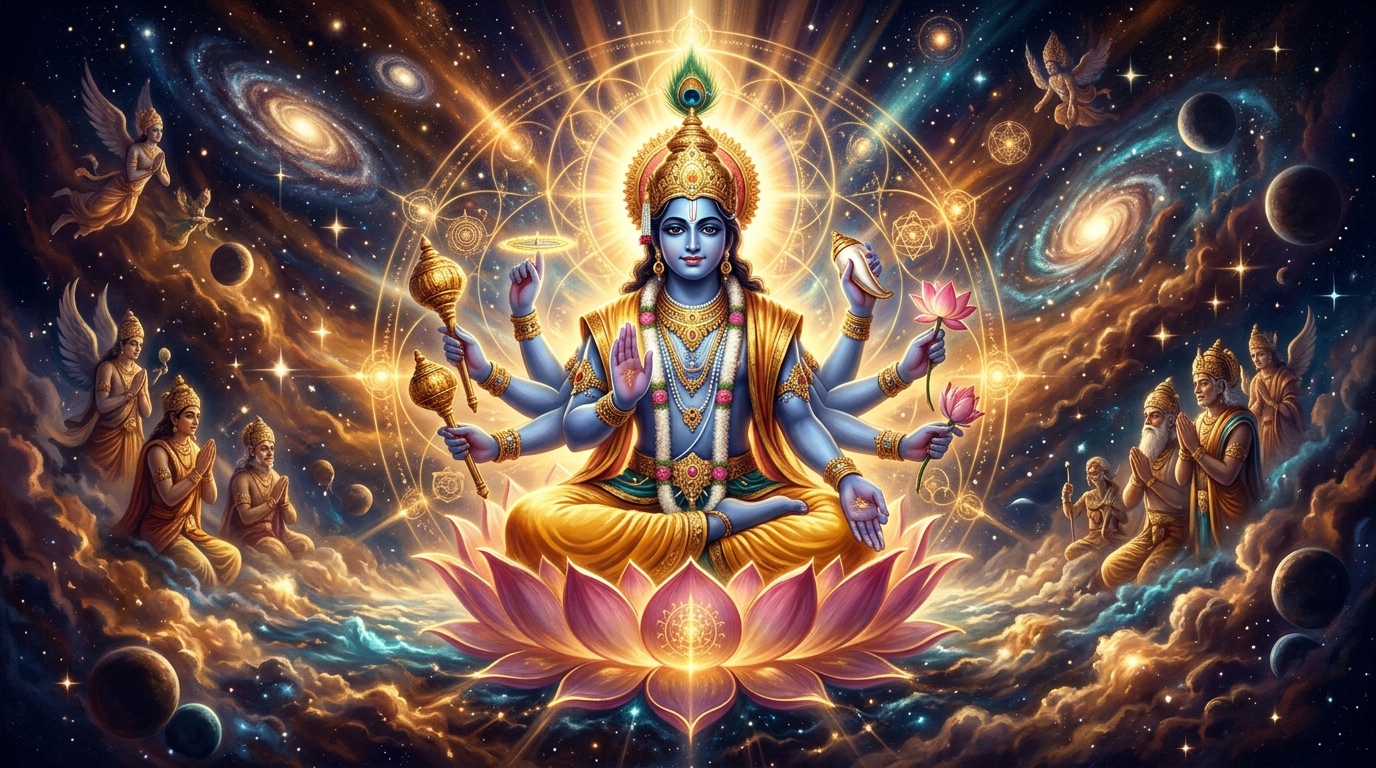
Through intense one-pointed focus, Dhruva stilled his breath and mind so deeply that Lord Vishnu Himself appeared before him. The moment Dhruva beheld the Lord’s radiant smile, all trace of petty anger melted—he asked only for loving devotion, and the Lord blessed him with righteous rule and the eternal Pole Star abode (Dhruva Loka).
Sacred Sanskrit Verse & Meaning
Srimad Bhagavatam 4.9.6 — Dhruva’s Awakened Prayer
योऽन्तः प्रविश्य मम वाचमिमां प्रसुप्तां सञ्जीवयत्यखिलशक्तिधरः स्वधाम्ना ।
Yo ’ntaḥ praviśya mama vācam imāṁ prasuptāṁ sañjīvayaty akhila-śakti-dharaḥ sva-dhāmnā |
Meaning: I bow to that Almighty Lord who enters within my heart and awakens my silent voice, senses, and spirit with His own divine radiance.
When Dhruva saw God face to face, he realized no worldly throne could ever compare with inner devotion.
Key Spiritual Lessons for Daily Life
- Channel Pain into Purpose, Not Hatred: Queen Suniti refused to poison her son with bitterness—turning rejection into spiritual elevation.
- Age Never Limits Sincerity: Focused intention from a young heart achieves what distracted adults postpone.
- When You Find the Highest, Petty Grievances Fade: Seeing the Divine healed Dhruva’s anger instantly.
Frequently Asked Questions
Where is the story of Dhruva found?
In Book (Skandha) 4, Chapters 8–12 of the Srimad Bhagavata Mahapurana, as well as the Vishnu Purana.
Which mantra did Sage Narada give Dhruva?
The twelve-syllable Dwadashakshari Mantra: Om Namo Bhagavate Vasudevaya.
Explore more sacred wisdom across our Bhagavad Gita Guide, Valmiki Ramayana Series, and Mantras & Chants Library.
To explore more spiritual stories, sacred texts, and Vedic wisdom and timeless wisdom from Hindu scriptures, visit and subscribe to our official Vibes of Divinity YouTube channel.
What lesson from this story resonates most with your life today? Share your thoughts in the comments below!