
Welcome to Vibes of Divinity. Few works of sacred art anywhere on Earth match the grace and philosophical depth of Lord Shiva as Nataraja—the Cosmic Dancer celebrated across temple sculptures, classical Bharatanatyam, and Chola bronzes.
The Story & Sacred Context
Every detail of Nataraja’s form encodes a complete vision of the universe in motion. Surrounding Him blazes the Prabhamandala (ring of cosmic fire), symbolizing the endless cycles of time, matter, and rebirth.
In His upper right hand He holds the Damaru (hourglass drum), sounding the primal vibration of creation; in His upper left hand burns Agni (fire), dissolving old forms so renewal can arise. His lower right hand rises in Abhaya Mudra (‘Fear not!’), reassuring every devotee amidst cosmic change, while His lower left hand points gracefully down to His raised left foot—signifying refuge and liberation.
Beneath His planted right foot lies Apasmara Purusha, the dwarf representing spiritual forgetfulness and ego—reminding dancers and seekers alike that true art conquers ego while keeping the face utterly serene amidst rapid motion.
Sacred Sanskrit Verse & Meaning
Nataraja Dhyana — Stillness Amid Cosmic Dance
आनन्दताण्डवपुरे हर नृत्यराजं वन्दे महेश्वरमनादिकलावतारम् ।
Ānanda-tāṇḍava-pure hara nṛtya-rājaṁ vande maheśvaram anādi-kalāvatāram |
Meaning: I bow to Lord Maheshwara, King of Cosmic Dance performing the Blissful Tandava—the timeless source of all sacred arts.
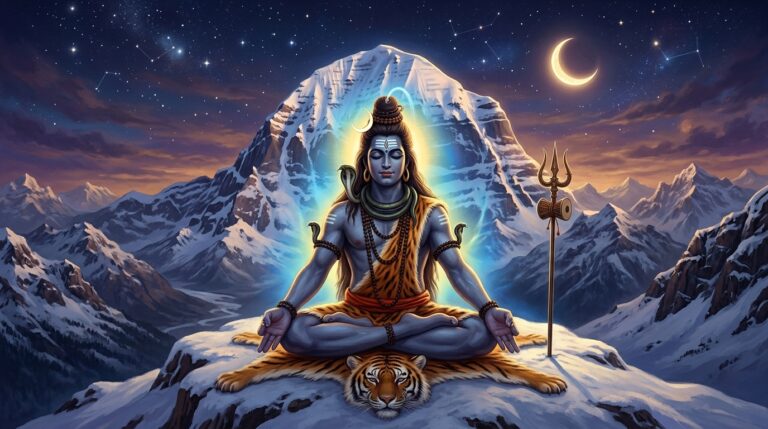
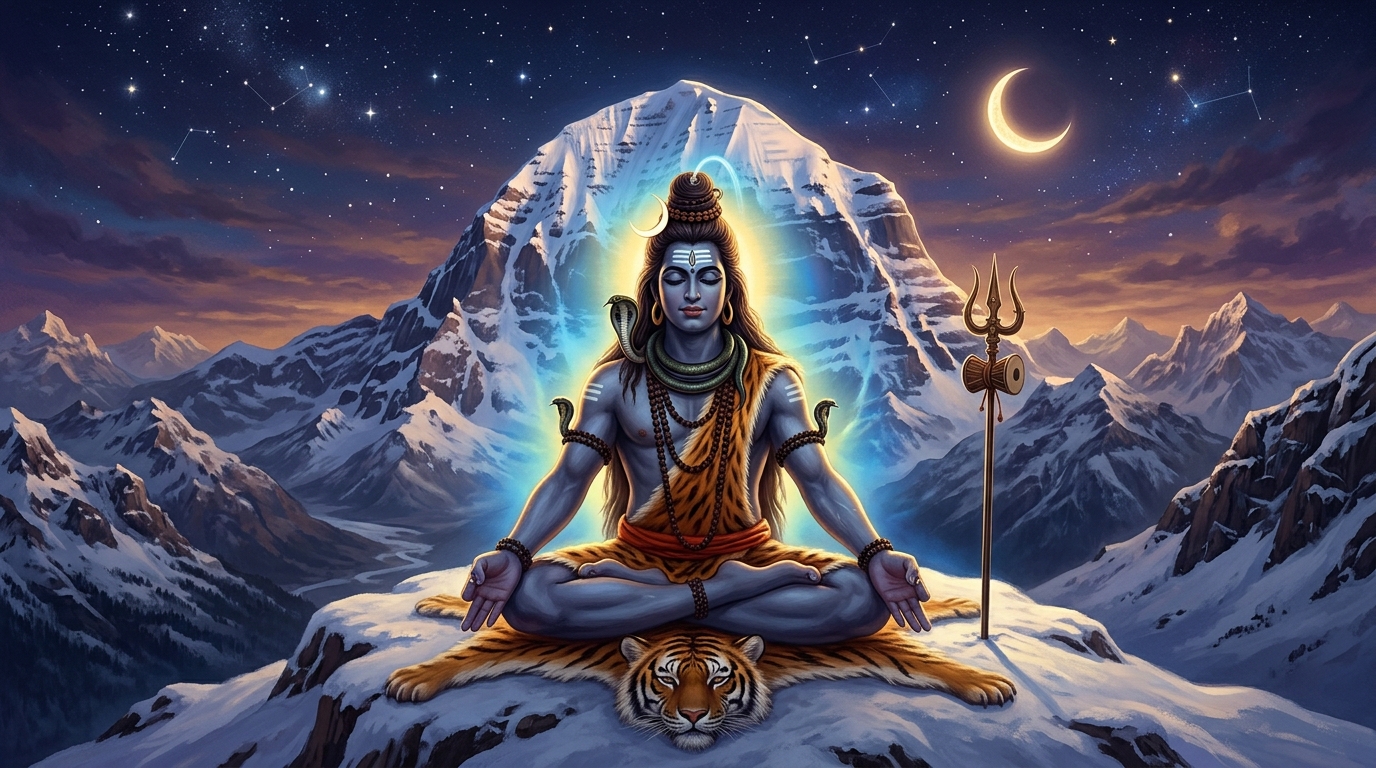
Notice Nataraja’s calm smile while His limbs move in rhythm—reminding us to stay peaceful inside even during busy seasons of life.
Key Spiritual Lessons for Daily Life
- Stay Centered While Life Moves Fast: Nataraja dances dynamically yet keeps a serene gaze.
- Accept Cycles of Change: Creation (damaru) and letting go (agni) belong together in nature.
- Honor Art as Spiritual Discipline: Indian classical dance and sculpture channel devotion through form and rhythm.
Frequently Asked Questions
What does Shiva’s raised foot symbolize in the Nataraja icon?
It symbolizes liberation (Moksha) and uplifting grace—pointed toward by His lower left hand as a promise of refuge.
Who lies beneath Nataraja’s right foot?
Apasmara (Muiyala), representing ignorance and ego—kept subdued so wisdom can shine.
Explore more sacred wisdom across our Bhagavad Gita Guide, Valmiki Ramayana Series, and Mantras & Chants Library.
To explore more spiritual stories, sacred texts, and Vedic wisdom and timeless wisdom from Hindu scriptures, visit and subscribe to our official Vibes of Divinity YouTube channel.
What lesson from this story resonates most with your life today? Share your thoughts in the comments below!