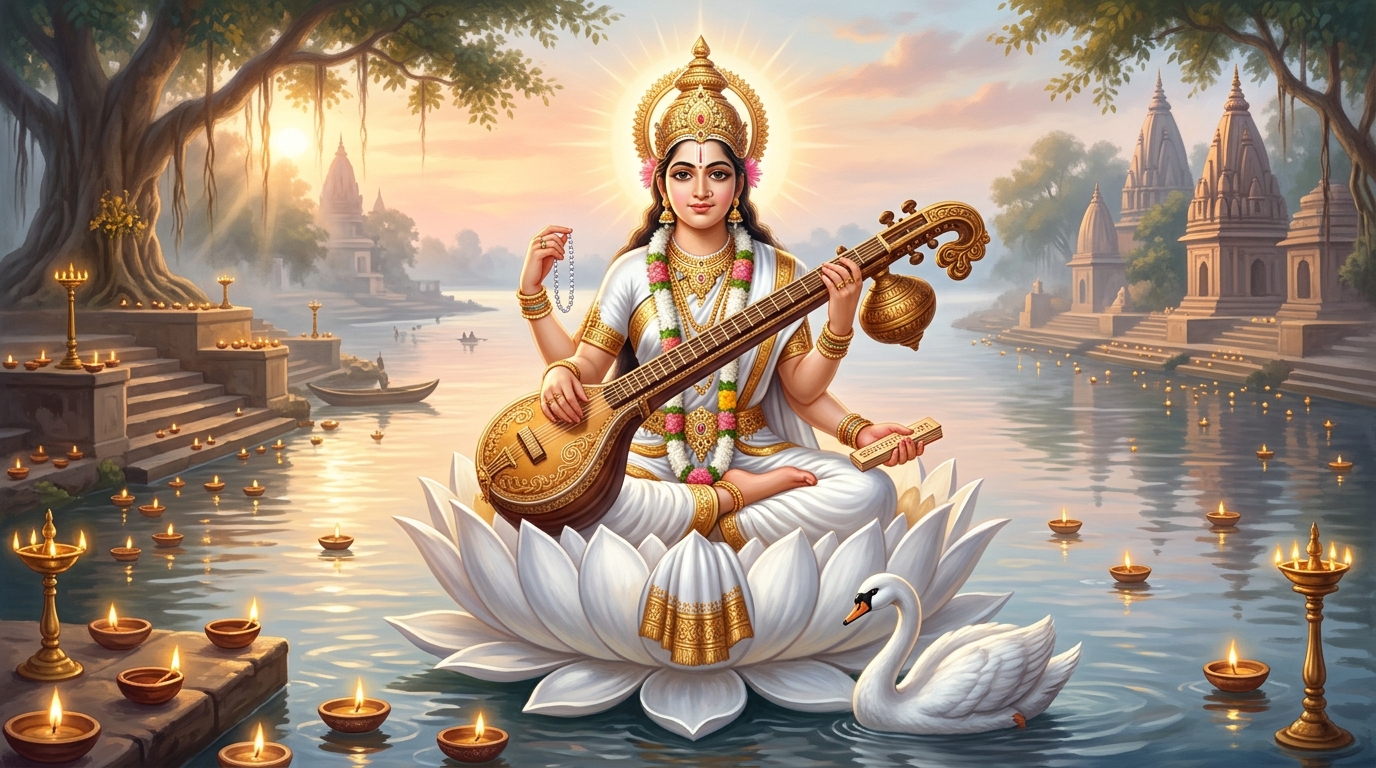

Welcome to Vibes of Divinity. Why does a single peaceful raga or heartfelt bhajan calm an anxious room faster than a hundred lectures? Ancient Indian sages recognized music not as mere entertainment, but as Nada Brahma—the realization that cosmic energy itself vibrates as sacred sound.
The Story & Sacred Context
Out of the four Vedas, the entire Samaveda is set to sacred musical meters and melodies—showing that spiritual realization and melody were intertwined from the dawn of Indian civilization. In the sacred syllable Om, sages heard the foundational resonance underlying silence and creation alike.
Traditional music treatises like Sharngadeva’s Sangita Ratnakara distinguish two streams of sound: Ahata Nada (struck sound heard by ears—flute, veena, voice, temple bells) and Anahata Nada (the unstruck cosmic vibration perceived in deep meditation). Indian classical ragas are carefully tuned to seasons and hours of the day to harmonize human emotion with nature.
Listening mindfully to devotional bhajans, classical ragas, or Saraswati Vandana isn’t passive distraction—it is gentle meditation through the ears.
Sacred Sanskrit Verse & Meaning
Sangita Ratnakara — Homage to Sacred Sound
नादब्रह्मानन्दसन्दोहं वन्देऽहं तं सदाशिवम् ।
Nāda-brahmānanda-sandohaṁ vande ’haṁ taṁ sadāśivam |
Meaning: I bow to Sadashiva, the Supreme Reality overflowing with the bliss of Nada Brahma—Sacred Sound.
In Sanatana Dharma, music is a direct yoga of the heart—tuning scattered thoughts into harmony.
Key Spiritual Lessons for Daily Life
- Curate What Your Ears Absorb: Gentle ragas, mantras, and acoustic devotional music calm the nervous system.
- Sing Without Self-Consciousness: Bhakti kirtan values heartfelt sincerity over concert perfection.
- Notice Silence Between Notes: True music teaches us to cherish quiet stillness as much as melody.
Frequently Asked Questions
What does ‘Nada Brahma’ mean?
It means ‘Sound is Divine / the Universe is Sacred Vibration’—treating disciplined music as a spiritual path toward stillness.
Which Veda focuses on sacred music and chants?
The Samaveda is dedicated to melodic chanting and inspired early Indian musical theory.
Explore more sacred wisdom across our Bhagavad Gita Guide, Valmiki Ramayana Series, and Mantras & Chants Library.
To explore more spiritual stories, sacred texts, and Vedic wisdom and timeless wisdom from Hindu scriptures, visit and subscribe to our official Vibes of Divinity YouTube channel.
What lesson from this story resonates most with your life today? Share your thoughts in the comments below!