
Welcome to Vibes of Divinity. The longest and most dramatic book of the epic, Yuddha Kanda chronicles the monumental struggle between righteousness and unchecked arrogance—from the construction of the floating stone bridge across the sea to the triumphant return to Ayodhya.
- Kanda (Book): युद्धकाण्ड (Yuddha Kanda — Book of War & Victory)
- Series Index: Valmiki Ramayana Complete 7-Kanda Guide
Narrative Summary of Kanda 6
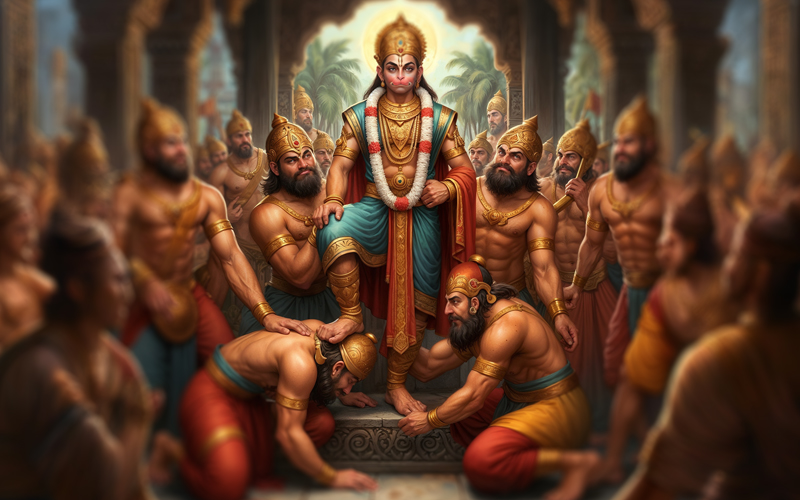
Marching to the southern shore, Rama welcomes Ravana’s younger brother Vibhishana, who chose dharma over family tyranny (Vibhishana’s Righteous Journey). Guided by Nala and Neela, the Vanara army builds the miraculous Rama Setu bridge to Lanka, and Prince Angada delivers one final peace offer in Ravana’s court (Epic Face-Off: Angad).
A fierce war unfolds: Kumbhakarna falls; Indrajit strikes Lakshmana unconscious with the Shakti weapon until Hanuman flies across India to lift Mount Dronagiri bearing the life-saving Sanjeevani herb. When Rama grows fatigued facing Ravana, Sage Agastya imparts the radiant Aditya Hridayam.
Striking Ravana’s navel nectar-vessel with the Brahmastra, Rama restores Dharma and honors even his fallen foe with royal funeral rites. After Sita’s pure Agni Pariksha and Vibhishana’s coronation, Rama, Sita, Lakshmana, and Hanuman return joyfully to Ayodhya aboard the Pushpaka Vimana—celebrated forever as Deepavali (Diwali).
Key Sanskrit Shlokas & Meanings
Yuddha Kanda — Rama’s Promise of Refuge (Abhaya)
सकृदेव प्रपन्नाय तवास्मीति च याचते । अभयं सर्वभूतेभ्यो ददाम्येतद्व्रतं मम ॥
Sakṛd eva prapannāya tavāsmīti ca yācate | Abhayaṁ sarva-bhūtebhyo dadāmy etad vrataṁ mama ||
Meaning: To anyone who surrenders even once, saying ‘I am Yours’ and seeking shelter, I grant fearlessness from all beings—this is My sacred vow!
Spoken when welcoming Vibhishana despite Sugriva’s doubts—revealing the boundless mercy of the Divine toward anyone choosing truth.
Yuddha Kanda — Hatred Ends at Death
मरणान्तानि वैराणि निवृत्तं नः प्रयोजनम् । क्रियतामस्य संस्कारो ममाप्येष यथा तव ॥
Maraṇāntāni vairāṇi nivṛttaṁ naḥ prayojanam | Kriyatām asya saṁskāro mamāpy eṣa yathā tava ||
Meaning: Enmity ends at death; our conflict is over. Perform Ravana’s final rites with honor—for in death he is as worthy of dignity to me as to you, Vibhishana.
Even after defeating his bitterest enemy, Rama shows unmatched nobility and freedom from vengeance.
Timeless Dharmic Lessons
- Stand for Truth Over Blind Loyalty: Vibhishana proved that real love means refusing to endorse injustice.
- Seek Peace Before Conflict: Rama sent Angada to offer Ravana one last honorable way out before unleashing full war.
- Show Dignity Even to Defeated Foes: Rama’s honorable funeral command for Ravana sets the highest standard of chivalry.
- Inner Light Renews Tired Warriors: Just as Agastya taught Rama the Aditya Hridayam, prayer restores strength when exhaustion sets in.
Frequently Asked Questions
What does Yuddha Kanda teach about forgiveness and refuge?
In verse 6.18.33, Rama vows that anyone who sincerely turns toward truth and seeks refuge receives unconditional protection.
Which festival celebrates Shri Rama’s return at the end of Yuddha Kanda?
Deepavali (Diwali) celebrates Shri Rama, Mata Sita, and Lakshmana returning to Ayodhya after fourteen years of exile and the victory of Dharma.
Continue Your Ramayana Journey
← Previous: Kanda 5 | All 7 Ramayana Kandas | Next: Kanda 7 →
To explore more Ramayana stories, Hanuman devotion, and epic insights and timeless wisdom from Hindu scriptures, visit and subscribe to our official Vibes of Divinity YouTube channel.
Which moment from this Kanda inspires you most? Share your reflections in the comments below!