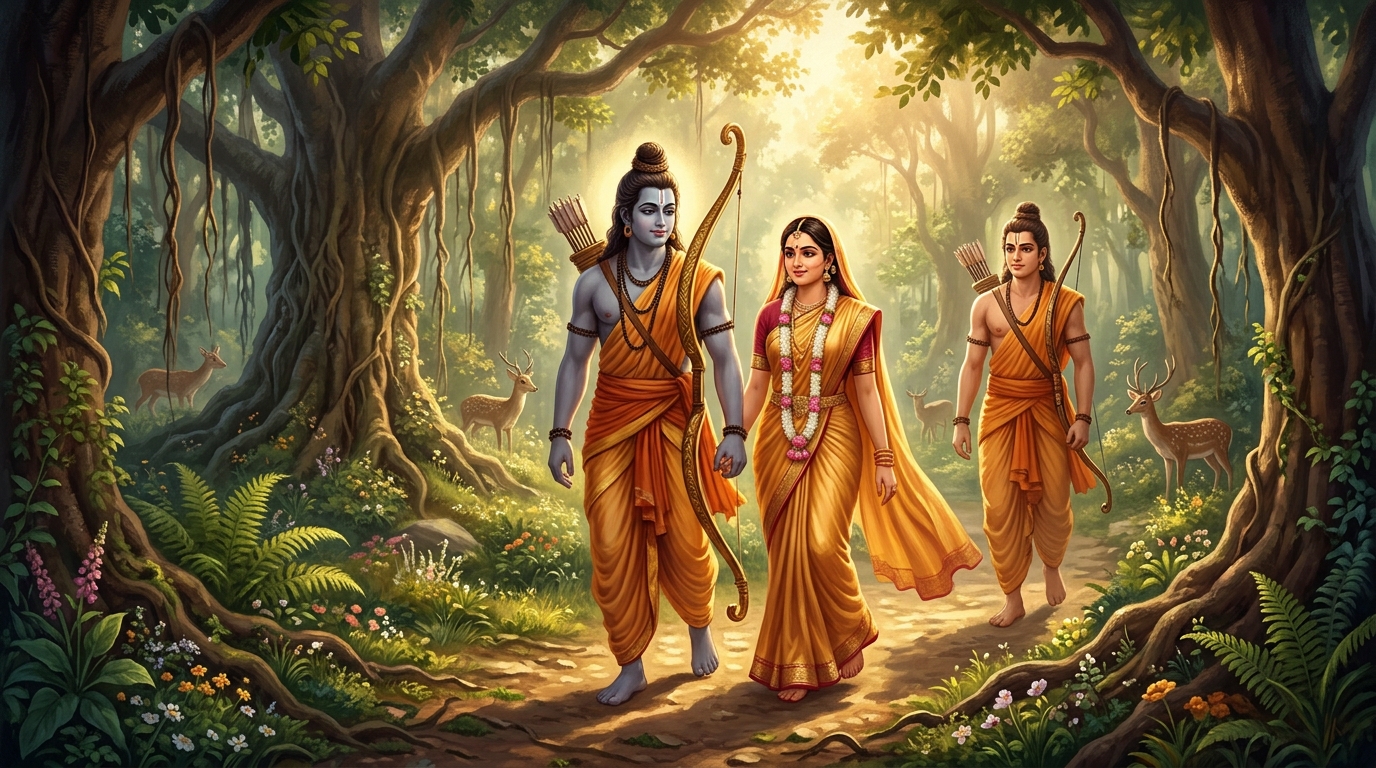

Welcome to Vibes of Divinity. Aranya Kanda shifts the Ramayana from royal palaces into the untamed wilderness of Dandakaranya and Panchavati. While Rama, Sita, and Lakshmana initially find peaceful harmony among forest sages, dark forces soon collide with them—culminating in the fateful abduction of Mata Sita.
- Kanda (Book): अरण्यकाण्ड (Aranya Kanda — Book of the Forest)
- Series Index: Valmiki Ramayana Complete 7-Kanda Guide
Narrative Summary of Kanda 3
Moving deeper south along the Godavari river, Rama, Sita, and Lakshmana visit revered rishis including Atri, Anasuya, Sharabhanga, and Agastya—pledging to protect forest ascetics from rakshasa attacks. Settling at serene Panchavati, their quiet days end when Ravana’s sister Surpanakha attacks Sita in jealousy and loses her nose and ears to Lakshmana.
Enraged, Ravana plots revenge by sending the shape-shifting demon Maricha disguised as an enchanting golden deer. Drawn by compassion and desire, Sita urges Rama to capture it; when Maricha mimics Rama’s dying cry, Sita sends Lakshmana after him, crossing the protective boundary drawn around their cottage.
Disguised as a wandering ascetic, Ravana abducts Sita. The aged vulture-king Jatayu fights Ravana fiercely in mid-air until his wings are severed—surviving just long enough to tell Rama which direction Ravana fled. Searching south, Rama and Lakshmana also bless the humble elderly devotee Shabari, tasting her berries offered with pure love (read Shabari’s full story).
Key Sanskrit Shlokas & Meanings
Aranya Kanda — Jatayu’s Fearless Stand for Dharma
रामो दाशरथिः श्रीमान् यस्याहं मित्रवत्सलः । न शक्यं मयि जीवति हर्तुं सीता त्वया बलात् ॥
Rāmo dāśarathiḥ śrīmān yasyāhaṁ mitra-vatsalaḥ | Na śakyaṁ mayi jīvati hartuṁ sītā tvayā balāt ||
Meaning: While I still breathe, you shall never abduct Sita by force—for I am the devoted friend of noble Rama, son of Dasharatha!
Even knowing Ravana was younger and vastly stronger, aged Jatayu chose heroic duty over safe silence.
Aranya Kanda — Rama’s Grief and Resolve
अपश्यतो मे वैदेहीं न प्राणैर्मे प्रयोजनम् । धर्ममेवानुपश्यामि न स्वार्थं रघुनन्दन ॥
Apaśyato me vaidehīṁ na prāṇair me prayojanam | Dharmam evānupaśyāmi na svārthaṁ raghunandana ||
Meaning: Without beholding Sita (Vaidehi), life holds no joy; yet in every step ahead I hold fast to Dharma above selfish despair.
Deep sorrow does not break Rama’s moral compass; grief becomes fuel for righteous rescue.
Timeless Dharmic Lessons
- Discern Illusion from Truth: Like the golden deer, alluring temptations often disguise hidden traps.
- Stand Up for the Vulnerable: Jatayu teaches that courage is measured by loyalty to truth, regardless of age or odds.
- Love Outshines Status: Shabari’s half-tasted berries won Rama’s highest grace because they were offered with pure bhakti.
- Guard Sacred Boundaries: Patience and discernment protect us when emotions push us toward rash decisions.
Frequently Asked Questions
What major turning point happens in Aranya Kanda?
The abduction of Mata Sita by Ravana after Maricha’s golden-deer deception—along with Jatayu’s sacrifice and Shabari’s meeting with Shri Rama.
Who told Shri Rama where Ravana took Sita?
The dying eagle-vulture king Jatayu informed Rama that Ravana carried Sita southward.
Continue Your Ramayana Journey
← Previous: Kanda 2 | All 7 Ramayana Kandas | Next: Kanda 4 →
To explore more Ramayana stories, Hanuman devotion, and epic insights and timeless wisdom from Hindu scriptures, visit and subscribe to our official Vibes of Divinity YouTube channel.
Which moment from this Kanda inspires you most? Share your reflections in the comments below!