
Welcome to Vibes of Divinity. If Bala Kanda celebrates divine promise, Ayodhya Kanda tests that promise in the crucible of heartbreak. On the very morning Ayodhya prepares to crown Shri Rama as crown prince, palace intrigue triggers fourteen years of forest exile—revealing why Rama is remembered as Maryada Purushottama, the supreme upholder of integrity.
- Kanda (Book): अयोध्याकाण्ड (Ayodhya Kanda — Book of Ayodhya)
- Series Index: Valmiki Ramayana Complete 7-Kanda Guide
Narrative Summary of Kanda 2
Overjoyed at Rama’s upcoming coronation, Ayodhya glows with celebration—until Queen Kaikeyi’s maid Manthara poisons her mind with jealousy and fear for her son Bharata. Recalling two old boons promised by King Dasharatha, Kaikeyi demands Bharata’s coronation and Rama’s fourteen-year exile into the Dandaka forest.
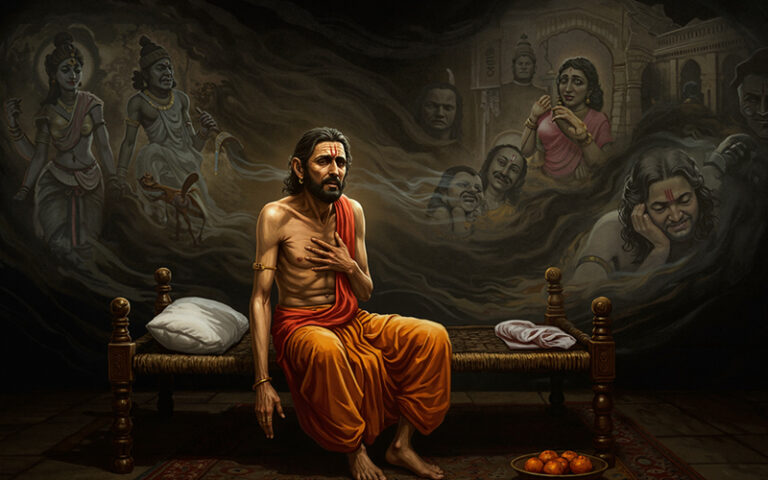
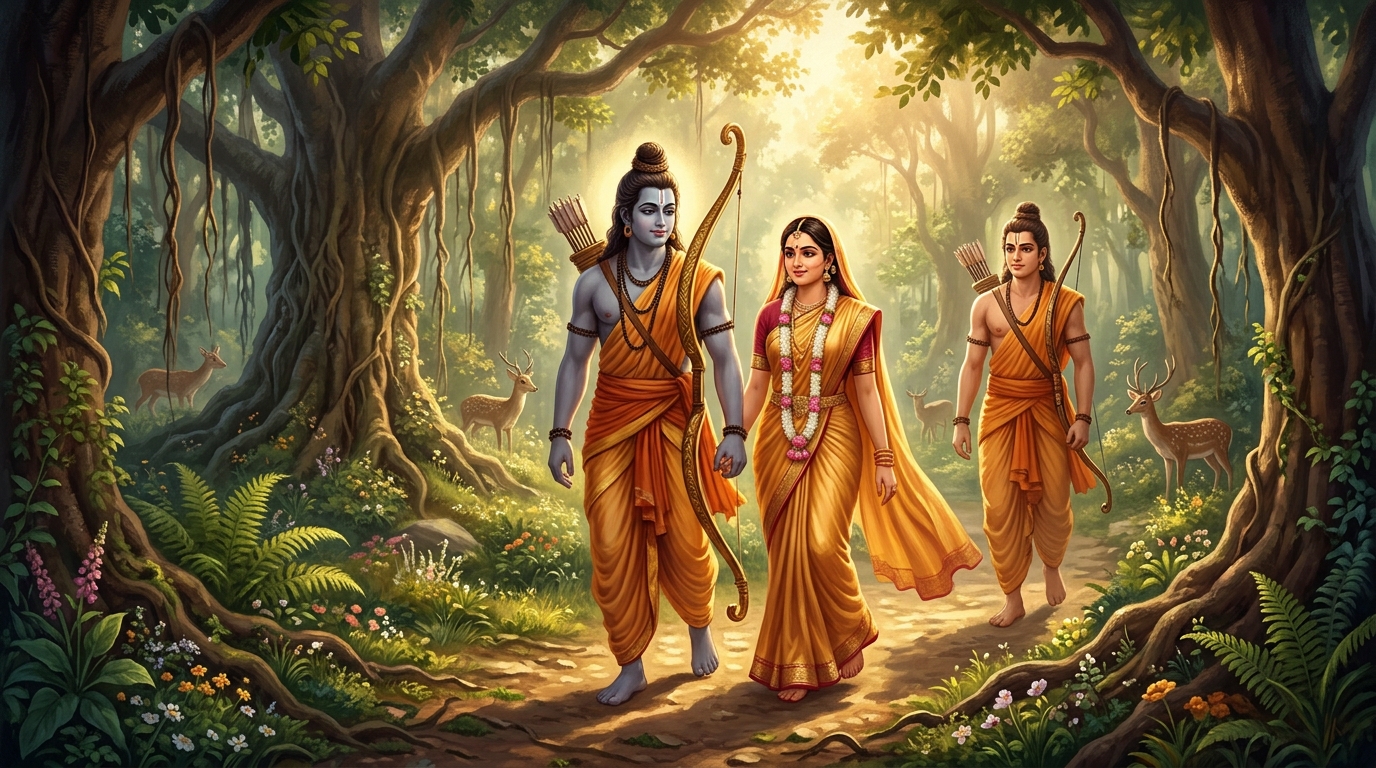
Heartbroken, Dasharatha collapses under the weight of his sacred promise. Yet Shri Rama greets the news with zero bitterness toward Kaikeyi—choosing to protect his father’s word above royal power. Devoted Sita and loyal Lakshmana insist on accompanying him, turning royal robes into ascetic bark garments as weeping citizens follow them to the Tamasa river.
After Dasharatha passes away in grief, Bharata returns to Ayodhya, fiercely rejects the throne gained through injustice, and journeys to Chitrakuta to beg Rama’s return. When Rama refuses to break Dasharatha’s pledge, Bharata places Rama’s golden sandals (Charan Paduka) upon the throne and rules Ayodhya as a humble caretaker from Nandigrama for fourteen years.
Key Sanskrit Shlokas & Meanings
Ayodhya Kanda — Dharma Stands Above Royal Power
रामो विग्रहवान्धर्मः साधुः सत्यपराक्रमः । राजा सर्वस्य लोकस्य देवानामिव वासवः ॥
Rāmo vigrahavān dharmaḥ sādhuḥ satya-parākramaḥ | Rājā sarvasya lokasya devānām iva vāsavaḥ ||
Meaning: Rama is Dharma personified—noble, whose true valor lies in unwavering truthfulness, worthy of guiding the whole world just as Indra guides the celestials.
Even those around Rama recognize that his greatness comes not from a crown, but from keeping his word without anger or resentment.
Ayodhya Kanda — Sita’s Unshakable Devotion
न पिता नात्मजो वात्मा न माता न सखीजनः । इह प्रेत्य च नारीणां पतिरेको गतिः सदा ॥
Na pitā nātmajo vātmā na mātā na sakhījanaḥ | Iha pretya ca nārīṇāṁ patir eko gatiḥ sadā ||
Meaning: Neither father, nor son, nor mother, nor friends—in joy and hardship alike, shared companionship in dharma is my true path and refuge.
Sita’s resolve to stand beside Rama in the forest demonstrates spiritual partnership grounded in shared values, not convenience.
Timeless Dharmic Lessons
- Equanimity Under Sudden Loss: Rama’s face does not lose its calm serenity whether offered a throne at sunrise or exile by noon.
- Integrity Outlasts Ambition: Bharata’s refusal of an unjust crown makes him one of history’s noblest leaders.
- Guard Against Toxic Whisperers: Kaikeyi’s downfall began the moment she let Manthara’s fear override her own affection for Rama.
- True Loyalty Shines in Adversity: Sita and Lakshmana chose hardship with Rama over comfort without him.
Frequently Asked Questions
Why did Shri Rama accept exile instead of claiming the throne?
Rama honored King Dasharatha’s solemn promise so his father’s truthfulness would never be tarnished, choosing dharma over political power.
What did Bharata do during Rama’s 14-year exile?
Bharata refused to sit on the throne; instead he placed Shri Rama’s sacred sandals (Paduka) on it and lived ascetically in Nandigrama as Rama’s trustee.
Continue Your Ramayana Journey
← Previous: Kanda 1 | All 7 Ramayana Kandas | Next: Kanda 3 →
To explore more Ramayana stories, Hanuman devotion, and epic insights and timeless wisdom from Hindu scriptures, visit and subscribe to our official Vibes of Divinity YouTube channel.
Which moment from this Kanda inspires you most? Share your reflections in the comments below!