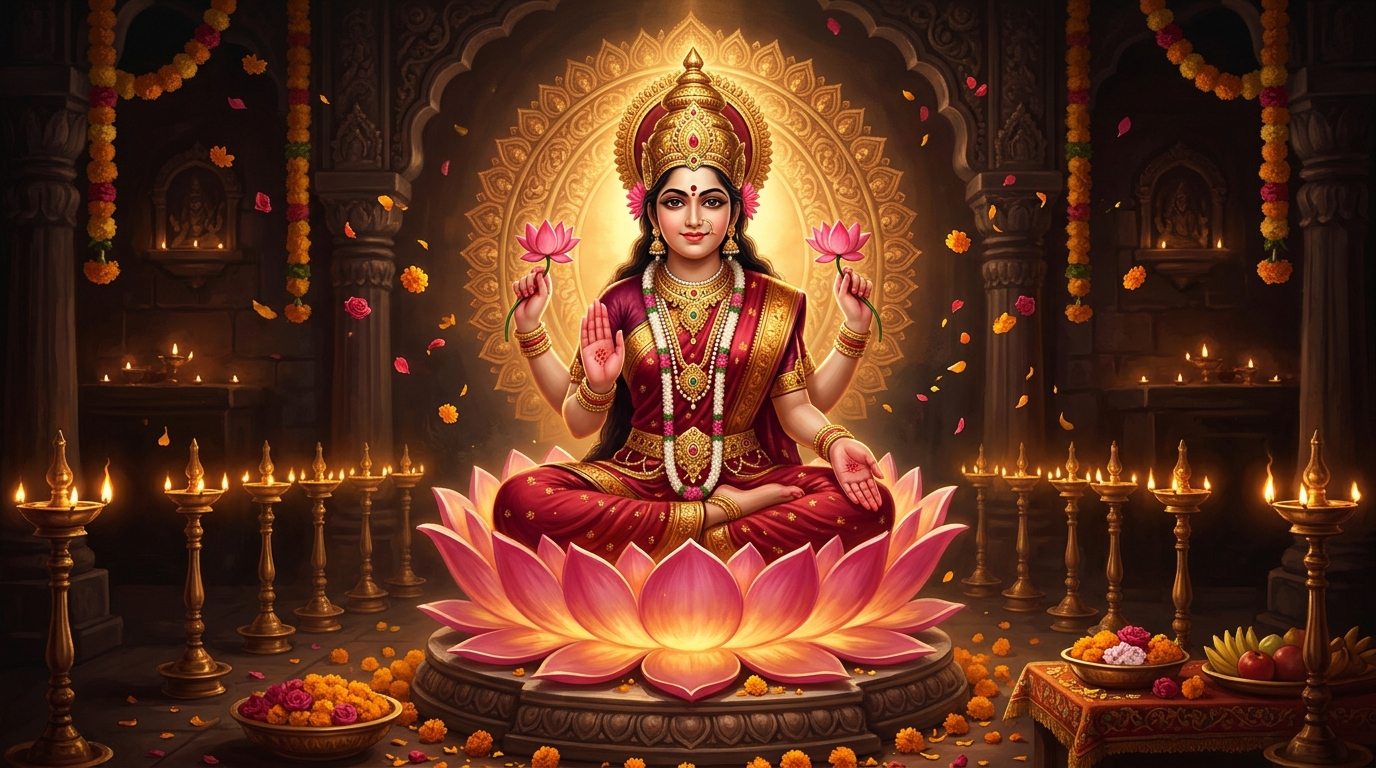

Welcome to Vibes of Divinity. In Hindu tradition, Goddess Mahalakshmi is far more than the deity of material wealth—she embodies auspiciousness (Shubha), grace, inner peace, gratitude, righteous prosperity, and spiritual richness (Ashta-Lakshmi).
Here we explore both the celebrated Mahalakshmi Moola Mantra and opening verses of the Mahalakshmi Ashtakam (traditionally sung by Indra in praise of the Goddess), complete with Devanagari, transliteration, and practical meaning.
Sacred Text, Transliteration & Meaning
Verse 1
ॐ श्रीं ह्रीं श्रीं कमले कमलालये प्रसीद प्रसीद ।
ॐ श्रीं ह्रीं श्रीं महालक्ष्म्यै नमः ॥
Oṁ Śrīṁ Hrīṁ Śrīṁ Kamale Kamalālaye Prasīda Prasīda |
Oṁ Śrīṁ Hrīṁ Śrīṁ Mahālakṣmyai Namaḥ ||
Meaning: Om Shreem Hreem Shreem! O Goddess of the Lotus, who dwells within the lotus of the heart, be pleased and bestow Your auspicious grace upon us. Salutations to Goddess Mahalakshmi.
Verse 2
नमस्तेऽस्तु महामाये श्रीपीठे सुरपूजिते ।
शङ्खचक्रगदाहस्ते महालक्ष्मि नमोऽस्तु ते ॥
Namaste ’stu mahāmāye śrī-pīṭhe sura-pūjite |
Śaṅkha-cakra-gadā-haste mahālakṣmi namo ’stu te ||
Meaning: Salutations to You, O Mahamaya, seated upon the sacred Sri Peetha and worshipped by all celestials; holding the conch, discus, and mace in Your hands—O Mahalakshmi, I bow to You.
Verse 3
सिद्धिबुद्धिप्रदे देवि भुक्तिमुक्तिप्रदायिनि ।
मन्त्रमूर्ते सदा देवि महालक्ष्मि नमोऽस्तु ते ॥
Siddhi-buddhi-prade devi bhukti-mukti-pradāyini |
Mantra-mūrte sadā devi mahālakṣmi namo ’stu te ||
Meaning: O Goddess who bestows accomplishment and wise discernment, granting both righteous worldly fulfillment (bhukti) and spiritual liberation (mukti); O eternal embodiment of sacred mantras—O Mahalakshmi, salutations to You.
Spiritual Significance & Deeper Insights
- Wealth Guided by Wisdom (Siddhi & Buddhi): Notice the Ashtakam asks for Buddhi (discernment) alongside abundance—reminding us that prosperity without wisdom brings restlessness.
- Harmony of Bhukti and Mukti: Sanatana Dharma does not treat honest livelihood as unspiritual; Lakshmi blesses both joyful living and spiritual liberation.
- Dharma Invites Lakshmi: Scriptures teach that cleanliness, truthfulness, gratitude, and generosity naturally welcome Goddess Lakshmi into a home.
How & When to Chant
- Best Time: Fridays (Shukravar), early morning or twilight (Godhuli Bela), and especially during Diwali and Sharad Purnima.
- Atmosphere: Keep your space tidy and serene, light a ghee lamp, and chant with gratitude rather than greedy anxiety.
- Repetitions: Chant ‘Om Shreem Mahalakshmiyei Namah’ 108 times on a lotus-seed (Kamalgatta) or Rudraksha/Tulsi mala.
Frequently Asked Questions
What does the seed syllable ‘Shreem’ mean in Lakshmi mantras?
Shreem is the sacred Beej (seed) mantra of Goddess Lakshmi, vibrating with abundance, beauty, auspiciousness, and inner peace.
Who composed the Mahalakshmi Ashtakam?
Traditionally it is attributed to Lord Indra in the Puranas as a humble hymn of praise to restore cosmic auspiciousness.
Is Mahalakshmi worship only for money?
No—through her Ashta-Lakshmi forms, she bestows health, courage, knowledge, nourishment, family harmony, and spiritual grace.
Explore more sacred hymns in our Mantras & Chants Library or read the Complete Bhagavad Gita Guide.
To explore more sacred mantras, stotras, and Puranic wisdom and timeless wisdom from Hindu scriptures, visit and subscribe to our official Vibes of Divinity YouTube channel.
Have you chanted this sacred prayer in your daily practice? Share your experience in the comments below!