
Welcome to Vibes of Divinity. Having united selfless action and wisdom, Lord Krishna now turns inward in Bhagavad Gita Chapter 6 (Dhyana Yoga)—giving one of history’s clearest, most practical guides to meditation, emotional balance, and mastering a restless mind.
- Chapter Name: ध्यानयोग / आत्मसंयमयोग (Dhyana / Atma Samyama Yoga)
- Section: Section 1: The Path of Selfless Action & Discipline (Chapters 1–6)
- Complete Text Included: All 47 Sanskrit shlokas with IAST transliteration & English translation
- Series Index: Bhagavad Gita Complete Guide (All 18 Chapters & 701 Shlokas)
Chapter 6 Summary & Context on Kurukshetra
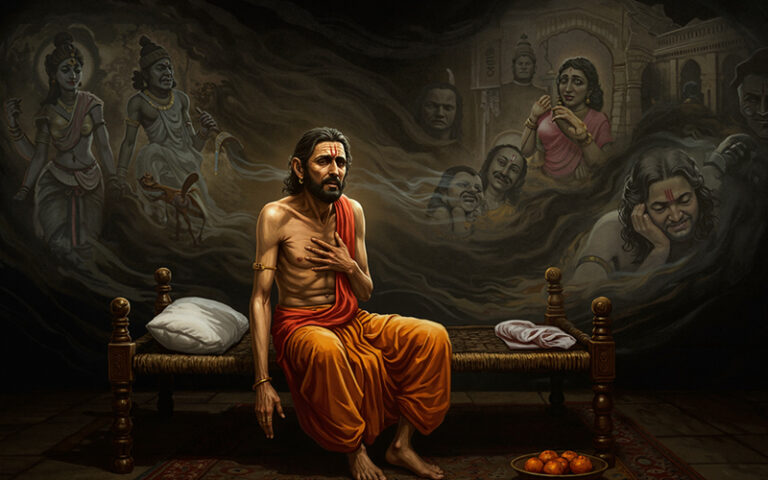
Krishna opens by defining who a real yogi is: not someone who merely quits work, but one who acts rightly without craving results. Your own mind can be your greatest ally or your worst adversary depending on whether you train it.
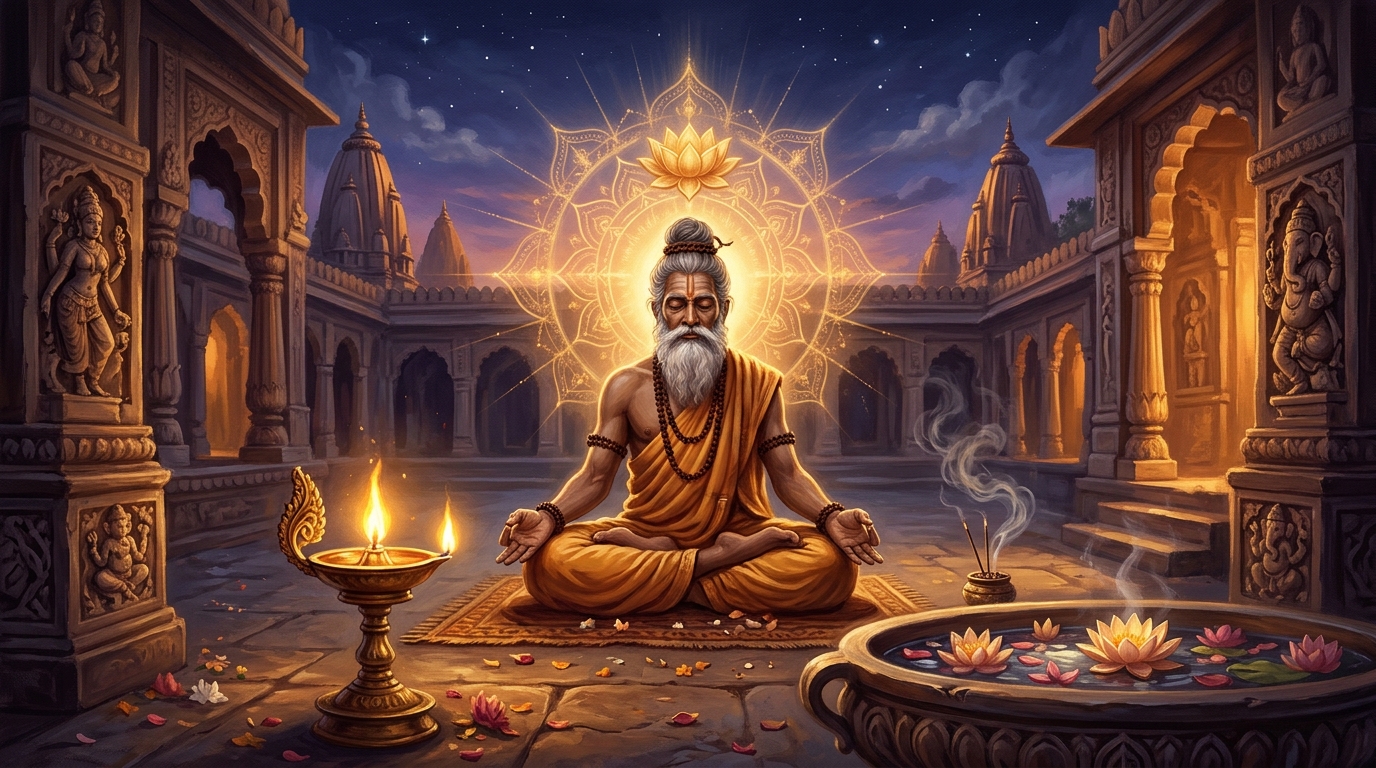
He gives concrete meditation instructions: choose a clean, quiet spot; sit steadily with spine, neck, and head aligned; gently withdraw wandering attention; and cultivate moderation in eating, sleeping, work, and rest.
When Arjuna candidly admits that controlling the restless mind feels harder than controlling the wind, Krishna agrees with warmth—and gives the twofold secret: Abhyasa (consistent practice) and Vairagya (calm detachment). Krishna also reassures Arjuna that no sincere spiritual effort is ever wasted, even across lifetimes.
Highlighted Shlokas & Spiritual Reflections (Chapter 6)
Shloka 6.5 — Lift Yourself by Yourself
उद्धरेदात्मनात्मानं नात्मानमवसादयेत् । आत्मैव ह्यात्मनो बन्धुरात्मैव रिपुरात्मनः ॥
Uddhared ātmanātmānaṁ nātmānam avasādayet | Ātmaiva hy ātmano bandhur ātmaiva ripur ātmanaḥ ||
Meaning: Elevate yourself through the power of your own mind, and never degrade yourself. For the mind alone is the friend of the self, and the mind alone is the enemy of the self.
Self-mastery begins with taking responsibility for our inner dialogue—turning our mind from self-sabotage into steady support.
Shloka 6.17 — Yoga Thrives on Moderation
युक्ताहारविहारस्य युक्तचेष्टस्य कर्मसु । युक्तस्वप्नावबोधस्य योगो भवति दुःखहा ॥
Yuktāhāra-vihārasya yukta-ceṣṭasya karmasu | Yukta-svapnāvabodhasya yogo bhavati duḥkha-hā ||
Meaning: For one who is balanced in eating and recreation, balanced in daily work, and balanced in sleep and wakefulness, Yoga becomes the destroyer of all sorrow.
Spirituality does not demand harmful extremes; sustainable discipline in diet, sleep, and routine brings natural peace.
Shloka 6.35 — Taming the Restless Mind
असंशयं महाबाहो मनो दुर्निग्रहं चलम् । अभ्यासेन तु कौन्तेय वैराग्येण च गृह्यते ॥
Asaṁśayaṁ mahā-bāho mano durnigrahaṁ calam | Abhyāsena tu kaunteya vairāgyeṇa ca gṛhyate ||
Meaning: Undoubtedly, O mighty-armed Arjuna, the mind is restless and hard to control; yet by constant practice (Abhyasa) and detachment (Vairagya), it can be mastered.
Do not feel discouraged when your mind wanders during meditation—gently returning it again and again IS the practice.
Complete Verse-by-Verse Bhagavad Gita Chapter 6 (All 47 Shlokas)
Read all 47 original Sanskrit verses of Chapter 6 below with Roman IAST transliteration and clear English meaning:
Verse 6.1
श्रीभगवानुवाच |
अनाश्रितः कर्मफलं कार्यं कर्म करोति यः |
स संन्यासी च योगी च न निरग्निर्न चाक्रियः ||६-१||
śrībhagavānuvāca .
anāśritaḥ karmaphalaṃ kāryaṃ karma karoti yaḥ .
sa saṃnyāsī ca yogī ca na niragnirna cākriyaḥ ||6-1||
Meaning: Lord Shri Krishna said: He who acts because it is his duty, not thinking of the consequences, is really spiritual and a true ascetic; and not he who merely observes rituals or who shuns all action.
Verse 6.2
यं संन्यासमिति प्राहुर्योगं तं विद्धि पाण्डव |
न ह्यसंन्यस्तसङ्कल्पो योगी भवति कश्चन ||६-२||
yaṃ saṃnyāsamiti prāhuryogaṃ taṃ viddhi pāṇḍava .
na hyasaṃnyastasaṅkalpo yogī bhavati kaścana ||6-2||
Meaning: O Arjuna! Renunciation is in fact what is called Right Action. No one can become spiritual who has not renounced all desire.
Verse 6.3
आरुरुक्षोर्मुनेर्योगं कर्म कारणमुच्यते |
योगारूढस्य तस्यैव शमः कारणमुच्यते ||६-३||
ārurukṣormuneryogaṃ karma kāraṇamucyate .
yogārūḍhasya tasyaiva śamaḥ kāraṇamucyate ||6-3||
Meaning: For the sage who seeks the heights of spiritual meditation, practice is the only method, and when he has attained them, he must maintain himself there by continual self-control.
Verse 6.4
यदा हि नेन्द्रियार्थेषु न कर्मस्वनुषज्जते |
सर्वसङ्कल्पसंन्यासी योगारूढस्तदोच्यते ||६-४||
yadā hi nendriyārtheṣu na karmasvanuṣajjate .
sarvasaṅkalpasaṃnyāsī yogārūḍhastadocyate ||6-4||
Meaning: When a man renounces even the thought of initiating action, when he is not interested in sense objects or any results which may flow from his acts, then in truth he understands spirituality.
Verse 6.5
उद्धरेदात्मनात्मानं नात्मानमवसादयेत् |
आत्मैव ह्यात्मनो बन्धुरात्मैव रिपुरात्मनः ||६-५||
uddharedātmanātmānaṃ nātmānamavasādayet .
ātmaiva hyātmano bandhurātmaiva ripurātmanaḥ ||6-5||
Meaning: Let him seek liberation by the help of his Highest Self, and let him never disgrace his own Self. For that Self is his only friend; yet it may also be his enemy.
Verse 6.6
बन्धुरात्मात्मनस्तस्य येनात्मैवात्मना जितः |
अनात्मनस्तु शत्रुत्वे वर्तेतात्मैव शत्रुवत् ||६-६||
bandhurātmātmanastasya yenātmaivātmanā jitaḥ .
anātmanastu śatrutve vartetātmaiva śatruvat ||6-6||
Meaning: To him who has conquered his lower nature by Its help, the Self is a friend, but to him who has not done so, It is an enemy.
Verse 6.7
जितात्मनः प्रशान्तस्य परमात्मा समाहितः |
शीतोष्णसुखदुःखेषु तथा मानापमानयोः ||६-७||
jitātmanaḥ praśāntasya paramātmā samāhitaḥ .
śītoṣṇasukhaduḥkheṣu tathā mānāpamānayoḥ ||6-7||
Meaning: The Self of him who is self-controlled, and has attained peace is equally unmoved by heat or cold, pleasure or pain, honour or dishonour.
Verse 6.8
ज्ञानविज्ञानतृप्तात्मा कूटस्थो विजितेन्द्रियः |
युक्त इत्युच्यते योगी समलोष्टाश्मकाञ्चनः ||६-८||
jñānavijñānatṛptātmā kūṭastho vijitendriyaḥ .
yukta ityucyate yogī samaloṣṭāśmakāñcanaḥ ||6-8||
Meaning: He who desires nothing but wisdom and spiritual insight, who has conquered his senses and who looks with the same eye upon a lump of earth, a stone or fine gold, is a real saint.
Verse 6.9
सुहृन्मित्रार्युदासीनमध्यस्थद्वेष्यबन्धुषु |
साधुष्वपि च पापेषु समबुद्धिर्विशिष्यते ||६-९||
suhṛnmitrāryudāsīnamadhyasthadveṣyabandhuṣu .
sādhuṣvapi ca pāpeṣu samabuddhirviśiṣyate ||6-9||
Meaning: He looks impartially on all – lover, friend or foe; indifferent or hostile; alien or relative; virtuous or sinful.
Verse 6.10
योगी युञ्जीत सततमात्मानं रहसि स्थितः |
एकाकी यतचित्तात्मा निराशीरपरिग्रहः ||६-१०||
yogī yuñjīta satatamātmānaṃ rahasi sthitaḥ .
ekākī yatacittātmā nirāśīraparigrahaḥ ||6-10||
Meaning: Let the student of spirituality try unceasingly to concentrate his mind; Let him live in seclusion, absolutely alone, with mind and personality controlled, free from desire and without possessions.
Verse 6.11
शुचौ देशे प्रतिष्ठाप्य स्थिरमासनमात्मनः |
नात्युच्छ्रितं नातिनीचं चैलाजिनकुशोत्तरम् ||६-११||
śucau deśe pratiṣṭhāpya sthiramāsanamātmanaḥ .
nātyucchritaṃ nātinīcaṃ cailājinakuśottaram ||6-11||
Meaning: Having chosen a holy place, let him sit in a firm posture on a seat, neither too high nor too low, and covered with a grass mat, a deer skin and a cloth.
Verse 6.12
तत्रैकाग्रं मनः कृत्वा यतचित्तेन्द्रियक्रियः |
उपविश्यासने युञ्ज्याद्योगमात्मविशुद्धये ||६-१२||
tatraikāgraṃ manaḥ kṛtvā yatacittendriyakriyaḥ .
upaviśyāsane yuñjyādyogamātmaviśuddhaye ||6-12||
Meaning: Seated thus, his mind concentrated, its functions controlled and his senses governed, let him practise meditation for the purification of his lower nature.
Verse 6.13
समं कायशिरोग्रीवं धारयन्नचलं स्थिरः |
सम्प्रेक्ष्य नासिकाग्रं स्वं दिशश्चानवलोकयन् ||६-१३||
samaṃ kāyaśirogrīvaṃ dhārayannacalaṃ sthiraḥ .
samprekṣya nāsikāgraṃ svaṃ diśaścānavalokayan ||6-13||
Meaning: Let him hold body, head and neck erect, motionless and steady; let him look fixedly at the tip of his nose, turning neither to the right nor to the left.
Verse 6.14
प्रशान्तात्मा विगतभीर्ब्रह्मचारिव्रते स्थितः |
मनः संयम्य मच्चित्तो युक्त आसीत मत्परः ||६-१४||
praśāntātmā vigatabhīrbrahmacārivrate sthitaḥ .
manaḥ saṃyamya maccitto yukta āsīta matparaḥ ||6-14||
Meaning: With peace in his heart and nor fear, observing the vow of celibacy, with mind controlled and fixed on Me, let the student lose himself in contemplation of Me.
Verse 6.15
युञ्जन्नेवं सदात्मानं योगी नियतमानसः |
शान्तिं निर्वाणपरमां मत्संस्थामधिगच्छति ||६-१५||
yuñjannevaṃ sadātmānaṃ yogī niyatamānasaḥ .
śāntiṃ nirvāṇaparamāṃ matsaṃsthāmadhigacchati ||6-15||
Meaning: Thus keeping his mind always in communion with Me, and with his thoughts subdued, he shall attain that Peace which is mine and which will lead him to liberation at last.
Verse 6.16
नात्यश्नतस्तु योगोऽस्ति न चैकान्तमनश्नतः |
न चातिस्वप्नशीलस्य जाग्रतो नैव चार्जुन ||६-१६||
nātyaśnatastu yogo.asti na caikāntamanaśnataḥ .
na cātisvapnaśīlasya jāgrato naiva cārjuna ||6-16||
Meaning: Meditation is not for him who eats too much, not for him who eats not at all; not for him who is overmuch addicted to sleep, not for him who is always awake.
Verse 6.17
युक्ताहारविहारस्य युक्तचेष्टस्य कर्मसु |
युक्तस्वप्नावबोधस्य योगो भवति दुःखहा ||६-१७||
yuktāhāravihārasya yuktaceṣṭasya karmasu .
yuktasvapnāvabodhasya yogo bhavati duḥkhahā ||6-17||
Meaning: But for him who regulates his food and recreation, who is balanced in action, in sleep and in waking, it shall dispel all unhappiness.
Verse 6.18
यदा विनियतं चित्तमात्मन्येवावतिष्ठते |
निःस्पृहः सर्वकामेभ्यो युक्त इत्युच्यते तदा ||६-१८||
yadā viniyataṃ cittamātmanyevāvatiṣṭhate .
niḥspṛhaḥ sarvakāmebhyo yukta ityucyate tadā ||6-18||
Meaning: When the mind, completely controlled, is centered in the Self, and free from all earthly desires, then is the man truly spiritual.
Verse 6.19
यथा दीपो निवातस्थो नेङ्गते सोपमा स्मृता |
योगिनो यतचित्तस्य युञ्जतो योगमात्मनः ||६-१९||
yathā dīpo nivātastho neṅgate sopamā smṛtā .
yogino yatacittasya yuñjato yogamātmanaḥ ||6-19||
Meaning: The wise man who has conquered his mind and is absorbed in the Self is as a lamp which does not flicker, since it stands sheltered from every wind.
Verse 6.20
यत्रोपरमते चित्तं निरुद्धं योगसेवया |
यत्र चैवात्मनात्मानं पश्यन्नात्मनि तुष्यति ||६-२०||
yatroparamate cittaṃ niruddhaṃ yogasevayā .
yatra caivātmanātmānaṃ paśyannātmani tuṣyati ||6-20||
Meaning: There, where the whole nature is seen in the light of the Self, where the man abides within his Self and is satisfied there, its functions restrained by its union with the Divine, the mind finds rest.
Verse 6.21
सुखमात्यन्तिकं यत्तद् बुद्धिग्राह्यमतीन्द्रियम् |
वेत्ति यत्र न चैवायं स्थितश्चलति तत्त्वतः ||६-२१||
sukhamātyantikaṃ yattad buddhigrāhyamatīndriyam .
vetti yatra na caivāyaṃ sthitaścalati tattvataḥ ||6-21||
Meaning: When he enjoys the Bliss which passes sense, and which only the Pure Intellect can grasp, when he comes to rest within his own highest Self, never again will he stray from reality.
Verse 6.22
यं लब्ध्वा चापरं लाभं मन्यते नाधिकं ततः |
यस्मिन्स्थितो न दुःखेन गुरुणापि विचाल्यते ||६-२२||
yaṃ labdhvā cāparaṃ lābhaṃ manyate nādhikaṃ tataḥ .
yasminsthito na duḥkhena guruṇāpi vicālyate ||6-22||
Meaning: Finding That, he will realise that there is no possession so precious. And when once established here, no calamity can disturb him.
Verse 6.23
तं विद्याद् दुःखसंयोगवियोगं योगसंज्ञितम् |
स निश्चयेन योक्तव्यो योगोऽनिर्विण्णचेतसा ||६-२३||
taṃ vidyād duḥkhasaṃyogaviyogaṃ yogasaṃjñitam .
sa niścayena yoktavyo yogo.anirviṇṇacetasā ||6-23||
Meaning: This inner severance from the affliction of misery is spirituality. It should be practised with determination and with a heart which refuses to be depressed.
Verse 6.24
सङ्कल्पप्रभवान्कामांस्त्यक्त्वा सर्वानशेषतः |
मनसैवेन्द्रियग्रामं विनियम्य समन्ततः ||६-२४||
saṅkalpaprabhavānkāmāṃstyaktvā sarvānaśeṣataḥ .
manasaivendriyagrāmaṃ viniyamya samantataḥ ||6-24||
Meaning: Renouncing every desire which imagination can conceive, controlling the senses at every point by the power of mind;
Verse 6.25
शनैः शनैरुपरमेद् बुद्ध्या धृतिगृहीतया |
आत्मसंस्थं मनः कृत्वा न किञ्चिदपि चिन्तयेत् ||६-२५||
śanaiḥ śanairuparamed buddhyā dhṛtigṛhītayā .
ātmasaṃsthaṃ manaḥ kṛtvā na kiñcidapi cintayet ||6-25||
Meaning: Little by little, by the help of his reason controlled by fortitude, let him attain peace; and, fixing his mind on the Self, let him not think of any other thing.
Verse 6.26
यतो यतो निश्चरति मनश्चञ्चलमस्थिरम् |
ततस्ततो नियम्यैतदात्मन्येव वशं नयेत् ||६-२६||
yato yato niścarati manaścañcalamasthiram .
tatastato niyamyaitadātmanyeva vaśaṃ nayet ||6-26||
Meaning: When the volatile and wavering mind would wander, let him restrain it and bring it again to its allegiance to the Self.
Verse 6.27
प्रशान्तमनसं ह्येनं योगिनं सुखमुत्तमम् |
उपैति शान्तरजसं ब्रह्मभूतमकल्मषम् ||६-२७||
praśāntamanasaṃ hyenaṃ yoginaṃ sukhamuttamam .
upaiti śāntarajasaṃ brahmabhūtamakalmaṣam ||6-27||
Meaning: Supreme Bliss is the lot of the sage, whose mind attains Peace, whose passions subside, who is without sin, and who becomes one with the Absolute.
Verse 6.28
युञ्जन्नेवं सदात्मानं योगी विगतकल्मषः |
सुखेन ब्रह्मसंस्पर्शमत्यन्तं सुखमश्नुते ||६-२८||
yuñjannevaṃ sadātmānaṃ yogī vigatakalmaṣaḥ .
sukhena brahmasaṃsparśamatyantaṃ sukhamaśnute ||6-28||
Meaning: Thus, free from sin, abiding always in the Eternal, the saint enjoys without effort the Bliss which flows from realisation of the Infinite.
Verse 6.29
सर्वभूतस्थमात्मानं सर्वभूतानि चात्मनि |
ईक्षते योगयुक्तात्मा सर्वत्र समदर्शनः ||६-२९||
sarvabhūtasthamātmānaṃ sarvabhūtāni cātmani .
īkṣate yogayuktātmā sarvatra samadarśanaḥ ||6-29||
Meaning: He who experiences the unity of life sees his own Self in all beings, and all beings in his own Self, and looks on everything with an impartial eye;
Verse 6.30
यो मां पश्यति सर्वत्र सर्वं च मयि पश्यति |
तस्याहं न प्रणश्यामि स च मे न प्रणश्यति ||६-३०||
yo māṃ paśyati sarvatra sarvaṃ ca mayi paśyati .
tasyāhaṃ na praṇaśyāmi sa ca me na praṇaśyati ||6-30||
Meaning: He who sees Me in everything and everything in Me, him shall I never forsake, nor shall he lose Me.
Verse 6.31
सर्वभूतस्थितं यो मां भजत्येकत्वमास्थितः |
सर्वथा वर्तमानोऽपि स योगी मयि वर्तते ||६-३१||
sarvabhūtasthitaṃ yo māṃ bhajatyekatvamāsthitaḥ .
sarvathā vartamāno.api sa yogī mayi vartate ||6-31||
Meaning: The sage who realises the unity of life and who worships Me in all beings, lives in Me, whatever may be his lot.
Verse 6.32
आत्मौपम्येन सर्वत्र समं पश्यति योऽर्जुन |
सुखं वा यदि वा दुःखं स योगी परमो मतः ||६-३२||
ātmaupamyena sarvatra samaṃ paśyati yo.arjuna .
sukhaṃ vā yadi vā duḥkhaṃ sa yogī paramo mataḥ ||6-32||
Meaning: O Arjuna! He is the perfect saint who, taught by the likeness within himself, sees the same Self everywhere, whether the outer form be pleasurable or painful.
Verse 6.33
अर्जुन उवाच |
योऽयं योगस्त्वया प्रोक्तः साम्येन मधुसूदन |
एतस्याहं न पश्यामि चञ्चलत्वात्स्थितिं स्थिराम् ||६-३३||
arjuna uvāca .
yo.ayaṃ yogastvayā proktaḥ sāmyena madhusūdana .
etasyāhaṃ na paśyāmi cañcalatvātsthitiṃ sthirām ||6-33||
Meaning: Arjuna said: I do not see how I can attain this state of equanimity which Thou has revealed, owing to the restlessness of my mind.
Verse 6.34
चञ्चलं हि मनः कृष्ण प्रमाथि बलवद् दृढम् |
तस्याहं निग्रहं मन्ये वायोरिव सुदुष्करम् ||६-३४||
cañcalaṃ hi manaḥ kṛṣṇa pramāthi balavad dṛḍham .
tasyāhaṃ nigrahaṃ manye vāyoriva suduṣkaram ||6-34||
Meaning: My Lord! Verily, the mind is fickle and turbulent, obstinate and strong, yea extremely difficult as the wind to control.
Verse 6.35
श्रीभगवानुवाच |
असंशयं महाबाहो मनो दुर्निग्रहं चलम् |
अभ्यासेन तु कौन्तेय वैराग्येण च गृह्यते ||६-३५||
śrībhagavānuvāca .
asaṃśayaṃ mahābāho mano durnigrahaṃ calam .
abhyāsena tu kaunteya vairāgyeṇa ca gṛhyate ||6-35||
Meaning: Lord Shri Krishna replied: Doubtless, O Mighty One, the mind is fickle and exceedingly difficult to restrain, but, O Son of Kunti, with practice and renunciation it can be done.
Verse 6.36
असंयतात्मना योगो दुष्प्राप इति मे मतिः |
वश्यात्मना तु यतता शक्योऽवाप्तुमुपायतः ||६-३६||
asaṃyatātmanā yogo duṣprāpa iti me matiḥ .
vaśyātmanā tu yatatā śakyo.avāptumupāyataḥ ||6-36||
Meaning: It is not possible to attain Self-Realisation if a man does not know how to control himself; but for him who, striving by proper means, learns such control, it is possible.
Verse 6.37
अर्जुन उवाच |
अयतिः श्रद्धयोपेतो योगाच्चलितमानसः |
अप्राप्य योगसंसिद्धिं कां गतिं कृष्ण गच्छति ||६-३७||
arjuna uvāca .
ayatiḥ śraddhayopeto yogāccalitamānasaḥ .
aprāpya yogasaṃsiddhiṃ kāṃ gatiṃ kṛṣṇa gacchati ||6-37||
Meaning: Arjuna asked: He who fails to control himself, whose mind falls from spiritual contemplation, who attains not perfection but retains his faith, what of him, my Lord?
Verse 6.38
कच्चिन्नोभयविभ्रष्टश्छिन्नाभ्रमिव नश्यति |
अप्रतिष्ठो महाबाहो विमूढो ब्रह्मणः पथि ||६-३८||
kaccinnobhayavibhraṣṭaśchinnābhramiva naśyati .
apratiṣṭho mahābāho vimūḍho brahmaṇaḥ pathi ||6-38||
Meaning: Shri Purohit Swami did not comment on this sloka
Verse 6.39
एतन्मे संशयं कृष्ण छेत्तुमर्हस्यशेषतः |
त्वदन्यः संशयस्यास्य छेत्ता न ह्युपपद्यते ||६-३९||
etanme saṃśayaṃ kṛṣṇa chettumarhasyaśeṣataḥ .
tvadanyaḥ saṃśayasyāsya chettā na hyupapadyate ||6-39||
Meaning: My Lord! Thou art worthy to solve this doubt once and for all; save Thyself there is no one competent to do so.
Verse 6.40
श्रीभगवानुवाच |
पार्थ नैवेह नामुत्र विनाशस्तस्य विद्यते |
न हि कल्याणकृत्कश्चिद् दुर्गतिं तात गच्छति ||६-४०||
śrībhagavānuvāca .
pārtha naiveha nāmutra vināśastasya vidyate .
na hi kalyāṇakṛtkaścid durgatiṃ tāta gacchati ||6-40||
Meaning: Lord Shri Krishna replied: My beloved child! There is no destruction for him, either in this world or in the next. No evil fate awaits him who treads the path of righteousness.
Verse 6.41
प्राप्य पुण्यकृतां लोकानुषित्वा शाश्वतीः समाः |
शुचीनां श्रीमतां गेहे योगभ्रष्टोऽभिजायते ||६-४१||
prāpya puṇyakṛtāṃ lokānuṣitvā śāśvatīḥ samāḥ .
śucīnāṃ śrīmatāṃ gehe yogabhraṣṭo.abhijāyate ||6-41||
Meaning: Having reached the worlds where the righteous dwell, and having remained there for many years, he who has slipped from the path of spirituality will be born again in the family of the pure, benevolent and prosperous.
Verse 6.42
अथवा योगिनामेव कुले भवति धीमताम् |
एतद्धि दुर्लभतरं लोके जन्म यदीदृशम् ||६-४२||
athavā yogināmeva kule bhavati dhīmatām .
etaddhi durlabhataraṃ loke janma yadīdṛśam ||6-42||
Meaning: Or, he may be born in the family of the wise sages, though a birth like this is, indeed, very difficult to obtain.
Verse 6.43
तत्र तं बुद्धिसंयोगं लभते पौर्वदेहिकम् |
यतते च ततो भूयः संसिद्धौ कुरुनन्दन ||६-४३||
tatra taṃ buddhisaṃyogaṃ labhate paurvadehikam .
yatate ca tato bhūyaḥ saṃsiddhau kurunandana ||6-43||
Meaning: Then the experience acquired in his former life will revive, and with its help he will strive for perfection more eagerly than before.
Verse 6.44
पूर्वाभ्यासेन तेनैव ह्रियते ह्यवशोऽपि सः |
जिज्ञासुरपि योगस्य शब्दब्रह्मातिवर्तते ||६-४४||
pūrvābhyāsena tenaiva hriyate hyavaśo.api saḥ .
jijñāsurapi yogasya śabdabrahmātivartate ||6-44||
Meaning: Unconsciously he will return to the practices of his old life; so that he who tries to realise spiritual consciousness is certainly superior to one who only talks of it.
Verse 6.45
प्रयत्नाद्यतमानस्तु योगी संशुद्धकिल्बिषः |
अनेकजन्मसंसिद्धस्ततो याति परां गतिम् ||६-४५||
prayatnādyatamānastu yogī saṃśuddhakilbiṣaḥ .
anekajanmasaṃsiddhastato yāti parāṃ gatim ||6-45||
Meaning: Then after many lives, the student of spirituality, who earnestly strives, and whose sins are absolved, attains perfection and reaches the Supreme.
Verse 6.46
तपस्विभ्योऽधिको योगी ज्ञानिभ्योऽपि मतोऽधिकः |
कर्मिभ्यश्चाधिको योगी तस्माद्योगी भवार्जुन ||६-४६||
tapasvibhyo.adhiko yogī jñānibhyo.api mato.adhikaḥ .
karmibhyaścādhiko yogī tasmādyogī bhavārjuna ||6-46||
Meaning: The wise man is superior to the ascetic and to the scholar and to the man of action; therefore be thou a wise man, O Arjuna!
Verse 6.47
योगिनामपि सर्वेषां मद्गतेनान्तरात्मना |
श्रद्धावान्भजते यो मां स मे युक्ततमो मतः ||६-४७||
yogināmapi sarveṣāṃ madgatenāntarātmanā .
śraddhāvānbhajate yo māṃ sa me yuktatamo mataḥ ||6-47||
Meaning: I look upon him as the best of mystics who, full of faith, worshippeth Me and abideth in Me.
Timeless Life Lessons for Modern Seekers
- Train Your Mind as a Friend: Notice negative self-talk and gently redirect focus toward constructive clarity.
- Honor Balance in Daily Life: Proper sleep, wholesome food, and healthy recreation protect mental stillness.
- Practice Daily Without Perfectionism: Even 10 minutes of daily stillness through Abhyasa transforms your nervous system over time.
- Never Fear Falling Short: Krishna promises in 6.40 that a sincere seeker never meets ruin—every small step forward counts forever.
Frequently Asked Questions — Bhagavad Gita Chapter 6
How does Krishna suggest controlling a wandering mind?
Krishna prescribes two complementary tools in verse 6.35: Abhyasa (steady, patient daily practice) and Vairagya (letting go of unhelpful cravings).
What happens to someone who tries meditation or yoga but cannot finish in this life?
In verses 6.40–6.45, Krishna assures Arjuna that no spiritual progress is ever lost; the seeker is reborn in favorable circumstances and continues right from where they left off.
How many verses are in Bhagavad Gita Chapter 6?
Bhagavad Gita Chapter 6 contains 47 verses.
Continue Your Bhagavad Gita Journey
← Previous: Chapter 5 | All 18 Gita Chapters | Next: Chapter 7 →
To explore more Bhagavad Gita teachings, Puranic stories, and sacred chants and timeless wisdom from Hindu scriptures, visit and subscribe to our official Vibes of Divinity YouTube channel.
Which shloka from this chapter touches your heart most today? Share your reflection in the comments below.