
Namaste and welcome to Vibes of Divinity. Every profound spiritual awakening begins with an honest question—and often, with a moment of deep inner crisis. In Bhagavad Gita Chapter 1 (Arjuna Vishada Yoga), the stage is set on the sacred battlefield of Kurukshetra, where the Pandava and Kaurava armies stand ready for war. Yet before a single arrow flies, the greatest warrior of his age, Arjuna, drops his bow Gandiva in overwhelming grief.
- Chapter Name: अर्जुनविषादयोग (Arjuna Vishada Yoga)
- Section: Section 1: The Path of Selfless Action & Discipline (Chapters 1–6)
- Complete Text Included: All 47 Sanskrit shlokas with IAST transliteration & English translation
- Series Index: Bhagavad Gita Complete Guide (All 18 Chapters & 701 Shlokas)
Chapter 1 Summary & Context on Kurukshetra
Blind King Dhritarashtra asks his minister Sanjaya to narrate what is unfolding at Dharmakshetra Kurukshetra. Duryodhana surveys the formidable Pandava ranks and boasts of his own commanders, including Bhishma, Drona, and Karna.
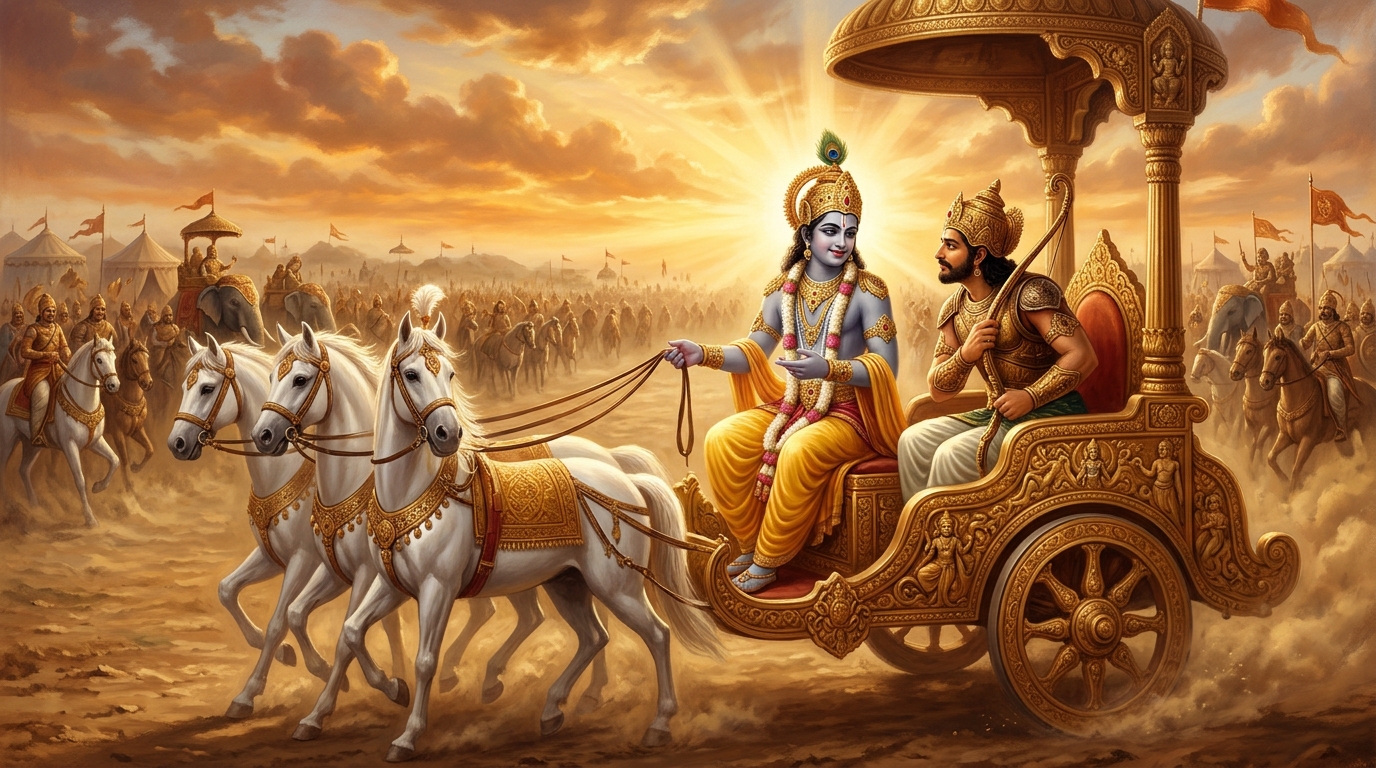
Conch shells thunder across the plains—Krishna blows the celestial Panchajanya and Arjuna sounds Devadatta. Asking Krishna to position their chariot between the two armies, Arjuna gazes across the field and sees his revered grandfather Bhishma, his teacher Dronacharya, uncles, brothers, and friends standing on both sides.
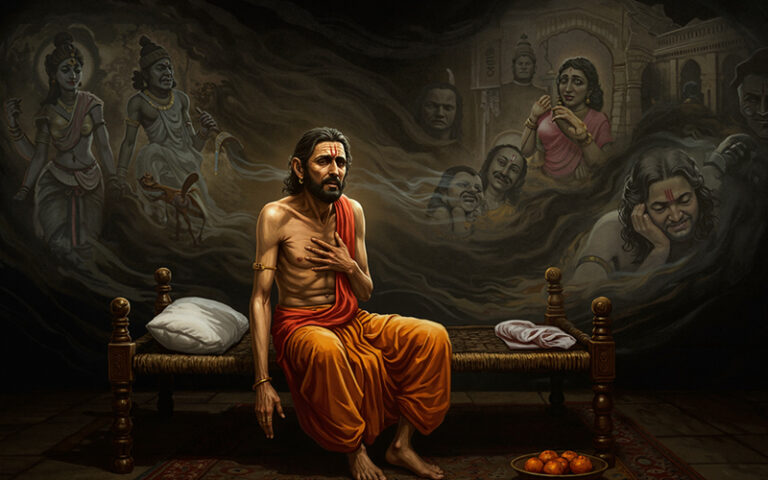
Sudden compassion mixed with emotional attachment overwhelms Arjuna. His limbs tremble, his mouth dries up, and he argues that no kingdom or victory could ever justify destroying one’s own family and eroding societal dharma. Setting aside his weapons, Arjuna sinks down in despair—creating the essential humility and openness required to receive Lord Krishna’s eternal wisdom.
Highlighted Shlokas & Spiritual Reflections (Chapter 1)
Shloka 1.1 — The Sacred Field of Dharma
धर्मक्षेत्रे कुरुक्षेत्रे समवेता युयुत्सवः । मामकाः पाण्डवाश्चैव किमकुर्वत सञ्जय ॥
Dharma-kṣetre kuru-kṣetre samavetā yuyutsavaḥ | Māmakāḥ pāṇḍavāś caiva kim akurvata sañjaya ||
Meaning: Dhritarashtra said: O Sanjaya, after assembling on the sacred field of Kurukshetra, eager to fight, what did my sons and the sons of Pandu do?
Notice the very first word of the Bhagavad Gita is Dharma. Kurukshetra is not merely a physical battleground—it mirrors the human mind, where righteous duty (dharma) and selfish attachment (mamakara) constantly confront one another.
Shloka 1.28 — Arjuna’s Emotional Collapse
कृपया परयाविष्टो विषीदन्निदमब्रवीत् । दृष्ट्वेमं स्वजनं कृष्ण युयुत्सुं समुपस्थितम् ॥
Kṛpayā parayāviṣṭo viṣīdann idam abravīt | Dṛṣṭvemam svajanaṁ kṛṣṇa yuyutsuṁ samupasthitam ||
Meaning: Overwhelmed by deep compassion and sorrow, Arjuna spoke these words: O Krishna, seeing my own kinsmen assembled here eager for battle, my heart sinks.
Arjuna’s collapse shows that intellectual brilliance and physical strength are not enough when our emotional attachments cloud our sense of right duty.
Shloka 1.47 — Dropping the Bow in Despair
एवमुक्त्वार्जुनः सङ्ख्ये रथोपस्थ उपाविशत् । विसृज्य सशरं चापं शोकसंविग्नमानसः ॥
Evam uktvārjunaḥ saṅkhye rathopastha upāviśat | Visṛjya sa-śaraṁ cāpaṁ śoka-saṁvigna-mānasaḥ ||
Meaning: Having spoken thus on the battlefield, Arjuna cast aside his bow and arrows and sank down upon the chariot seat, his mind overwhelmed with grief.
Spiritual transformation begins when we admit our confusion honestly rather than pretending to have all the answers. Arjuna’s surrender prepares him to become Krishna’s disciple in Chapter 2.
Complete Verse-by-Verse Bhagavad Gita Chapter 1 (All 47 Shlokas)
Read all 47 original Sanskrit verses of Chapter 1 below with Roman IAST transliteration and clear English meaning:
Verse 1.1
धृतराष्ट्र उवाच |
धर्मक्षेत्रे कुरुक्षेत्रे समवेता युयुत्सवः |
मामकाः पाण्डवाश्चैव किमकुर्वत सञ्जय ||१-१||
dhṛtarāṣṭra uvāca .
dharmakṣetre kurukṣetre samavetā yuyutsavaḥ .
māmakāḥ pāṇḍavāścaiva kimakurvata sañjaya ||1-1||
Meaning: The King Dhritarashtra asked: "O Sanjaya! What happened on the sacred battlefield of Kurukshetra, when my people gathered against the Pandavas?"
Verse 1.2
सञ्जय उवाच |
दृष्ट्वा तु पाण्डवानीकं व्यूढं दुर्योधनस्तदा |
आचार्यमुपसंगम्य राजा वचनमब्रवीत् ||१-२||
sañjaya uvāca .
dṛṣṭvā tu pāṇḍavānīkaṃ vyūḍhaṃ duryodhanastadā .
ācāryamupasaṃgamya rājā vacanamabravīt ||1-2||
Meaning: Sanjaya replied: The Prince Duryodhana, when he saw the army of the Pandavas paraded, approached his preceptor Guru Drona and spoke as follows:
Verse 1.3
पश्यैतां पाण्डुपुत्राणामाचार्य महतीं चमूम् |
व्यूढां द्रुपदपुत्रेण तव शिष्येण धीमता ||१-३||
paśyaitāṃ pāṇḍuputrāṇāmācārya mahatīṃ camūm .
vyūḍhāṃ drupadaputreṇa tava śiṣyeṇa dhīmatā ||1-3||
Meaning: Revered Father! Behold this mighty host of the Pandavas, paraded by the son of King Drupada, thy wise disciple.
Verse 1.4
अत्र शूरा महेष्वासा भीमार्जुनसमा युधि |
युयुधानो विराटश्च द्रुपदश्च महारथः ||१-४||
atra śūrā maheṣvāsā bhīmārjunasamā yudhi .
yuyudhāno virāṭaśca drupadaśca mahārathaḥ ||1-4||
Meaning: In it are heroes and great bowmen; the equals in battle of Arjuna and Bheema, Yuyudhana, Virata and Drupada, great soldiers all;
Verse 1.5
धृष्टकेतुश्चेकितानः काशिराजश्च वीर्यवान् |
पुरुजित्कुन्तिभोजश्च शैब्यश्च नरपुंगवः ||१-५||
dhṛṣṭaketuścekitānaḥ kāśirājaśca vīryavān .
purujitkuntibhojaśca śaibyaśca narapuṃgavaḥ ||1-5||
Meaning: Dhrishtaketu, Chekitan, the valiant King of Benares, Purujit, Kuntibhoja, Shaibya – a master over many;
Verse 1.6
युधामन्युश्च विक्रान्त उत्तमौजाश्च वीर्यवान् |
सौभद्रो द्रौपदेयाश्च सर्व एव महारथाः ||१-६||
yudhāmanyuśca vikrānta uttamaujāśca vīryavān .
saubhadro draupadeyāśca sarva eva mahārathāḥ ||1-6||
Meaning: Yudhamanyu, Uttamouja, Soubhadra and the sons of Droupadi, famous men.
Verse 1.7
अस्माकं तु विशिष्टा ये तान्निबोध द्विजोत्तम |
नायका मम सैन्यस्य संज्ञार्थं तान्ब्रवीमि ते ||१-७||
asmākaṃ tu viśiṣṭā ye tānnibodha dvijottama .
nāyakā mama sainyasya saṃjñārthaṃ tānbravīmi te ||1-7||
Meaning: Further, take note of all those captains who have ranged themselves on our side, O best of Spiritual Guides! The leaders of my army. I will name them for you.
Verse 1.8
भवान्भीष्मश्च कर्णश्च कृपश्च समितिञ्जयः |
अश्वत्थामा विकर्णश्च सौमदत्तिस्तथैव च ||१-८||
bhavānbhīṣmaśca karṇaśca kṛpaśca samitiñjayaḥ .
aśvatthāmā vikarṇaśca saumadattistathaiva ca ||1-8||
Meaning: You come first; then Bheeshma, Karna, Kripa, great soldiers; Ashwaththama, Vikarna and the son of Somadhatta;
Verse 1.9
अन्ये च बहवः शूरा मदर्थे त्यक्तजीविताः |
नानाशस्त्रप्रहरणाः सर्वे युद्धविशारदाः ||१-९||
anye ca bahavaḥ śūrā madarthe tyaktajīvitāḥ .
nānāśastrapraharaṇāḥ sarve yuddhaviśāradāḥ ||1-9||
Meaning: And many others, all ready to die for my sake; all armed, all skilled in war.
Verse 1.10
अपर्याप्तं तदस्माकं बलं भीष्माभिरक्षितम् |
पर्याप्तं त्विदमेतेषां बलं भीमाभिरक्षितम् ||१-१०||
aparyāptaṃ tadasmākaṃ balaṃ bhīṣmābhirakṣitam .
paryāptaṃ tvidameteṣāṃ balaṃ bhīmābhirakṣitam ||1-10||
Meaning: Yet our army seems the weaker, though commanded by Bheeshma; their army seems the stronger, though commanded by Bheema.
Verse 1.11
अयनेषु च सर्वेषु यथाभागमवस्थिताः |
भीष्ममेवाभिरक्षन्तु भवन्तः सर्व एव हि ||१-११||
ayaneṣu ca sarveṣu yathābhāgamavasthitāḥ .
bhīṣmamevābhirakṣantu bhavantaḥ sarva eva hi ||1-11||
Meaning: Therefore in the rank and file, let stand firm in their posts, according to battalions; and all you generals about Bheeshma.
Verse 1.12
तस्य सञ्जनयन्हर्षं कुरुवृद्धः पितामहः |
सिंहनादं विनद्योच्चैः शङ्खं दध्मौ प्रतापवान् ||१-१२||
tasya sañjanayanharṣaṃ kuruvṛddhaḥ pitāmahaḥ .
siṃhanādaṃ vinadyoccaiḥ śaṅkhaṃ dadhmau pratāpavān ||1-12||
Meaning: Then to enliven his spirits, the brave Grandfather Bheeshma, eldest of the Kuru-clan, blew his conch, till it sounded like a lion's roar.
Verse 1.13
ततः शङ्खाश्च भेर्यश्च पणवानकगोमुखाः |
सहसैवाभ्यहन्यन्त स शब्दस्तुमुलोऽभवत् ||१-१३||
tataḥ śaṅkhāśca bheryaśca paṇavānakagomukhāḥ .
sahasaivābhyahanyanta sa śabdastumulo.abhavat ||1-13||
Meaning: And immediately all the conches and drums, the trumpets and horns, blared forth in tumultuous uproar.
Verse 1.14
ततः श्वेतैर्हयैर्युक्ते महति स्यन्दने स्थितौ |
माधवः पाण्डवश्चैव दिव्यौ शङ्खौ प्रदध्मतुः ||१-१४||
tataḥ śvetairhayairyukte mahati syandane sthitau .
mādhavaḥ pāṇḍavaścaiva divyau śaṅkhau pradadhmatuḥ ||1-14||
Meaning: Then seated in their spacious war chariot, yoked with white horses, Lord Shri Krishna and Arjuna sounded their divine shells.
Verse 1.15
पाञ्चजन्यं हृषीकेशो देवदत्तं धनञ्जयः |
पौण्ड्रं दध्मौ महाशङ्खं भीमकर्मा वृकोदरः ||१-१५||
pāñcajanyaṃ hṛṣīkeśo devadattaṃ dhanañjayaḥ .
pauṇḍraṃ dadhmau mahāśaṅkhaṃ bhīmakarmā vṛkodaraḥ ||1-15||
Meaning: Lord Shri Krishna blew his Panchajanya and Arjuna his Devadatta, brave Bheema his renowned shell, Poundra.
Verse 1.16
अनन्तविजयं राजा कुन्तीपुत्रो युधिष्ठिरः |
नकुलः सहदेवश्च सुघोषमणिपुष्पकौ ||१-१६||
anantavijayaṃ rājā kuntīputro yudhiṣṭhiraḥ .
nakulaḥ sahadevaśca sughoṣamaṇipuṣpakau ||1-16||
Meaning: The King Dharmaraja, the son of Kunti, blew the Anantavijaya, Nakalu and Sahadeo, the Sugosh and Manipushpaka, respectively.
Verse 1.17
काश्यश्च परमेष्वासः शिखण्डी च महारथः |
धृष्टद्युम्नो विराटश्च सात्यकिश्चापराजितः ||१-१७||
kāśyaśca parameṣvāsaḥ śikhaṇḍī ca mahārathaḥ .
dhṛṣṭadyumno virāṭaśca sātyakiścāparājitaḥ ||1-17||
Meaning: And the Maharaja of Benares, the great archer, Shikhandi, the great soldier, Dhrishtayumna, Virata and Satyaki, the invincible,
Verse 1.18
द्रुपदो द्रौपदेयाश्च सर्वशः पृथिवीपते |
सौभद्रश्च महाबाहुः शङ्खान्दध्मुः पृथक्पृथक् ||१-१८||
drupado draupadeyāśca sarvaśaḥ pṛthivīpate .
saubhadraśca mahābāhuḥ śaṅkhāndadhmuḥ pṛthakpṛthak ||1-18||
Meaning: And O King! Drupada, the sons of Droupadi and Soubhadra, the great soldier, blew their conches.
Verse 1.19
स घोषो धार्तराष्ट्राणां हृदयानि व्यदारयत् |
नभश्च पृथिवीं चैव तुमुलोऽभ्यनुनादयन् (or लोव्यनु) ||१-१९||
sa ghoṣo dhārtarāṣṭrāṇāṃ hṛdayāni vyadārayat .
nabhaśca pṛthivīṃ caiva tumulo.abhyanunādayan (lo vyanu)||1-19||
Meaning: The tumult rent the hearts of the sons of Dhritarashtra, and violently shook heaven and earth with its echo.
Verse 1.20
अथ व्यवस्थितान्दृष्ट्वा धार्तराष्ट्रान् कपिध्वजः |
प्रवृत्ते शस्त्रसम्पाते धनुरुद्यम्य पाण्डवः |
हृषीकेशं तदा वाक्यमिदमाह महीपते ||१-२०||
atha vyavasthitāndṛṣṭvā dhārtarāṣṭrān kapidhvajaḥ .
pravṛtte śastrasampāte dhanurudyamya pāṇḍavaḥ ||1-20||
Meaning: Then beholding the sons of Dhritarashtra, drawn up on the battle- field, ready to fight, Arjuna, whose flag bore the Hanuman,
Verse 1.21
अर्जुन उवाच |
सेनयोरुभयोर्मध्ये रथं स्थापय मेऽच्युत ||१-२१||
hṛṣīkeśaṃ tadā vākyamidamāha mahīpate .
arjuna uvāca .
senayorubhayormadhye rathaṃ sthāpaya me.acyuta ||1-21||
Meaning: Raising his bow, spoke this to the Lord Shri Krishna: O Infallible! Lord of the earth! Please draw up my chariot betwixt the two armies,
Verse 1.22
यावदेतान्निरीक्षेऽहं योद्धुकामानवस्थितान् |
कैर्मया सह योद्धव्यमस्मिन् रणसमुद्यमे ||१-२२||
yāvadetānnirikṣe.ahaṃ yoddhukāmānavasthitān .
kairmayā saha yoddhavyamasmin raṇasamudyame ||1-22||
Meaning: So that I may observe those who must fight on my side, those who must fight against me;
Verse 1.23
योत्स्यमानानवेक्षेऽहं य एतेऽत्र समागताः |
धार्तराष्ट्रस्य दुर्बुद्धेर्युद्धे प्रियचिकीर्षवः ||१-२३||
yotsyamānānavekṣe.ahaṃ ya ete.atra samāgatāḥ .
dhārtarāṣṭrasya durbuddheryuddhe priyacikīrṣavaḥ ||1-23||
Meaning: And gaze over this array of soldiers, eager to please the sinful sons of Dhritarashtra.
Verse 1.24
सञ्जय उवाच |
एवमुक्तो हृषीकेशो गुडाकेशेन भारत |
सेनयोरुभयोर्मध्ये स्थापयित्वा रथोत्तमम् ||१-२४||
sañjaya uvāca .
evamukto hṛṣīkeśo guḍākeśena bhārata .
senayorubhayormadhye sthāpayitvā rathottamam ||1-24||
Meaning: Sanjaya said: Having listened to the request of Arjuna, Lord Shri Krishna drew up His bright chariot exactly in the midst between the two armies,
Verse 1.25
भीष्मद्रोणप्रमुखतः सर्वेषां च महीक्षिताम् |
उवाच पार्थ पश्यैतान्समवेतान्कुरूनिति ||१-२५||
bhīṣmadroṇapramukhataḥ sarveṣāṃ ca mahīkṣitām .
uvāca pārtha paśyaitānsamavetānkurūniti ||1-25||
Meaning: Whither Bheeshma and Drona had led all the rulers of the earth, and spoke thus: O Arjuna! Behold these members of the family of Kuru assembled.
Verse 1.26
तत्रापश्यत्स्थितान्पार्थः पितॄनथ पितामहान् |
आचार्यान्मातुलान्भ्रातॄन्पुत्रान्पौत्रान्सखींस्तथा ||१-२६||
tatrāpaśyatsthitānpārthaḥ pitṝnatha pitāmahān .
ācāryānmātulānbhrātṛnputrānpautrānsakhīṃstathā ||1-26||
Meaning: There Arjuna noticed fathers, grandfathers, uncles, cousins, sons, grandsons, teachers, friends;
Verse 1.27
श्वशुरान्सुहृदश्चैव सेनयोरुभयोरपि |
तान्समीक्ष्य स कौन्तेयः सर्वान्बन्धूनवस्थितान् ||१-२७||
śvaśurānsuhṛdaścaiva senayorubhayorapi .
tānsamīkṣya sa kaunteyaḥ sarvānbandhūnavasthitān ||1-27||
Meaning: Fathers-in-law and benefactors, arrayed on both sides. Arjuna then gazed at all those kinsmen before him.
Verse 1.28
कृपया परयाविष्टो विषीदन्निदमब्रवीत् |
अर्जुन उवाच |
दृष्ट्वेमं स्वजनं कृष्ण युयुत्सुं समुपस्थितम् ||१-२८||
kṛpayā parayāviṣṭo viṣīdannidamabravīt .
arjuna uvāca .
dṛṣṭvemaṃ svajanaṃ kṛṣṇa yuyutsuṃ samupasthitam ||1-28||
Meaning: And his heart melted with pity and sadly he spoke: O my Lord! When I see all these, my own people, thirsting for battle,
Verse 1.29
सीदन्ति मम गात्राणि मुखं च परिशुष्यति |
वेपथुश्च शरीरे मे रोमहर्षश्च जायते ||१-२९||
sīdanti mama gātrāṇi mukhaṃ ca pariśuṣyati .
vepathuśca śarīre me romaharṣaśca jāyate ||1-29||
Meaning: My limbs fail me and my throat is parched, my body trembles and my hair stands on end.
Verse 1.30
गाण्डीवं स्रंसते हस्तात्त्वक्चैव परिदह्यते |
न च शक्नोम्यवस्थातुं भ्रमतीव च मे मनः ||१-३०||
gāṇḍīvaṃ sraṃsate hastāttvakcaiva paridahyate .
na ca śaknomyavasthātuṃ bhramatīva ca me manaḥ ||1-30||
Meaning: The bow Gandeeva slips from my hand, and my skin burns. I cannot keep quiet, for my mind is in tumult.
Verse 1.31
निमित्तानि च पश्यामि विपरीतानि केशव |
न च श्रेयोऽनुपश्यामि हत्वा स्वजनमाहवे ||१-३१||
nimittāni ca paśyāmi viparītāni keśava .
na ca śreyo.anupaśyāmi hatvā svajanamāhave ||1-31||
Meaning: The omens are adverse; what good can come from the slaughter of my people on this battlefield?
Verse 1.32
न काङ्क्षे विजयं कृष्ण न च राज्यं सुखानि च |
किं नो राज्येन गोविन्द किं भोगैर्जीवितेन वा ||१-३२||
na kāṅkṣe vijayaṃ kṛṣṇa na ca rājyaṃ sukhāni ca .
kiṃ no rājyena govinda kiṃ bhogairjīvitena vā ||1-32||
Meaning: Ah my Lord! I crave not for victory, nor for the kingdom, nor for any pleasure. What were a kingdom or happiness or life to me,
Verse 1.33
येषामर्थे काङ्क्षितं नो राज्यं भोगाः सुखानि च |
त इमेऽवस्थिता युद्धे प्राणांस्त्यक्त्वा धनानि च ||१-३३||
yeṣāmarthe kāṅkṣitaṃ no rājyaṃ bhogāḥ sukhāni ca .
ta ime.avasthitā yuddhe prāṇāṃstyaktvā dhanāni ca ||1-33||
Meaning: When those for whose sake I desire these things stand here about to sacrifice their property and their lives:
Verse 1.34
आचार्याः पितरः पुत्रास्तथैव च पितामहाः |
मातुलाः श्वशुराः पौत्राः श्यालाः सम्बन्धिनस्तथा ||१-३४||
ācāryāḥ pitaraḥ putrāstathaiva ca pitāmahāḥ .
mātulāḥ śvaśurāḥ pautrāḥ śyālāḥ sambandhinastathā ||1-34||
Meaning: Teachers, fathers and grandfathers, sons and grandsons, uncles, father-in-law, brothers-in-law and other relatives.
Verse 1.35
एतान्न हन्तुमिच्छामि घ्नतोऽपि मधुसूदन |
अपि त्रैलोक्यराज्यस्य हेतोः किं नु महीकृते ||१-३५||
etānna hantumicchāmi ghnato.api madhusūdana .
api trailokyarājyasya hetoḥ kiṃ nu mahīkṛte ||1-35||
Meaning: I would not kill them, even for three worlds; why then for this poor earth? It matters not if I myself am killed.
Verse 1.36
निहत्य धार्तराष्ट्रान्नः का प्रीतिः स्याज्जनार्दन |
पापमेवाश्रयेदस्मान्हत्वैतानाततायिनः ||१-३६||
nihatya dhārtarāṣṭrānnaḥ kā prītiḥ syājjanārdana .
pāpamevāśrayedasmānhatvaitānātatāyinaḥ ||1-36||
Meaning: My Lord! What happiness can come from the death of these sons of Dhritarashtra? We shall sin if we kill these desperate men.
Verse 1.37
तस्मान्नार्हा वयं हन्तुं धार्तराष्ट्रान्स्वबान्धवान् |
स्वजनं हि कथं हत्वा सुखिनः स्याम माधव ||१-३७||
tasmānnārhā vayaṃ hantuṃ dhārtarāṣṭrānsvabāndhavān .
svajanaṃ hi kathaṃ hatvā sukhinaḥ syāma mādhava ||1-37||
Meaning: We are worthy of a nobler feat than to slaughter our relatives – the sons of Dhritarashtra; for, my Lord, how can we be happy of we kill our kinsmen?
Verse 1.38
यद्यप्येते न पश्यन्ति लोभोपहतचेतसः |
कुलक्षयकृतं दोषं मित्रद्रोहे च पातकम् ||१-३८||
yadyapyete na paśyanti lobhopahatacetasaḥ .
kulakṣayakṛtaṃ doṣaṃ mitradrohe ca pātakam ||1-38||
Meaning: Although these men, blinded by greed, see no guilt in destroying their kin, or fighting against their friends,
Verse 1.39
कथं न ज्ञेयमस्माभिः पापादस्मान्निवर्तितुम् |
कुलक्षयकृतं दोषं प्रपश्यद्भिर्जनार्दन ||१-३९||
kathaṃ na jñeyamasmābhiḥ pāpādasmānnivartitum .
kulakṣayakṛtaṃ doṣaṃ prapaśyadbhirjanārdana ||1-39||
Meaning: Should not we, whose eyes are open, who consider it to be wrong to annihilate our house, turn away from so great a crime?
Verse 1.40
कुलक्षये प्रणश्यन्ति कुलधर्माः सनातनाः |
धर्मे नष्टे कुलं कृत्स्नमधर्मोऽभिभवत्युत ||१-४०||
kulakṣaye praṇaśyanti kuladharmāḥ sanātanāḥ .
dharme naṣṭe kulaṃ kṛtsnamadharmo.abhibhavatyuta ||1-40||
Meaning: The destruction of our kindred means the destruction of the traditions of our ancient lineage, and when these are lost, irreligion will overrun our homes.
Verse 1.41
अधर्माभिभवात्कृष्ण प्रदुष्यन्ति कुलस्त्रियः |
स्त्रीषु दुष्टासु वार्ष्णेय जायते वर्णसङ्करः ||१-४१||
adharmābhibhavātkṛṣṇa praduṣyanti kulastriyaḥ .
strīṣu duṣṭāsu vārṣṇeya jāyate varṇasaṅkaraḥ ||1-41||
Meaning: When irreligion spreads, the women of the house begin to stray; when they lose their purity, adulteration of the stock follows.
Verse 1.42
सङ्करो नरकायैव कुलघ्नानां कुलस्य च |
पतन्ति पितरो ह्येषां लुप्तपिण्डोदकक्रियाः ||१-४२||
saṅkaro narakāyaiva kulaghnānāṃ kulasya ca .
patanti pitaro hyeṣāṃ luptapiṇḍodakakriyāḥ ||1-42||
Meaning: Promiscuity ruins both the family and those who defile it; while the souls of our ancestors droop, through lack of the funeral cakes and ablutions.
Verse 1.43
दोषैरेतैः कुलघ्नानां वर्णसङ्करकारकैः |
उत्साद्यन्ते जातिधर्माः कुलधर्माश्च शाश्वताः ||१-४३||
doṣairetaiḥ kulaghnānāṃ varṇasaṅkarakārakaiḥ .
utsādyante jātidharmāḥ kuladharmāśca śāśvatāḥ ||1-43||
Meaning: By the destruction of our lineage and the pollution of blood, ancient class traditions and family purity alike perish.
Verse 1.44
उत्सन्नकुलधर्माणां मनुष्याणां जनार्दन |
नरके नियतं वासो भवतीत्यनुशुश्रुम (or नरकेऽनियतं) ||१-४४||
utsannakuladharmāṇāṃ manuṣyāṇāṃ janārdana .
narake niyataṃ vāso bhavatītyanuśuśruma ||1-44||
Meaning: The wise say, my Lord, that they are forever lost, whose ancient traditions are lost.
Verse 1.45
अहो बत महत्पापं कर्तुं व्यवसिता वयम् |
यद्राज्यसुखलोभेन हन्तुं स्वजनमुद्यताः ||१-४५||
aho bata mahatpāpaṃ kartuṃ vyavasitā vayam .
yadrājyasukhalobhena hantuṃ svajanamudyatāḥ ||1-45||
Meaning: Alas, it is strange that we should be willing to kill our own countrymen and commit a great sin, in order to enjoy the pleasures of a kingdom.
Verse 1.46
यदि मामप्रतीकारमशस्त्रं शस्त्रपाणयः |
धार्तराष्ट्रा रणे हन्युस्तन्मे क्षेमतरं भवेत् ||१-४६||
yadi māmapratīkāramaśastraṃ śastrapāṇayaḥ .
dhārtarāṣṭrā raṇe hanyustanme kṣemataraṃ bhavet ||1-46||
Meaning: If, on the contrary, the sons of Dhritarashtra, with weapons in their hand, should slay me, unarmed and unresisting, surely that would be better for my welfare!
Verse 1.47
सञ्जय उवाच |
एवमुक्त्वार्जुनः सङ्ख्ये रथोपस्थ उपाविशत् |
विसृज्य सशरं चापं शोकसंविग्नमानसः ||१-४७||
sañjaya uvāca .
evamuktvārjunaḥ saṅkhye rathopastha upāviśat .
visṛjya saśaraṃ cāpaṃ śokasaṃvignamānasaḥ ||1-47||
Meaning: Sanjaya said: "Having spoken thus, in the midst of the armies, Arjuna sank on the seat of the chariot, casting away his bow and arrow; heartbroken with grief."
Timeless Life Lessons for Modern Seekers
- Honest Self-Awareness Precedes Clarity: Like Arjuna, acknowledging when you feel overwhelmed or conflicted is not weakness—it is the doorway to seeking higher wisdom.
- Distinguish Compassion from Attachment: True compassion uplifts dharma and protects the innocent, whereas blind attachment makes us shrink away from difficult responsibilities.
- Pause Before Reacting: In moments of crisis, pause and seek counsel from a higher, calmer perspective rather than acting out of panic or fear.
- Inner Battles Mirror Outer Challenges: Every day we face choices between short-term comfort and long-term righteousness; clarity comes when we align with dharma.
Frequently Asked Questions — Bhagavad Gita Chapter 1
Why is Chapter 1 of the Bhagavad Gita called Arjuna Vishada Yoga?
Even though Arjuna experiences deep grief (vishada), his sorrow becomes a yoga—a bridge to union with the Divine—because it strips away ego and opens his heart to Lord Krishna’s guidance.
How many verses are in Bhagavad Gita Chapter 1?
Chapter 1 contains 47 Sanskrit verses narrated primarily through Sanjaya’s eyewitness report to King Dhritarashtra.
Why did Arjuna refuse to fight at first?
Arjuna feared sin, the loss of loved ones such as Bhishma and Drona, and the breakdown of family and social order—confusing personal attachment with righteous duty.
Continue Your Bhagavad Gita Journey
All 18 Gita Chapters | Next: Chapter 2 →
To explore more Bhagavad Gita teachings, Puranic stories, and sacred chants and timeless wisdom from Hindu scriptures, visit and subscribe to our official Vibes of Divinity YouTube channel.
Which shloka from this chapter touches your heart most today? Share your reflection in the comments below.